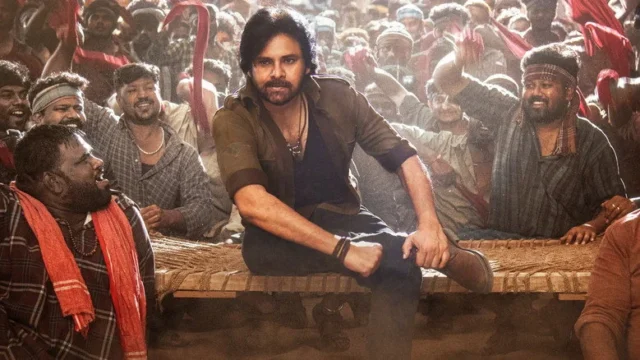
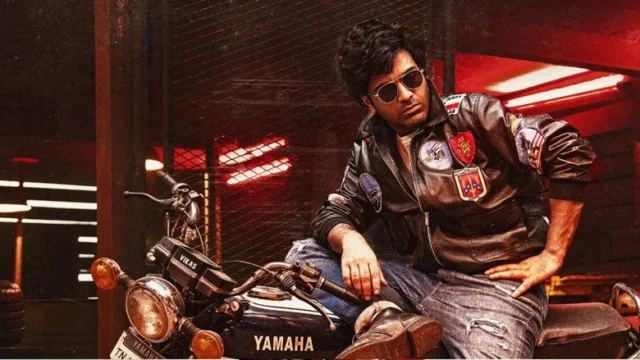
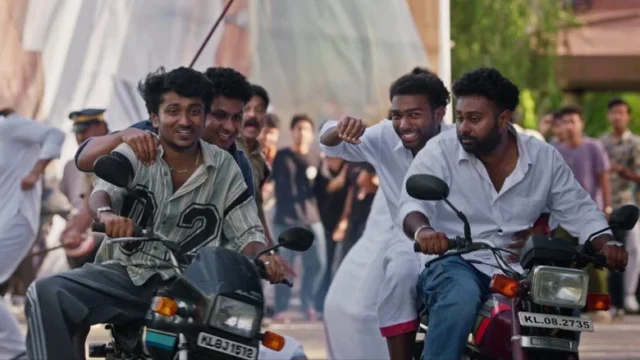
A village father nicknamed “Kuthirai Mutta” stands across from a polished NRI in a city drawing room, and every awkward silence between them carries more weight than the romance that supposedly drives this film. Happy Raj is sold as a romantic comedy, but Maria Raja Elanchezian’s debut feature has far more warmth in its family drama bones than its love story ever earns.
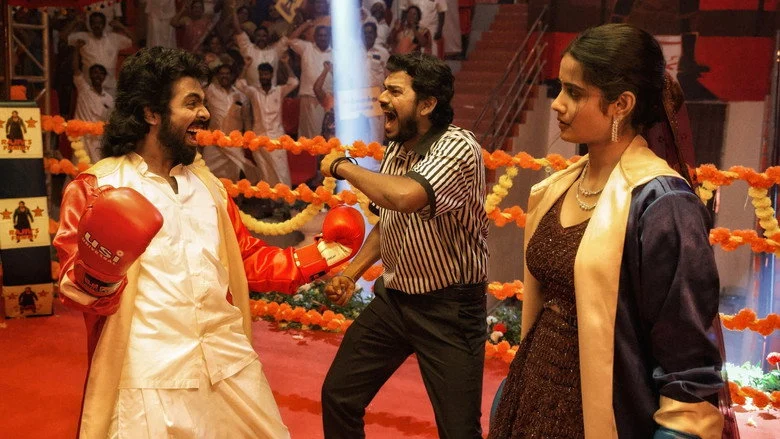
G.V. Prakash Kumar Holds Ground Without a Signature Moment
G.V. Prakash Kumar plays Anandh “Happy” Raj with an earnest likeability that suits the role. Once the narrative moves to Bangalore’s IT corridors, he finds a rhythm, the film breathes easier around him here. But the character never gets a scene that belongs exclusively to him. He is reactive throughout, caught between Kavya’s expectations and his father’s shadow, and I found myself wishing the screenplay had given him one moment to fully ignite.
Elanchezian’s Second Half Redeems a First Half That Doesn’t Trust Its Audience
The opening fifteen minutes announce a problem early. Heavy narration piles exposition onto exposition, explaining Kathamuthu’s backstory and his “horse egg” nickname through voiceover rather than scene. It is the kind of writing that signals a director unsure whether audiences will keep up.
The screenplay also oscillates, never fully committing to romantic comedy, never fully leaning into family drama. That structural drift costs the film genuine momentum across its 158-minute runtime. Cinema Express noted this uneven balance in their 3/5 assessment, and it is hard to argue against it.
The second half, however, is a different film. Elanchezian packs genuine comedy into the family meeting sequences, and the cultural collision between Kathamuthu and Abbas’s Rajiv produces the kind of situational humour that lands organically. Editor Selva RK’s tighter rhythm in this stretch confirms the film’s real home is here.
If you enjoy character-driven Tamil family dramas, there’s a rich catalogue of similar work worth exploring through Tamil Comedy reviews across different registers and budgets.
George Maryan’s Kathamuthu Is the Film’s Undeniable Spine
George Maryan does something difficult: he plays a figure of ridicule with complete dignity. Kathamuthu is mocked by the world around him, yet Maryan never lets the character become a punchline. His throwaway line about simple biology, a brief, philosophical observation about family bonds, lands harder than anything the romance subplot manages. Times of India’s ETimes rated the film 3/5, and much of what earns even that rating traces back to Maryan’s presence.
Abbas Returns and Rajiv Delivers the Film’s Sharpest Comic Engine
Abbas marks a comeback to Tamil cinema after over a decade, and his casting as the NRI father Rajiv is shrewder than it first appears. He represents a particular kind of aspirational urban Tamil identity, polished, globally exposed, quietly condescending about village traditions. His scenes opposite Maryan carry an ideological friction that the screenplay could have pushed further. The film wisely lets their dynamic, not the central romance, generate its most watchable stretches.
Sri Gouri Priya as Kavya and Geetha Kailasam as Gomathi are serviceable within their functional roles, though neither is given material that tests them. The film’s emotional architecture concentrates almost entirely on the men, which is both its strength and a missed opportunity.
Audience Reception Points Toward a Clear Viewing Tribe
Happy Raj does not have the framing or pace of a mainstream romantic comedy. Audiences arriving for that experience will feel the mismatch within the first half hour. The film’s emotional manipulation, and it does manipulate, with some calculation, works better on viewers who already have affection for the cultural milieu it depicts. Family audiences, George Maryan fans, and viewers drawn to father-son dynamics written with some sincerity are the ones most likely to leave satisfied. Those expecting sharp rom-com energy throughout will clock every slow minute of the first half.
If the cultural-clash dynamic in Happy Raj resonates, the tonal ambition in Vaazha II review, which similarly struggles to reconcile its emotional register with genre expectations, makes for a pointed comparison.
Happy Raj is worth one theatrical watch for George Maryan alone, but go in expecting a family drama that occasionally remembers it was supposed to be a romantic comedy. The second half genuinely earns your patience; the first half tests it. Regular theatrical is the right format, this is a film that needs a crowd to warm up properly.
Happy Raj (2026) is a film that half-works brilliantly and half-stumbles, and with Maryan anchoring every scene he occupies, it scrapes through to a critic’s 2.75 out of 5, a watch with calibrated expectations, not a recommendation without them.
Carmeni Selvam, which also grapples with flawed male protagonists navigating family and social pressure, shares Carmeni Selvam verdict that undercuts its stronger dramatic instincts.