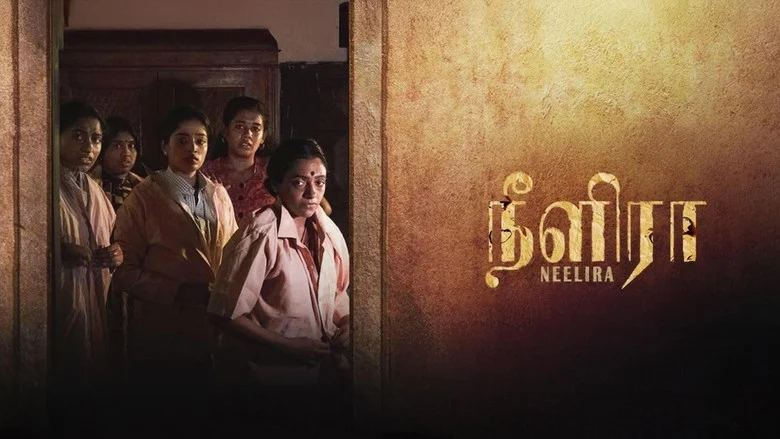
In a 1988 Sri Lankan village, Vasuki’s family is mid-wedding-eve when eight IPKF soldiers knock on the door, lost and desperate. That one knock, answered by a grandfather with no good options, pulls a civilian family into a war they never enlisted in, and from that moment, Neelira refuses to let any of them breathe.
Naveen Chandra’s Captain Is Stern, Frantic, and Deliberately Difficult to Root For
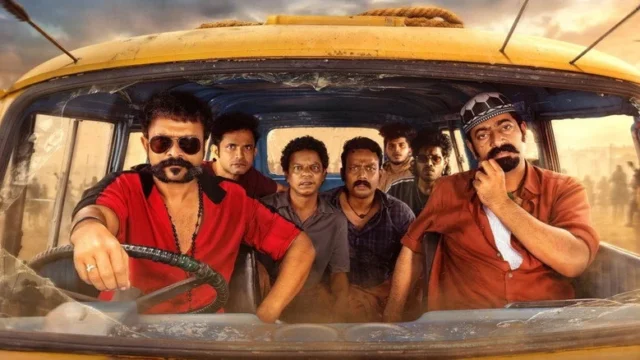
Naveen Chandra doesn’t offer the audience easy sympathy. His Captain secures the house, kills any illusion of choice for this family, and operates in that uncomfortable space between duty and coercion. The power-tripping during the standoff is precisely where Chandra earns his keep.
He’s never quite a villain, never quite a protector. That ambiguity is the film’s most interesting performance gamble, and Chandra holds it without flinching.
Someetharan’s Debut Builds a Pressure Cooker, Then Struggles to Find Its Steam Release
As a directorial debut built from personal war-child memories, Someetharan’s instincts are commendable. He trusts the confined space. He trusts silence over spectacle. The decision to turn a single night into a sustained quagmire of dread shows genuine formal confidence.
But the screenplay stops just short of where it needs to go. Character histories arrive in fragments, a detail here, a glance there, and the film ultimately presents the surface of its own tragedy rather than its marrow. Critics at NDTV scored it a 3 out of 5, and that middling figure feels accurate: it’s a promising film that doesn’t fully unlock itself.
The linear structure over one night has its own discipline, but co-director Vikky and Someetharan together don’t quite solve the chamber film’s central riddle, how do you make a room feel infinite? Here, it occasionally feels exactly as small as it is.
The Three-Way Standoff Is Where the Thriller Earns Its Right to Exist
Once the radio confirms no backup is coming, the film shifts gears. The Captain’s decision to fortify the home and hold the family until dawn creates a genuinely uncomfortable moral geometry. There’s no clean side to occupy.
With LTTE rebels closing in from outside, the family is squeezed between two armed forces neither of which asked for their consent. That three-way tension, family, soldiers, rebels, is Neelira’s most sophisticated structural move. One publication put it plainly: “The best hostage films don’t need explosions. They need a room, a locked door, and people who can’t afford to blink.” Neelira understands that principle, even if it doesn’t always execute it with full emotional conviction.
The overnight crossfire sequence ties the thriller threads together with reasonable tautness. What it lacks is a scene or a moment that crystallises the Eelam Tamil community’s grief into something devastating and specific. The war’s trauma is present; it just doesn’t always pierce.
For more Tamil drama and thriller reviews with this kind of political edge, Tamil Thriller reviews on this site cover a range of films navigating similar territory.
Roopa Koduvayur Carries the Family’s Emotional Weight Without Being Given Enough to Work With
Roopa Koduvayur as Vasuki is the film’s civilian conscience. Her wedding-night transformation from bride to hostage should be the film’s gut-punch. She is placed at the centre of both the domestic setting and the hostage situation, which makes her the character with the most to lose.
The casting signals that Someetharan understood this story needed a grounded emotional anchor, not a trained-soldier register. Vasuki needed to feel like someone ordinary violence has no business touching. Koduvayur brings that quality, but the screenplay gives her fragments rather than a full emotional arc. I found myself wanting the film to trust her more.
Sananth and Kapila Venu are listed in the cast, but their roles don’t surface with enough definition to evaluate individually. In a chamber film this tight, every face should be doing double work, and that’s a missed opportunity the script can’t fully recover from.
Audience Reception Reflects a Film Respected More Than Loved
Times of India handed Neelira a 3.5 out of 5 and noted the film’s real grit in small-scale war drama. The user rating on the same platform matched that score, a rare alignment suggesting the film landed with its intended audience, but didn’t generate the groundswell of word-of-mouth a film like this needs. The on-screen text at the end tracking one character’s journey from Sri Lanka to Europe adds a quietly haunting postscript, and it’s the kind of detail that lingers, even when the film itself occasionally frustrates.
There are no reported controversies around Neelira’s release. With producers including Karthik Subbaraj and Rana Daggubati attached, the film carries institutional credibility. But institutional backing can’t substitute for the emotional specificity this story demands and only partially delivers.
If Neelira’s chamber-war approach interests you, the Kaalidas 2 review on this site examines another Tamil thriller that builds its world carefully but struggles to follow through on its tension.
Neelira is worth a single viewing for its formal discipline and Naveen Chandra’s morally unresolved performance, but go in prepared for a film that builds its world more confidently than it inhabits it. Watch it at home, where a quiet room will do the film the service its confined setting deserves.
Neelira (2026) is a film you’ll respect on the way out and feel slightly cheated by on reflection, a 3 out of 5 that reaches for something genuinely important about Eelam Tamil suffering and grasps it just loosely enough to sting.
For films where a single night of survival is treated with comparable urgency and similar production ambition, the Biker 2026 verdict explores how spectacle and emotional restraint compete for the same screen space.