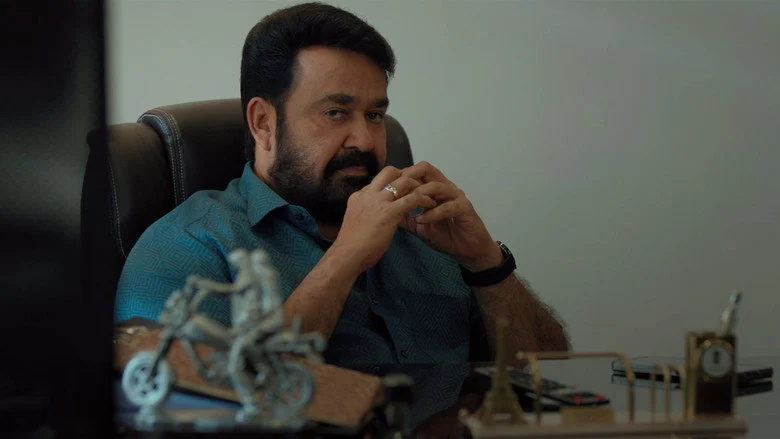
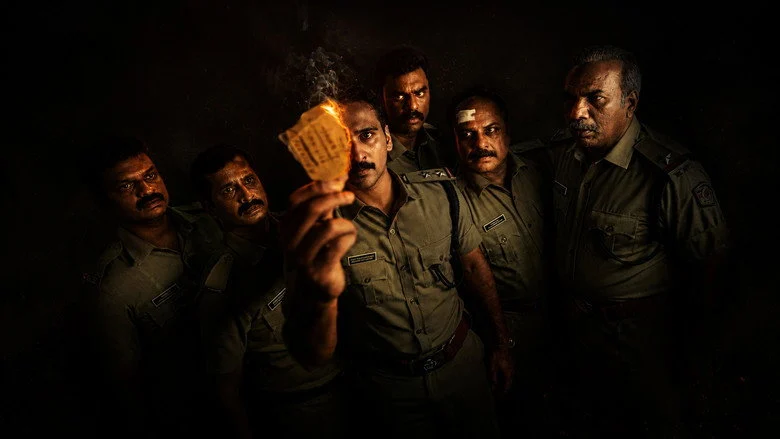
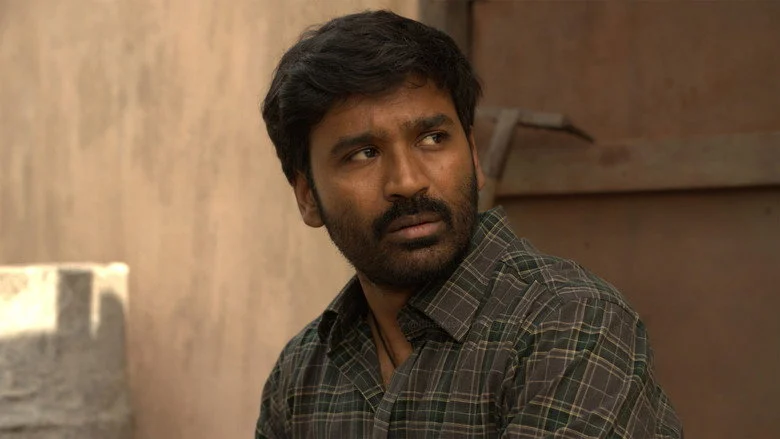
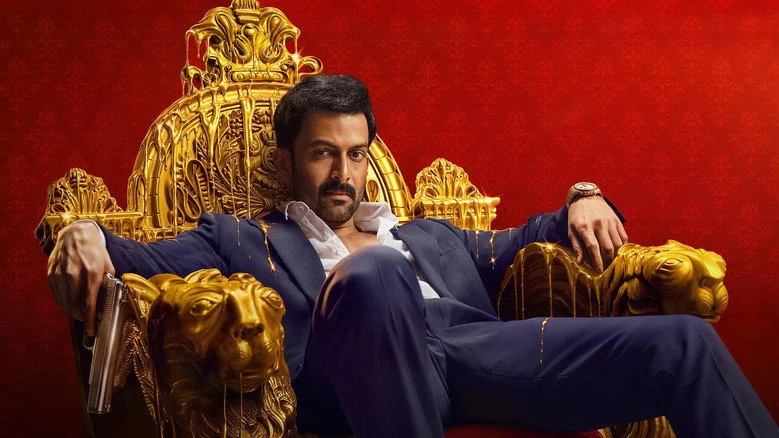
Rajeevan, a government employee with a quiet life, stands in line at a bank. He stumbles into a robbery as an accidental witness, and his body, already battered in the teaser, seems to absorb the blow of the crime long before the bullets fly. Prithviraj Sukumaran doesn’t stand out in a crowd, and that ordinariness is exactly what director Nissam Basheer weaponizes against him. The promise is a slow-burn thriller about institutional collapse, but the film’s own structure keeps collapsing into a frustrating identity crisis.

Prithviraj Sukumaran: The Bruises Speak, The Script Doesn’t
Prithviraj’s Rajeevan is a study in restraint, a man who hunches his shoulders and avoids eye contact, only to be forced into heroism. The teaser scene where he is shown bloodied and exhausted is the film’s most effective image, because it communicates physical stakes without dialogue. But the screenplay keeps cutting away from his interior conflict to chase genre leaps, leaving Prithviraj stranded in scenes that feel like they belong to three different movies. He is committed, but he cannot stabilize a film that refuses to sit still for more than one tone. I genuinely wanted more time with his fear, but the film was already busy being something else.
Direction and Screenplay: Bold Ambition, Blunt Execution
Nissam Basheer deserves credit for refusing to make a conventional heist thriller. The non-linear narrative and genre-shifting approach are ambitious on paper, but in practice, they feel like the film is switching channels every five minutes. One scene lands as a paranoid drama; the next veers into action mayhem; the one after flirts with dark comedy. Basheer’s strength is his willingness to toy with form, but his weakness is a screenplay by Sameer Abdul that never tightens the screw long enough to create real tension. The moment Rajeevan is branded a troublemaker by the system could have been a turning point, but the plot rushes past it into confusion.
Genre-Core Execution: A Thriller That Fights Itself
The heist-action-thriller premise promised a tight, single-sitting adrenaline experience. Instead, the genre-core execution relies on psychological tension and deconstruction of institutional safety, worthy ideas that are undermined by constant tonal whiplash. The scene where Rajeevan witnesses the robbery is effectively disorienting, but the film never builds a consistent atmosphere around that disorientation. By the time the second half escalates into family-at-risk territory, the dramatic weight feels borrowed rather than earned.
Crime elements are introduced with reasonable craft: Dinesh Purushothaman’s cinematography captures the grit of the underworld, and Jakes Bejoy’s score presumably heightens paranoia (specific song names are not available in sources). But the genre-shifting becomes a structural crutch, not a creative choice. One minute the film is a psychological thriller about a hunted man; the next, it tries to be a conventional action drama. The result is a film that reads like a promising outline, not a finished feature.
What holds the genre execution together is the central question: What happens when an ordinary man realizes the systems designed to protect him are built to exploit him? That thematic spine is strong enough to carry multiple genres, but the film fumbles the execution by overloading its tool kit. The cost of silence may be greater than speaking out, as the tagline claims, but the film never commits to either path long enough to make us feel that tradeoff.
Supporting Cast: Interesting Pieces, Incomplete Puzzle
Parvathy Thiruvothu brings her usual emotional precision to a lead role that likely grounds Rajeevan’s family life, but details of her character are absent from available materials. Suraj Venjaramoodu as the antagonist represents the corrupt system hunting Rajeevan, a potentially powerful metaphor that deserves more screen time. Hakkim Shahjahan, Ashokan, and Vijayaraghavan appear in pivotal roles, yet their specific moments remain unclear from the research data. Their casting signals ambition: veterans and rising talents alike, but the film cannot serve them all. Shankar Ramakrishnan and Madhupal round out a strong ensemble that the script treats more like a checklist than a chorus.
Audience Reception: Excitement and Confusion in Equal Measure
Early audience response reveals a split: excitement over the cryptic poster and release date announcement, but confusion about the genre-shifting nature of the narrative. Social media sentiment is unavailable from the sources, but the pattern is clear, viewers drawn by Prithviraj’s star power found themselves asking whether this was an action movie or a drama. The film’s refusal to fit into a single category has been praised as unconventional by some, but criticized as inconsistent by others. No controversies, political reactions, or box office figures are available yet, making audience reception the only real metric of the film’s divided appeal.
If you are the kind of viewer who loves a director taking risks, there is value in Malayalam Thriller reviews that test form but fall short of perfect execution.
For all its ambition, I, Nobody is a film caught between wanting to be a clever genre deconstruction and a crowd-pleasing thriller, and it excels at neither. Watch it only if you are a Prithviraj completist willing to endure structural frustration in exchange for one or two genuinely tense moments. See it in theaters if you must, but manage expectations: this is not a tight heist film, but a sprawling, messy attempt at one.
Nissam Basheer’s I, Nobody earns a hesitant 2.5 out of 5, a film with a bold thesis and a shaky argument.
A more streamlined approach to suspense can be found in the flawed but confident Gatta Kusthi review.