A man cracks under the weight of his own absolute truth-telling, convinced that every lie he tells condemns another girl to birth, and his household spirals into chaos trying to manage his impossible conviction. The premise is audacious enough to sustain a full-length comedy, yet depends entirely on whether the execution trusts the absurdity rather than explaining it away.
Abadameva Jayathe anchors its humor in character reaction rather than external plot mechanics, a craft choice that either deepens the comedy or exposes it as thin depending on how precisely the screenplay lands each beat. Directors Karthikeyan Santosh K and Karthik Konda have built a 128-minute feature around situational escalation, each scene designed to tighten the knot around their protagonist’s moral cage. The question isn’t whether the premise works; it’s whether the writers have the discipline to let social absurdity breathe without telegraphing the punchline.

Babu Mohan Trapped in His Own Principle
Babu Mohan carries the film as Patela, a man whose commitment to honesty has calcified into religious dogma. The character demands an actor willing to play rigidity without caricature, to find layers in someone whose entire worldview is built on a single, irrational foundation. Whether Mohan mines that contradiction for genuine pathos or settles for surface-level stubbornness will determine if Patela feels like a man in crisis or a cartoon obstacle.
Direction Built on Scene-by-Scene Escalation, Not Plot
The directorial strength lies in structural discipline: a dramatic architecture that escalates through character behavior rather than external conflict. The team emphasized recurring escalation across scenes, suggesting they’ve mapped the emotional geography carefully. The weakness surfaces in a screenplay that asks audiences to accept a foundational absurdity, that a man genuinely believes honesty causes female births, without ever interrogating why he holds this belief or what event might crack it.
Situational Comedy Built on Gender Prejudice
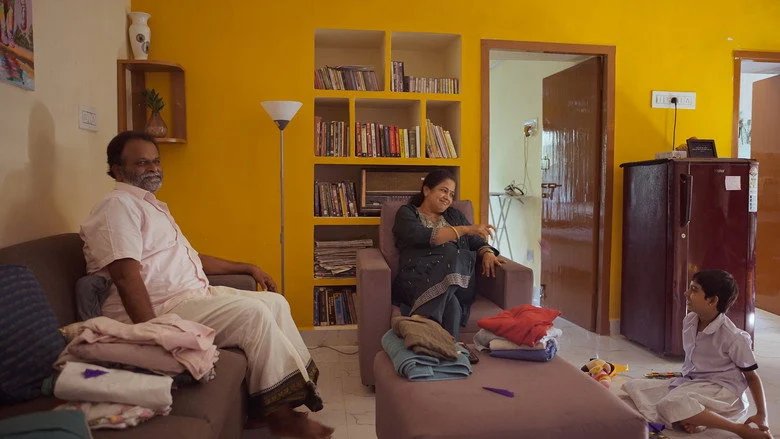
The film examines deception and its consequences through the lens of social absurdity rooted in gender bias. A single lie reverberates through the household, triggering cascading domestic chaos as family members either enable or resist Patela’s rigid worldview. The comedy engine depends on how sharply the screenplay distinguishes between characters who find his belief ridiculous and those who’ve internalized parts of it.
Character-driven comedy lives or dies on specificity. If each family member reacts with distinct logic, Latha with exasperation, Bhaskar with skepticism, Chitti with complicity, the film gains texture. If reactions blend into generic “people dealing with a difficult man” beats, the premise collapses into predictability. The film’s runtime suggests the team trusts the material enough to let scenes breathe rather than cutting for speed.
The core dramatic challenge is maintaining sympathy for a protagonist whose belief system is demonstrably wrong while keeping the social critique sharp. Comedy that mocks gender prejudice only works if the film never endorses the prejudice itself, even for a moment. The balance between satire and slapstick determines whether audiences laugh with or at the character.
For fans of ensemble-driven Telugu comedy and viewers interested in character-led social satire, this film targets a specific corner of the audience. Telugu comedy reviews continue to evolve toward more ambitious premises, Telugu Comedy reviews to track how this genre is reshaping itself beyond formula.
Pravanya Reddy as the Household’s Moral Compass
Pravanya Reddy plays Latha opposite Patela’s rigidity. The supporting role carries narrative weight, she’s the character most likely to articulate why Patela’s belief is absurd, making her the audience’s surrogate. How Reddy calibrates exasperation with affection determines whether Latha feels trapped by love or merely irritated by her husband’s logic.
Gender Prejudice as the Film’s Actual Target
The film’s thematic core, that girls are born as punishment for lies, directly mirrors real-world gender bias that continues in parts of Indian society. Rather than controversy, the premise reads as social comedy with teeth. The question is whether the screenplay uses this absurdity to critique the prejudice itself or simply exploits it for humor without interrogation.
If you’re drawn to Telugu comedies that build tension through character collision rather than external stakes, this film speaks your language. Babu Mohan anchors a premise that could flatten into caricature, and the directorial focus on escalation suggests the team understands how to tighten a character-driven narrative. Watch it in regular format, the dialogue-heavy nature and facial-reaction comedy doesn’t demand technical spectacle.
Abadameva Jayathe bets everything on whether character absurdity can sustain feature-length comedy without exhausting its premise, landing somewhere between clever social satire and a one-joke feature, a film that works for Telugu comedy fans willing to meet its specific sensibility at 3.5 out of 5 stars.
The ensemble-driven emotional structure mirrors the family-focused chaos of Parimala Co review, both films trusting character friction over external plotting.
Both films rely on psychological constraint as their comedic engine, characters trapped by their own belief systems much like Rao Bahadur verdict‘s protagonist navigating impossible moral terrain.