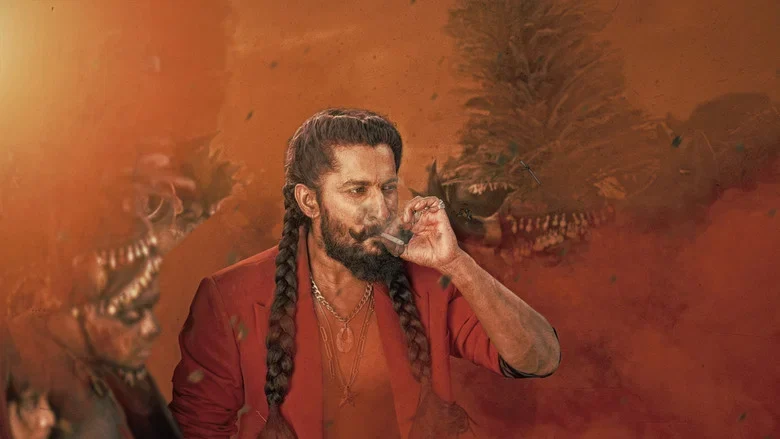
A regal figure sits alone in a decaying mansion, his authority corroded by whispers he cannot silence. Satyadev’s transformation into Rao Bahadur announces itself not as spectacle but as slow unraveling, a man whose inherited power becomes his psychological prison, where doubt metastasizes into something far more sinister than mere suspicion.
Venkatesh Maha’s psychological drama arrives without the comfort of a fully disclosed narrative arc, positioning itself squarely for viewers willing to enter aristocratic collapse without a safety net. This is a deliberate positioning, one that mirrors the film’s thematic architecture: a study in how identity fractures when certainty evaporates.

Satyadev’s Regal Isolation Carries the Film’s Weight
The first-look reveal of Satyadev in his titular role drew immediate attention precisely because it signals transformation rather than type. His presence in the aristocratic setting suggested a performer willing to inhabit psychological deterioration rather than heroic resistance. Without verified scene-level performance data from critics, the visual framing itself, a regal figure photographed against a fading backdrop, becomes the performance statement: this is not a character defending his throne, but a man watching it crumble from within.
Maha’s Direction Leans Into Atmosphere Over Plot Exposition
Director Venkatesh Maha frames this as a psychological drama blending suspense, dark comedy, and magical realism, a tonal mixture that demands precision in execution. The strength lies in this ambitious genre architecture: doubt as dramatic engine rather than plot convenience. The weakness, however, may rest in the film’s refusal to disclose its narrative spine before release, which either signals artistic confidence or leaves audiences navigating murky waters without tonal markers.
Psychological Drama’s Fragile Tonal Balance Drives the Premise
The tagline “Doubt is a Demon” repeats across promotional materials not as throwaway copy but as the film’s narrative north star. In a psychological drama, internal conflict must sustain tension without relying on plot momentum, a difficult balance. The marketing frames suspicion and identity fracture as the central dramatic mechanisms, which suggests Maha understands that aristocratic decline works only when the viewer feels the character’s internal erosion rather than witnessing external plot turns.
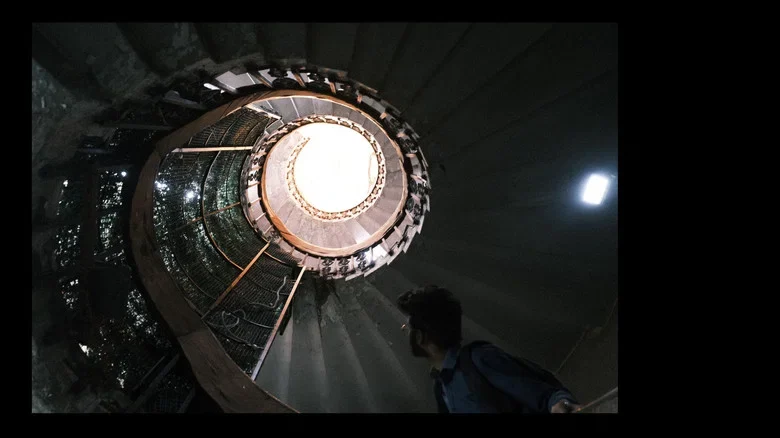
The aristocratic setting itself becomes a character. Fading mansions, inherited authority, and social collapse provide the visual language for psychological deterioration. When doubt becomes the antagonistic force rather than a character’s flaw, the entire genre framework shifts from traditional suspense toward something more experimental. The dark comedy element signals tonal variation, moments of bitter humor breaking the psychological pressure, which either deepens the portrait or destabilizes it depending on execution.
Magical realism as a listed genre component suggests the film may blur internal and external reality, positioning doubt not merely as psychological condition but as narrative device that alters the story’s fabric itself. This demands disciplined screenwriting and confident direction, neither of which can be verified from available materials.
Telugu psychological dramas tailored for class audiences have precedent, Uma Maheswara Ugra Roopasya explored similar territory of identity and memory, but Maha’s specific approach remains to be seen upon release. The film positions itself deliberately against conventional commercial Telugu cinema, which may narrow its audience but deepen its reach among viewers seeking psychological complexity.
Supporting Cast Remains Architecturally Unclear
Vikas Muppala, Deepa Thomas, Bala Parasar, and Anand Bharathi are listed without disclosed roles, which either reflects production secrecy or suggests their functions remain peripheral to Satyadev’s psychological journey. In a film centered on internal collapse, this sparse ensemble framing signals that doubt may be a solitary condition rather than relational drama. The absence of an identified antagonist further supports this: Rao Bahadur’s conflict appears internalized rather than interpersonal.
Audience Appetite for Psychological Complexity Over Commercial Reassurance
The target profile is admirably narrow: fans willing to enter murky psychological territory, class audiences seeking thematic substance, viewers interested in drama over action or romance. The marketing implicitly acknowledges that conventional commercial audiences may find this film deliberately obscure, a choice that either signals artistic integrity or commercial risk. The “Made in Telugu, for the world” positioning suggests ambitions beyond regional circuit success, framing this as an experiment in Telugu-language psychological storytelling for international sensibility.
This is a film for audiences uncomfortable with plot transparency, willing to trust a director’s atmosphere-building over narrative disclosure. Satyadev’s transformation and Maha’s tonal ambition may reward this patience or frustrate it. The 2-hour 25-minute runtime provides space for psychological unfolding without baggy indulgence, a practical choice for a film built on internal tension rather than external incident.
If you value psychological complexity and can tolerate narrative withholding, Rao Bahadur offers aristocratic decay filtered through doubt as both theme and structural device. Watch it in regular theatrical format, where the mansion’s atmosphere and Satyadev’s isolation hit harder than smaller screens can deliver. This is deliberately uncommercial Telugu cinema, which means the audience self-selects at the title.
For more examinations of character-driven psychological narratives in regional cinema, explore Hai Jawani review to discover similar ventures into internal complexity.
Rao Bahadur positions itself as ambitious psychological portraiture rather than conventional entertainment, a gamble that deserves recognition even before critical verdicts arrive, landing somewhere between compelling risk and uncertain execution (3.5/5).
Similar examinations of doubt destabilizing identity appear in Monkey Cage verdict where internal pressure drives narrative forward.