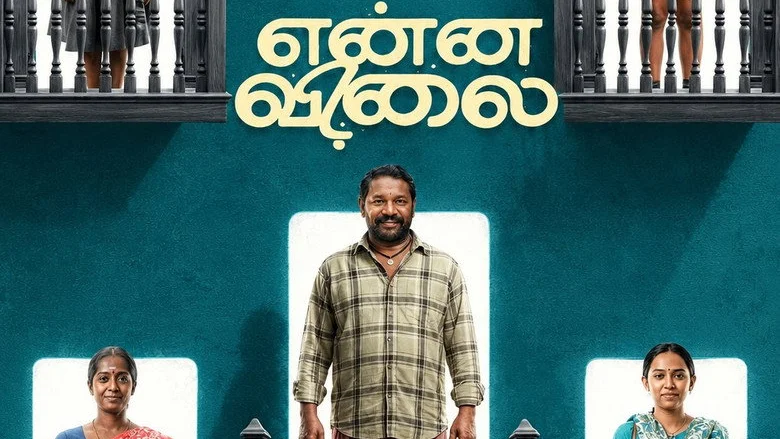
A boy and girl fall in love across the intimate lanes of a Muslim neighborhood in southern Tamil Nadu, their romance rippling outward like a stone dropped into still water, fracturing the very community that shaped them both. Meera Kathiravan’s debut frames love not as private transcendence but as public rupture, where every glance becomes an act of defiance against generations of unspoken rules.
This is a film built on constraint rather than spectacle. The constraint is cultural specificity, and Kathiravan appears to have embraced it as her primary dramatic tool instead of burying it beneath romance-film convention.
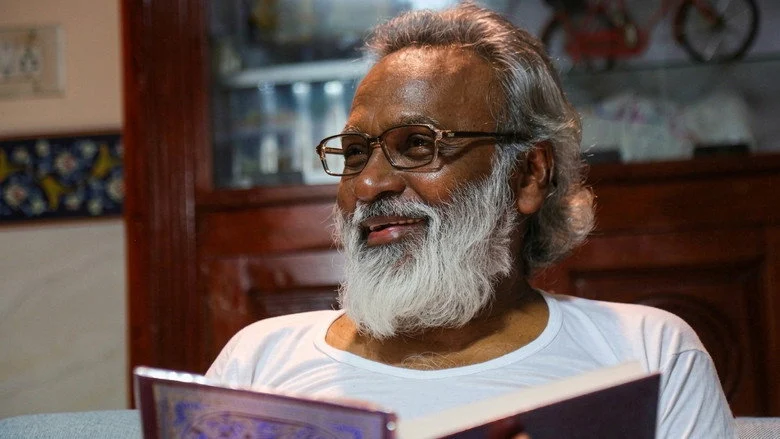
Esha M and Malavika Manoj in untested romantic territories
The leads are fresh faces unfamiliar to mass Tamil cinema, which immediately signals Kathiravan’s refusal to trade on star capital. Neither Esha M nor Malavika Manoj arrives with baggage, they are vessels waiting to be filled by a director who seems intent on grounding her film in character rather than charisma. Without released performance data, the casting choice itself becomes the statement: Kathiravan has opted for actors who will disappear into the neighborhood rather than announce themselves above it.
Kathiravan’s cultural attention paired with unproven narrative control
The director’s strength lies in her decision to root the story in a specific place: the Tamil-speaking Muslim quarters of southern Tamil Nadu, a setting rarely centered in Tamil cinema outside tokenism. The teaser material insists on the neighborhood as co-protagonist, not backdrop. But pre-release criticism cannot assess whether Kathiravan has the screenplay architecture to sustain this vision across a full feature, or whether cultural specificity becomes an aesthetic veneer masking conventional drama.
Romance as communal fracture, not private escape
The central dramatic engine here is not grand passion but social consequence. The film positions the couple’s relationship as inherently divisive, a wound in the community’s fabric rather than a celebration within it. This inverts the romance genre’s usual trajectory toward romantic triumph, instead, love becomes a source of ambient dread.
Without released scenes to analyze, we cannot yet measure how Kathiravan executes this inversion. Does she sustain the tension between desire and social rupture across the full runtime, or does she retreat into reconciliation fantasy? The casting of Kasthuri Raja in a pivotal role suggests intergenerational or authority-based conflict will shape the second act, likely placing him as a figure of social law against the couple’s transgression.
The premise itself, romance as community rupture, is genuinely uncommon for Tamil cinema, which typically subordinates social critique to happy endings. If Kathiravan commits to the unhappiness embedded in her own premise, she will have made something structurally brave.
Viewers interested in Tamil drama-romance films that center cultural specificity over mass-market sentimentality will find Tamil Drama reviews that track directors willing to take formal risks with familiar genres.
Kasthuri Raja, Anusreya Rajan, and Dhanashree Sudhakaran as the voice of order
Kasthuri Raja’s pivotal casting signals that authority will be embodied, whether parental, communal, or patriarchal remains unclear. His presence alone suggests the film will not avoid the power structures that make love transgressive. Anusreya Rajan and Dhanashree Sudhakaran occupy supporting positions, likely representing internal voices within the community, those who resist the couple and those who might defend them, though without released footage this remains inference rather than observation.
A debut without controversy, built on cultural intention rather than provocation
No censorship battles, casting scandals, or political furor have preceded Habeebi’s release, which suggests Kathiravan has opted for quiet cultural examination rather than polemical intervention. The film appears designed to ask questions about love and belonging within Tamil-Muslim identity rather than to answer them loudly. This restraint is either wisdom or timidity, only the finished film will tell.
Habeebi arrives as a craft-led bet on specificity in a market that usually demands universality. Kathiravan has chosen a neighborhood, a language, a religious identity, and a single romantic conflict, then wagered that these constraints will generate depth rather than limit it. The film will either vindicate that wager or collapse under its own narrowness. Either way, it represents a directorial conviction that Tamil cinema rarely sees at debut.
Go if you trust debut directors willing to refuse commercial formula and anchor themselves in cultural particularity; skip if you need the validation of released critical consensus before taking chances on untested filmmakers. Watch it in regular format to feel the neighborhood’s geography as Kathiravan intends.
Habeebi is a formal risk wrapped in romantic premise, whether it lands as cinema or settles as intention will determine if Meera Kathiravan has earned her place in Tamil drama, rating this a deliberate 3.5 out of 5 until release proves otherwise.
Kasthuri Raja’s casting carries the same intergenerational weight that defined Blast review.
Fresh faces navigating social rupture echo the untested performances that grounded Pati Patni verdict domestic specificity.