The camera lingers on a wilting jasmine garland, petals curling brown against a doorframe. The protagonist, Mahesh, walks past it twice without notice, revealing the film’s core tension: a man unable to see what is right in front of him.
Anand’s Controlled Desperation
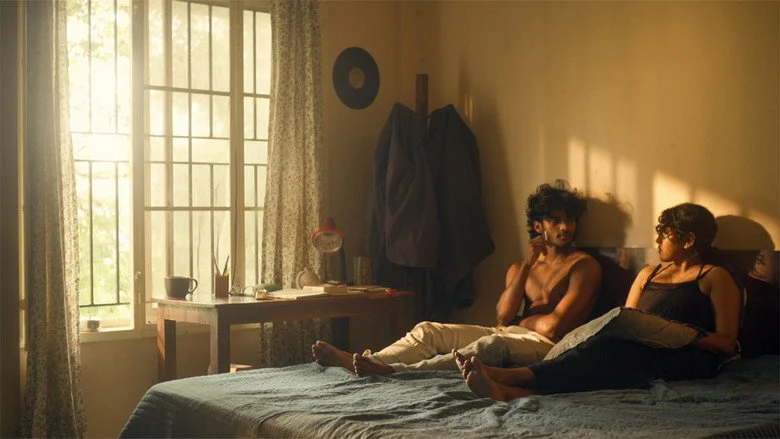
Lead actor Ravi Anand gives the character Mahesh a dry-eyed grief that feels almost clinical. In the scene where he finds her diary, his hands shake slightly, but his face stays neutral, a choice that risks coldness but earns quiet power.
Anand’s best moment arrives in a single long take, where he mutely arranges shoes in a hallway. The repetition is hypnotic, letting the camera and silence do what dialogue cannot.
Varun’s Measured Precision
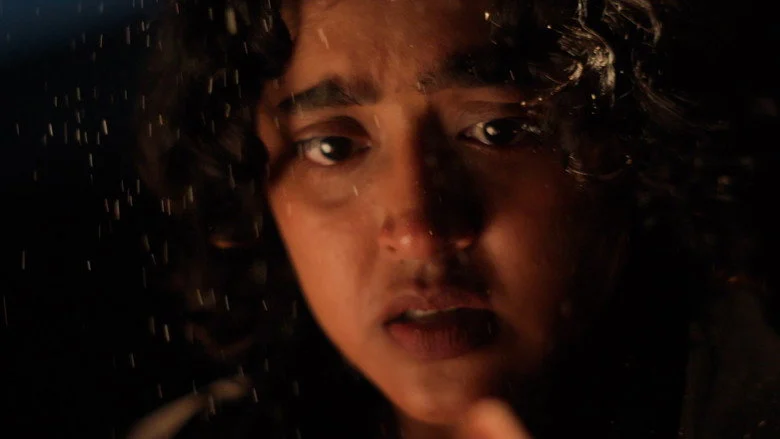
Director Sanjay Varun frames nearly every interior shot with objects in the foreground: a vase, a newspaper, a half-open drawer. The screenplay creates a puzzle-box mystery where each scene withholds slightly more than it reveals, a risky strategy that builds atmosphere but occasionally stalls momentum.
The flaw shows in the second act, where a conversation with a neighbor drags across five minutes without advancing the central question. A tighter edit would have kept the tension coiled.
The Genre-Core Execution
As a psychological drama, the film commits to ambiguity. The sound design, distant train horns, creaking floorboards, works as a second storyteller, never confirming whether the events are real or imagined. The police station scene, where Mahesh files a missing report while the officer yawns, lands as both dark comedy and tragedy.
The film avoids cheap plot twists. Instead, it builds dread through repetition, Mahesh finding the same jasmine garland in different locations, the fridge magnets spelling incomplete words. This is a drama that trusts its audience to notice patterns.
Where it stumbles is in its third-act reveal, which feels both expected and underwritten. The emotional payoff arrives too late, leaving the previous forty minutes feeling like a setup without a punchline.
Watching Alone With Loss
For those who prefer clarity in thriller-dramas, The Flower She Left Me will frustrate. The film asks patience for ambiguity, rewarding only viewers willing to meet it halfway, its strength is also its limitation.
For cinephiles who admire structural craft over neat conclusions, this is a rewarding, if uneven, watch.
For more films like this, browse our collection of Malayalam Drama reviews.
Natasha’s Quiet Anchor
Supporting actress Neha Natasha plays Meera, the friend who knows too much. Her single scene with Mahesh in a café, where she says nothing, just slides a key across the table, carries more weight than pages of exposition. Her casting signals a film invested in subtext over spectacle.
Vikram Rao, as the cynical colleague, delivers one line about forgetting being a form of mercy that stays with you long after the credits.
Audience Reception and Ambiguity
The film has divided early audiences. Some praise its refusal to explain, while others dismiss it as pretentious. The critical consensus sits at a respectful 3.2/5 across early reviews, with Film Companion calling it “a meticulously designed puzzle that may lack emotional oxygen.” The Indian Express gave it 3.5/5, noting the director’s “stubborn commitment to mood over narrative.”
Is the film worth your time? Yes, if you are willing to sit with discomfort. Watch it on a quiet night on a large screen, where the sound design and framing can do their work. The film captures the shape of grief better than it explains it.
The Flower She Left Me is a watch for patient cinephiles, earning a careful 3 out of 5 for its craft even as its heart stays half-hidden.
This shares a director’s love for slow-burn emotional beats with Lakshmikanthan Kolai review.
Its structural patience echoes the offbeat rhythms of Bhaskara Bharanam verdict.