The film opens on a transaction. A hand slides cash across a counter, a door closes, and we are inside a world where warmth has a price tag and a return policy. It is a striking image to build a movie around, and for roughly twenty minutes, the film believes in it completely.
The central figure, a man whose loneliness has calcified into routine, purchases companionship the way others buy groceries. The screenplay, however, never lets us feel the weight of that choice. We watch him pay. We watch him sit. We watch him leave. The camera observes, but it does not interrogate.
This is the film’s foundational problem: it stages the premise of commodified intimacy without ever dramatizing the cost of it. The loneliness is stated, not embodied. The transactions accumulate, but the character does not change.
When the Screenplay Refuses to Ask the Hard Question
By the second act, the film has settled into a rhythm of repetition. The protagonist returns to the café, encounters a new companion, and retreats into his apartment. Each cycle is shot with the same muted palette, the same static framing, the same absence of escalation.
There is a scene roughly midway through where a female companion breaks protocol and asks him a personal question. For a moment, the film threatens to become interesting. Then the moment passes, the question goes unanswered, and we are back to the transactional loop.
This refusal to escalate is not restraint. It is evasion. The screenplay mistakes withholding information for generating mystery, and the result is a second act that feels less like tension building and more like a film afraid of its own thesis.
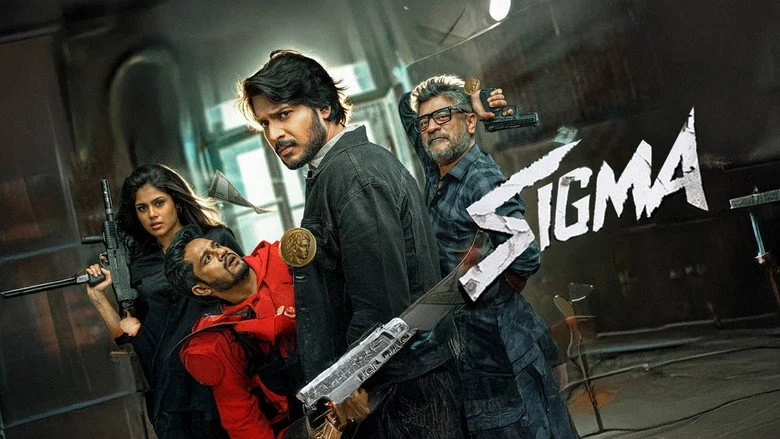
Where a more disciplined filmmaker might have tightened the spatial geometry around the protagonist’s isolation, as demonstrated in Toxic, where excess becomes the subject rather than the flaw, here the camera stays neutral to a fault.
The Performances Are Buried Under a Blanket of Directorial Caution
The lead actor has a stillness that should be devastating. In close-up, his face registers the precise moment when a purchased embrace stops feeling like comfort and starts feeling like humiliation. It is a flicker, a tightening around the jaw, and then it is gone.
But the film does not trust that flicker. It cuts away too quickly, as if afraid the audience might actually sit with the discomfort. The supporting performers, particularly the women who cycle through the café, are given no interiority beyond their function.
One companion, in a late scene, delivers a monologue about her own loneliness with a raw, unvarnished directness that briefly cracks the film open. It is the only moment where the screenplay allows a character to speak without hedging. The scene ends, and the film retreats.
That retreat is the film’s signature move. It gestures toward emotional depth, then withdraws before the gesture can land. The restraint that worked in Selvi, where silence became a weapon of tension, here becomes a crutch.
Directional Pacing That Mistakes Slowness for Significance
The film’s visual grammar is consistent to the point of monotony. The café is shot in flat, even light. The apartment is shot in shadow. The city is shot through rain-streaked windows. These are not choices; they are defaults.
There is no score to speak of, only ambient sound, the hum of fluorescent lights, the clink of cups, the distant traffic. This could be a deliberate sonic strategy, but without variation, it flattens every scene into the same emotional register.
The editing, too, refuses to modulate. Scenes end abruptly, without lingering on the aftermath of a moment. The result is a film that feels simultaneously too long and too short, too long because nothing accumulates, too short because nothing resolves.
This is the opposite of the kinetic, over-determined storytelling that sank Hi, where the film’s eagerness to say everything left no room for silence. Here, the silence is everywhere, but it says nothing.
A Final Act That Resolves Nothing and Asks Us to Call It Ambiguity
The climax arrives without fanfare. The protagonist sits alone in his apartment. The camera holds on his face for a long, unbroken take. He does not cry. He does not smile. He simply exists in the space he has paid to fill.
It is a moment that could have been devastating. Instead, it feels like the film ran out of ideas and decided to stop. The ambiguity is not earned; it is a failure of dramatic imagination dressed up as artistic restraint.
The final shot, a slow zoom out from the café’s neon sign, suggests a cycle continuing. But the film has not given us enough to care whether the cycle breaks or not. The protagonist remains a cipher, and the film mistakes that emptiness for profundity.
In a landscape where contemporary Tamil dramas are increasingly willing to sit with uncomfortable truths, Cuddle Café feels like a step backward, a film that wants to be about loneliness but is afraid to be lonely with its audience.
The Verdict: A Film That Confuses Silence with Substance
Cuddle Café is not a failure of ambition. It is a failure of execution. The premise is strong, the lead performance has moments of genuine vulnerability, and the film’s refusal to offer easy catharsis is, in theory, admirable.
But theory is not cinema. The film’s relentless neutrality, its refusal to escalate, to confront, to risk, leaves the audience at a distance that never closes. We watch loneliness. We do not feel it.
For viewers who value mood over momentum, there may be something here. For everyone else, the film’s 90-odd minutes will feel like a transaction that never delivers on its promise.
Rating: 2.5 / 5
In the end, Cuddle Café is a film about the impossibility of buying warmth that never generates any of its own.