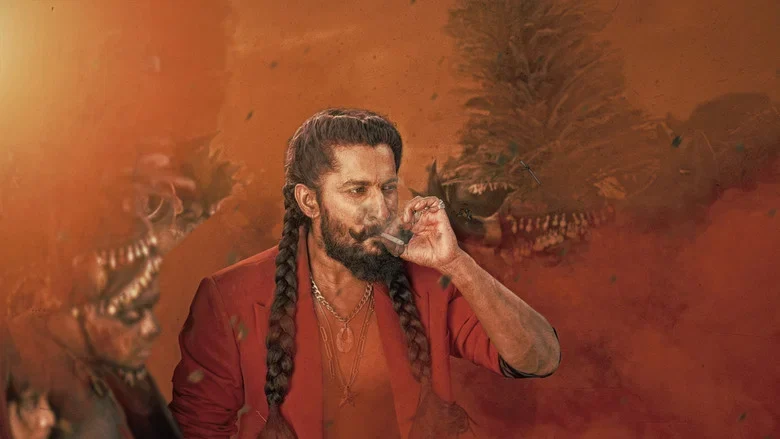
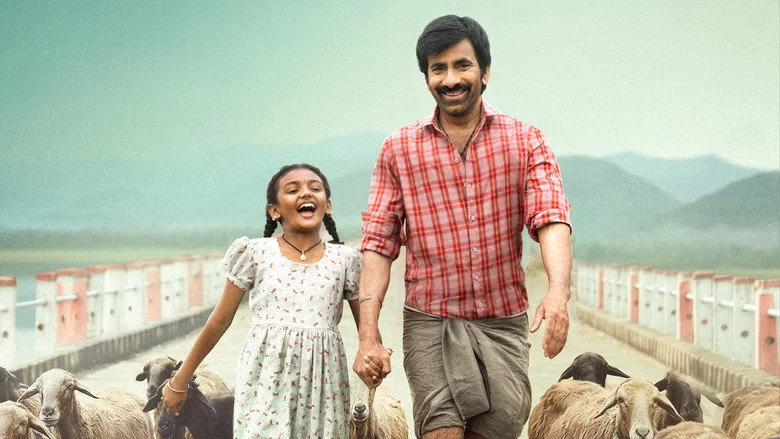
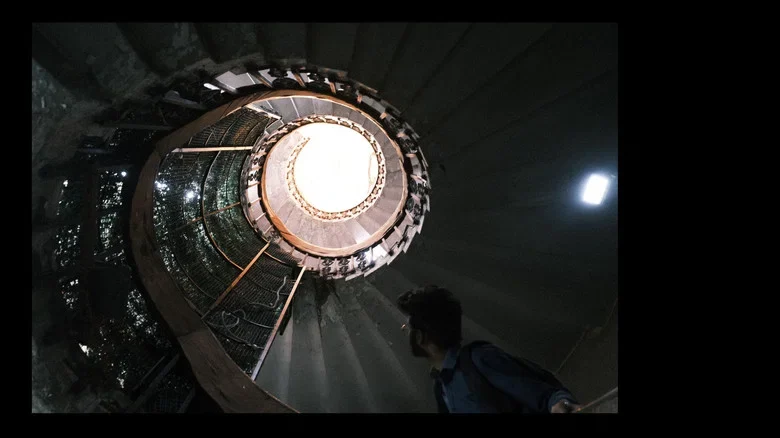
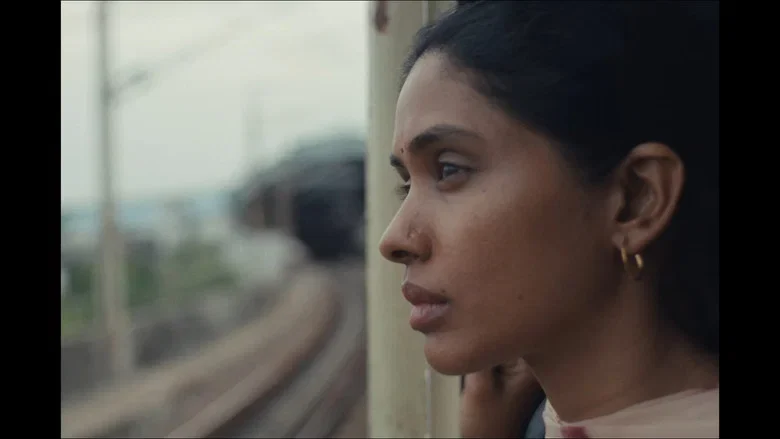
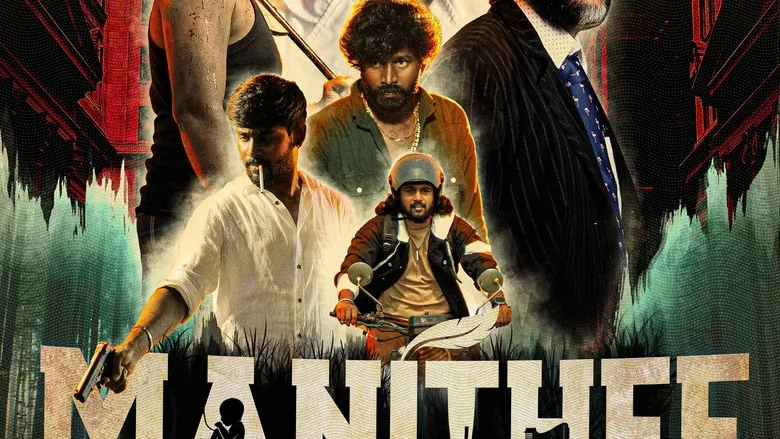
Two dreamers walk into a forest and the film never quite lets them out. MJ Nitharsan’s Manithee: The Fire Bird arrives with a premise that sounds less like a Tamil fantasy and more like a thesis on creative obsession: a female physicist chasing a breakthrough, a village filmmaker chasing a vision, both swallowed whole by an unexplained woodland. At ninety-eight minutes, it is lean to the point of starvation, and that hunger is both its signature and its wound.
This is a production that wants to be about ambition while being throttled by the mechanics of survival. The result is a strange, uneven, occasionally arresting piece of genre filmmaking that believes in its own mystery more than it knows how to resolve it.
A Physicist And A Filmmaker Walk Into A Forest, And The Film Loses Its Compass
The opening stretch does something genuinely unusual for a regional fantasy: it refuses to privilege one dream over the other. The physicist’s laboratory ambition and the filmmaker’s village-born hunger are staged as parallel fevers, neither one granted moral superiority. Nitharsan lets their paths converge into the forest without ceremony, as if the woods were simply the next logical room in a house they both happened to be building.
That confidence is admirable. It is also premature. The film treats the forest as self-evidently mysterious, but mystery is not a location, it is a rhythm, a withholding, a discipline. Here, the trees arrive before the dread does. We are told the environment is hostile long before we feel it, and the screenplay leans on the audience’s genre literacy rather than earning its own atmosphere. The dual-protagonist structure, meanwhile, splits focus at exactly the moment the narrative needs a single, tightening spine.
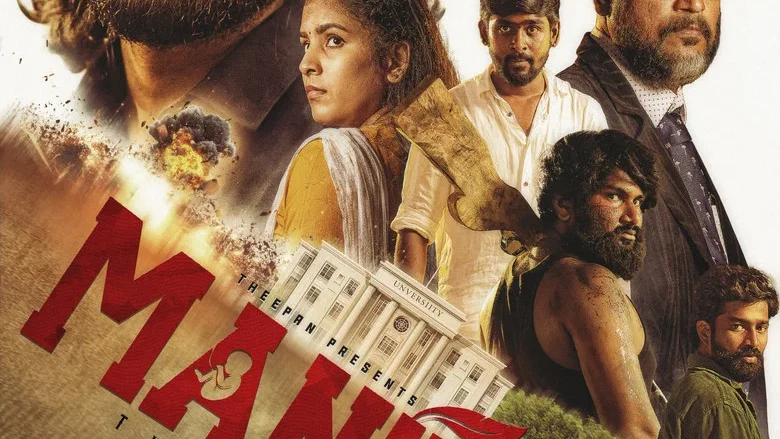
The Trap That Never Tightens: Why The Middle Act Loses Pressure
Trapped-in-a-forest thrillers live or die on escalation. Each obstacle must cost something the protagonist cannot afford to lose, and each escape must narrow the next one. Manithee understands this intellectually, the physicist and the filmmaker are repeatedly tested, but the tests feel sequential rather than cumulative. One problem resolves, another arrives, and the stakes reset instead of compounding. By the midpoint, the forest has become a revolving door of inconvenience rather than a closing fist.
Compare this to the discipline on display in Toxic, where excess at least generates forward momentum even when it overshoots. Nitharsan’s film has the opposite ailment: it is too polite to its own premise, too reluctant to let its characters truly suffer. The scientific breakthrough that should anchor the physicist’s desperation is gestured at rather than dramatized, and the filmmaker’s artistic dream remains an abstraction we are asked to care about rather than a wound we are made to feel.
Performances Held At Arm’s Length By A Script That Won’t Commit
The cast is working without a net. Vithu Vanni’s Ranga carries the weight of the film’s more physical passages with a stillness that reads as exhaustion rather than interiority, a choice that could be devastating if the screenplay gave him a single moment of unguarded want. Instead, he is asked to react to the forest rather than to reveal himself against it. Rathitharan Kathiresu’s Balraj has a similarly guarded register, and the two share a screen language of glances that never quite becomes a conversation.
Where the film does find a flicker of life is in its quieter, less plot-driven beats, the kind of ambiguous character work that Cuddle Café attempted with more self-consciousness. Here, at least, the silences feel earned by the setting rather than imposed by a director’s thesis. Maithily Ravivarman’s Thuvaraka, in her limited screen time, brings a watchfulness that suggests a richer film hiding inside this one, a film that trusted its actors to hold the frame without explanation.
The Forest As Character, And The Limits Of Atmospheric Suggestion
Visually, the film has a clear idea: conceal, restrict, disorient. The camera stays low and close during the entrapment sequences, favoring foliage that blocks sightlines and compositions that keep the horizon out of reach. It is a coherent strategy, and in the first act it works, the audience feels the walls of the world closing in. But strategy is not the same as escalation. By the third act, the same visual grammar repeats without variation, and what began as suffocating becomes merely repetitive.
The sound design follows a similar arc. Early scenes use near-silence to manufacture pressure, letting ambient forest noise do the work of a score. Later, when the film needs its biggest emotional lift, it reaches for instrumentation that feels imported from a different, more conventional movie. The genre peers this film invites comparison with, including the franchise fatigue on display in Aadu 3, at least commit to a tonal register. Manithee keeps changing its mind about what kind of film it wants to be.
The Uncomfortable Resolution: Dreams Survive, But At What Cost To The Story?
The ending, as the premise promises, allows both protagonists to continue toward their dreams. That is the film’s thesis, stated plainly: persistence outlasts obstruction. But the resolution arrives without the forest ever having been understood, which leaves the audience with a strange aftertaste. Was the woodland a metaphor for creative resistance? A literal threat? A psychological projection? The film declines to choose, and that refusal reads less like ambiguity than like avoidance.
What lingers is not the mystery but the sense of a filmmaker who wanted to say something about ambition and ended up saying something about indecision. The 98-minute runtime, which should have been an asset, becomes evidence of a story that never fully committed to its own stakes. This is a film that gestures toward the kind of patient, character-driven fantasy gaining traction across contemporary Tamil fantasys, but it mistakes atmosphere for architecture.
Rating: 2.5 / 5
There is a real film buried somewhere in Manithee: The Fire Bird, one that trusts its actors, commits to its forest, and lets its dreamers bleed for what they believe in. What we get instead is a beautiful, unfinished sketch of that film, and the fire bird never quite takes flight.