The most telling detail in Kitti isn’t a jump scare or a twist. It’s the certificate: UA16+. Nedumaran Mohandoss’s psychological thriller isn’t interested in the visceral carnage that usually earns that rating in Tamil cinema. It’s chasing something quieter and, frankly, harder to pull off, the slow erosion of a man’s certainty. Whether the film fully earns that ambition is another question, but the intent is unmistakable from the first frame.
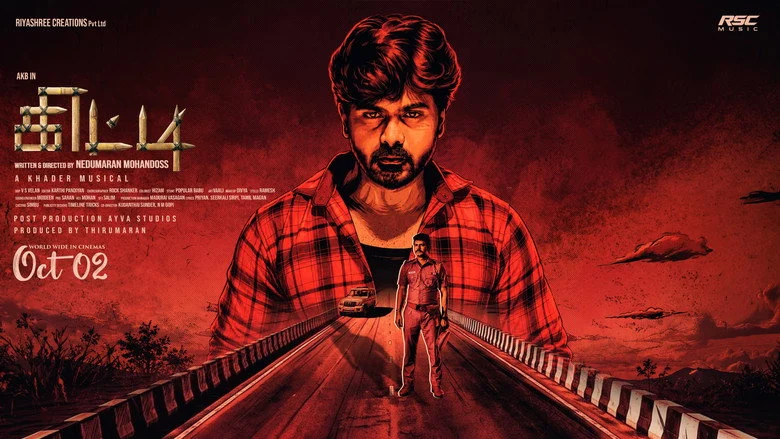
The Premise: An Ordinary Life, Systematically Dismantled
Ashok Kumar Balakrishnan plays Vijay, a man whose life is disrupted by what the synopsis carefully calls “an unexpected incident.” That vagueness is deliberate, the film’s entire architecture depends on the audience sharing Vijay’s disorientation. The first act establishes normalcy only to yank it away, and the second act pushes him deeper into hidden truths where reality and illusion begin to blur. It’s a structure that lives or dies on execution, because the premise itself, ordinary man, destabilized reality, buried secrets, is as old as the genre.
What separates a genuinely unsettling psychological thriller from a forgettable one is specificity. The best entries in this space ground their unreality in concrete, tactile details, a recurring sound, a misplaced object, a face that doesn’t quite belong. Kitti‘s synopsis emphasizes perception and fear, but without verified scene-level breakdowns from critics or audiences, it’s difficult to confirm whether the film commits to that granular craft or settles for atmospheric vagueness. The available material suggests the latter is a risk.
Ashok Kumar Balakrishnan Carries the Weight
Vijay is a role that demands an actor who can register confusion without mugging, fear without theatricality. Ashok Kumar Balakrishnan, working with a cast that includes Thirumaran Mohandoss as Rajapandiyan, Arjoona Duraisamy as Raja, and veteran Y.G. Mahendran as a judge, is the film’s anchor. The supporting ensemble, Nisha Ishmeet, Sangavi Dharmaraj, Simu Advani, fills out a world that the protagonist can no longer trust.
Here’s the problem: without verified performance analysis from post-release coverage, we can only assess the architecture the film builds around its lead. A psychological thriller lives and dies on whether the actor’s internal collapse feels earned. If the screenplay leans too heavily on external incident rather than internal deterioration, even a committed performance can’t bridge the gap. The genre demands that the audience feel the ground shifting under Vijay’s feet, not just observe it.
For a contrasting example of how star presence alone can’t rescue a structurally wobbly premise, our review of Anbil Avan review makes for instructive reading. That film had a similar problem: a lead doing everything asked of him while the script around him refused to cohere.
The Craft Team and the Genre’s Demands
Cinematographer Venkatachalam Singaravelan, composer Sheik Khader, and editor Karthi Pandiyan form the technical backbone. In a psychological thriller, the editor is arguably the most critical collaborator, pacing determines whether ambiguity feels deliberate or merely confused. A film that blurs reality and illusion needs a rhythm that disorients without alienating, and a two-hour runtime leaves little margin for indulgence.
The genre’s best examples understand that horror and suspense are built in the edit, not the script. A held shot, a cut that arrives half a beat too late, a sound cue that doesn’t match the image, these are the tools that make an audience question what they’re seeing. Whether Kitti wields them with precision or simply gestures at unease is, based on available information, an open question.
It’s worth noting that Tamil cinema has been producing increasingly ambitious psychological thrillers in recent years, though not all of them stick the landing. Our take on Sigma verdict explored a similar tension between genre ambition and executional caution, a caution that can be fatal when the entire premise rests on destabilizing the viewer.
The Verdict: Ambition Without Confirmation
Kitti arrives with a clear thesis: reality is fragile, fear distorts perception, and the human mind is its own worst enemy. That’s fertile ground. But the film’s ultimate success depends on whether Nedumaran Mohandoss and his team can translate that thesis into concrete, memorable moments, the kind that linger because they were staged with precision, not just implied through atmosphere.
Without verified critical consensus, audience scores, or box office data at the time of writing, the honest assessment is that Kitti remains an intriguing proposition rather than a confirmed success. The cast is capable, the premise is sound, and the genre is one that rewards intelligence. But psychological thrillers are unforgiving, they require a level of craft discipline that can’t be faked. If the film trusts its atmosphere and its lead to carry the weight, it has a chance. If it hedges, it’ll join the long list of Tamil thrillers that promised unsettling ambiguity and delivered only confusion.
Who should watch: Devoted fans of slow-burn psychological thrillers who value mood over momentum, and viewers interested in Ashok Kumar Balakrishnan’s dramatic range.
Who should skip: Anyone seeking clear resolutions, family-friendly entertainment, or the propulsive energy of a mainstream Tamil actioner.
Rating: 2.5/5, A film with the right instincts and the wrong amount of verified evidence to call it a triumph. Proceed with measured expectations.