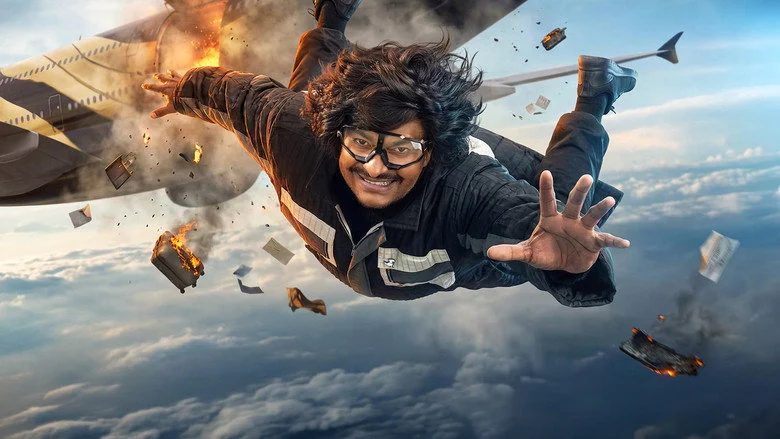
In 2040 Chennai, an algorithm called the Love Insurance Kompany decides who you love, how you love, and for how long. Vasu, a man who goes by “Vibe Vasu”, decides that’s not good enough, and what unfolds is Vignesh Shivan’s most ambitious gamble yet: a sci-fi romantic comedy that dares to ask whether a human heart can out-perform a machine’s code.
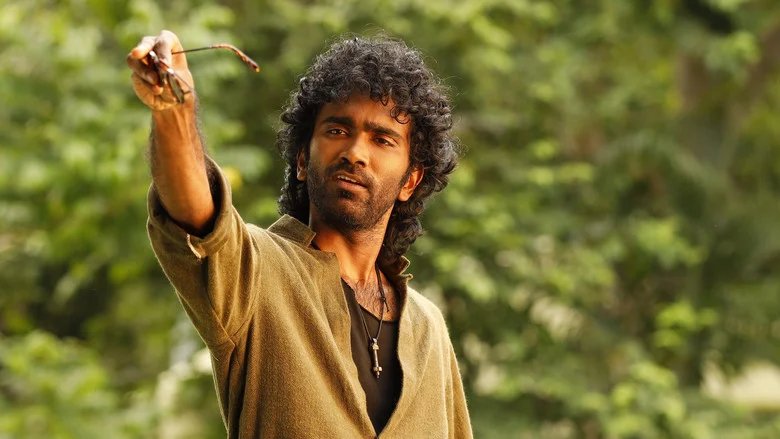
Pradeep Ranganathan Carries the Film’s Entire Emotional Logic on His Shoulders
Pradeep Ranganathan steps into a role that demands charm and conviction in equal measure. His Vasu isn’t simply a romantic rebel, he’s a man arguing against an entire infrastructure of curated feelings. The line “What does LIK even know?” reportedly lands as both a punchline and a manifesto, which tells you a great deal about how Ranganathan is being positioned here.
This is a significant upgrade from his earlier outings in scale and concept. Whether he has the emotional range to make the film’s climactic declaration, “You may succeed in eliminating me physically, but you can’t take me out of Dheema’s heart”, land with genuine weight rather than melodrama, is the film’s central performance risk.
Vignesh Shivan’s Screenplay Trusts the Concept but the Revival History Raises Questions
Shivan writes and directs, which means every structural choice belongs entirely to him, the credit and the liability. His strength has always been wrapping whimsy around emotional sincerity, and a 2040 matchmaking dystopia is precisely the kind of playground where that instinct could flourish.
The flaw, arguably, is baked into the production history itself. This film was conceived in 2019 with Sivakarthikeyan, shelved over budget concerns, and revived in 2023 with a different lead. Projects that survive such long gestation periods often carry tonal inconsistencies, ideas that were sharp in one era feeling slightly blunted when they finally reach screen.
I find it hard to fully trust a script that spent years in a drawer, no matter how polished the final cut appears. The concept is genuinely fresh for Tamil cinema. Whether Shivan’s execution keeps pace with his ambition is the question April 10th will answer.
For more Tamil romantic and sci-fi films worth your time, browse our full archive of Tamil Sci Fi reviews.
SJ Suryah as Jolly Prabhu Is Either the Film’s Secret Weapon or Its Tonal Wildcard
SJ Suryah playing an antagonist named “Jolly Prabhu” is either the most inspired casting decision Vignesh Shivan has made, or a signal that the film’s tonal register will swing unpredictably. Suryah’s screen presence in villainous roles carries a specific unhinged energy, controlled chaos dressed in a smile. That quality could be exactly what a corporate matchmaking antagonist requires.
Yogi Babu and Seeman appear in supporting capacities. Yogi Babu’s presence almost always signals comic relief, but in a film already playing in comedic territory, the risk is redundancy rather than reinforcement. Seeman’s casting is the more intriguing signal, it suggests at least one scene or subplot with a harder political or ideological edge beneath the rom-com surface.
The Title Controversy Actually Tells You Something About the Film’s Larger Stakes
In July 2024, the film’s original acronym “LIC” had to be abandoned following copyright claims from both S. S. Kumaran and the Life Insurance Corporation of India. The title became “Love Insurance Kompany”, the ‘K’ doing double duty as creative workaround and, perhaps unintentionally, a marker of scrappiness.
It’s a minor footnote, but it reflects something real: this production has had to fight for its identity at multiple stages, from its 2019 shelving under Lyca Productions with Sivakarthikeyan to its 2023 resurrection with an entirely new lead. Films that reach screen after this kind of turbulence either arrive leaner and sharper for the struggle, or visibly patched at the seams.
Anirudh Ravichander voices Bro 9000, an AI character, which is an elegant piece of casting, his sonic identity is so embedded in Tamil pop culture that using his voice to represent algorithmic companionship carries its own layer of commentary. Whether Shivan makes that commentary explicit or leaves it as texture will reveal a great deal about the film’s intellectual ambition.
Films that pair cross-cultural storytelling with romantic stakes in interesting ways deserve closer attention, Made Korea review wrestled with similar questions of identity beneath its lighter surface.
Love Insurance Kompany arrives with a genuinely compelling premise and a cast built for both comedy and conflict. If Vignesh Shivan can sustain the 2040 world-building without letting it collapse into a generic rom-com in the second half, this could be one of the more distinctive Tamil releases of 2026. Watch it in theatres if the sci-fi aesthetic matters to you, this kind of production design rarely translates well to a phone screen.
Love Insurance Kompany is a bold swing at a genre Tamil cinema rarely attempts with this much conceptual seriousness, and on the strength of its premise and casting alone, it earns a cautious 3/5, with the understanding that Vignesh Shivan’s execution history makes optimism feel like a calculated risk rather than a certainty.
Pawan Kalyan’s performance in Ustaad Bhagat verdict raises similar questions about whether star charisma alone can carry a film when its structural blueprint shows visible cracks.