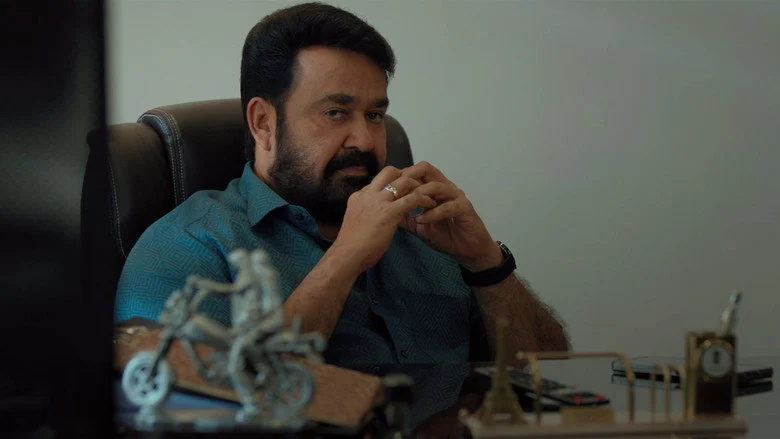
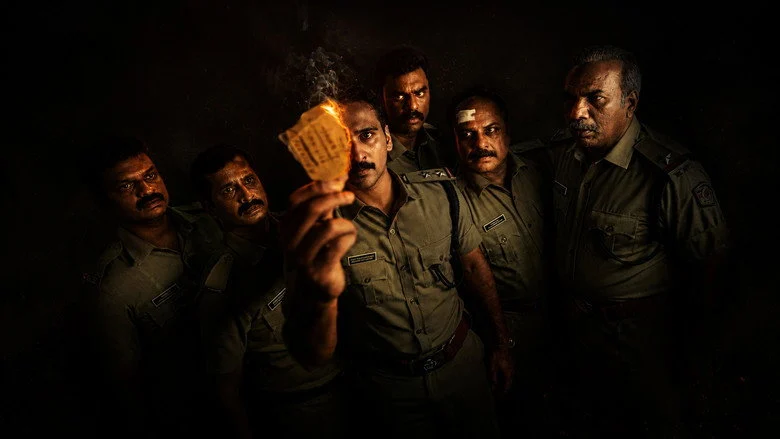
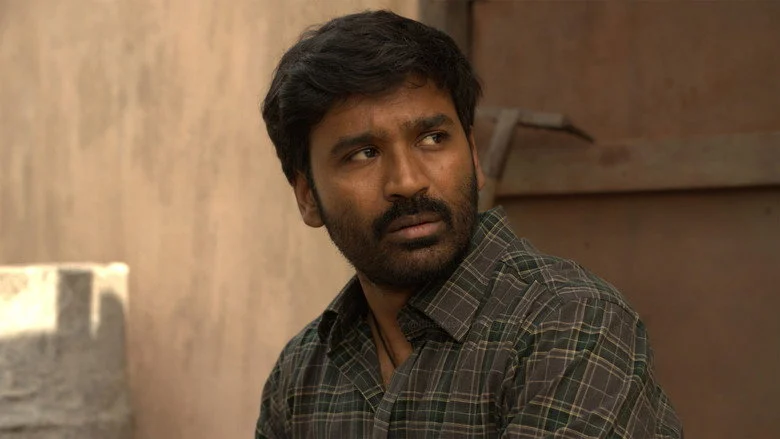
A crime drama titled “Man of Divine Grace” carries an immediate contradiction at its core, and that tension, between human fallibility and aspirational morality, is either the film’s sharpest weapon or its most unresolved burden. Director Dennis Manjunath, working from his own screenplay under Vyom Entertainments, stakes a claim to serious Tamil cinema with a cast that includes Mime Gopi and Y.G. Mahendran, names that signal intent, even when execution remains an open question.

K. Selvaraghavan Carries the Film on Unfamiliar Shoulders
K. Selvaraghavan steps into the lead with the weight of a production that leans entirely on his presence. He is not a conventional face for marquee Tamil drama, and that unconventionality is both the risk and the intrigue here.
Kushee Ravi occupies the other lead position, and her casting alongside Selvaraghavan suggests the film is building a dynamic rooted in contrast rather than comfort, perhaps moral, perhaps emotional. Without that chemistry landing, the film has no anchor at all.
Dennis Manjunath Writes and Directs, Which Means the Flaws Are Fully His
When a director writes his own material, there is no external voice to challenge the blind spots. Manjunath’s dual role here is admirable in its ambition but risky in its insularity. A crime drama demands that its moral architecture hold under pressure.
The strength of self-written crime narratives is specificity, and there is evidence in the casting choices that Manjunath has a precise vision of the world he is building. Y.G. Mahendran and Mime Gopi are not decorative hires.
The structural risk, however, is that without a credited co-writer to push back, the screenplay can drift into the director’s comfort zones. I find this pattern recurring across low-to-mid budget Tamil crime dramas, where thematic ambition outpaces dramatic discipline in the second half.
Crime Drama in Tamil Cinema Demands More Than Moral Posturing
The genre has a specific grammar in Tamil, it lives and dies on the tension between institutional corruption and individual conscience. Manjunath’s title alone suggests he is engaging that tradition directly. Whether the film earns its moral weight or merely gestures toward it is the central question.
Cinematographer K. Ravi Varma’s visual language will determine how much the crime world feels lived-in versus staged. Crime drama in this register needs texture, faces under streetlight, spaces that feel economically specific. The craft promise is there on paper.
Editor Deepak S. Dwaraknath’s rhythm will be the invisible hand guiding whether tension accumulates or dissipates. In a genre where pacing can mask or expose narrative thinness, the edit is not a supporting decision, it is a structural one. Composer A.K. Prriyan’s score sits alongside these choices, and in crime drama, restraint is almost always the correct instinct.
For readers who want more analytical takes on Tamil crime and drama releases, Tamil Drama reviews covering the current wave are worth exploring in full.
Mime Gopi and Y.G. Mahendran Signal a Film Betting on Character Weight
Mime Gopi’s presence in any Tamil film is a deliberate creative statement. He operates in a register of quiet, coiled intensity that elevates material around him, his casting here suggests Manjunath needs a supporting performance that can carry moral complexity without dialogue-heavy exposition.
Y.G. Mahendran brings decades of character-actor credibility. His appearance signals the film is not chasing youth demographics, it is building toward something with earned gravity. Sathish and Kousalya round out the ensemble, with Sathish’s comedic history suggesting the film may attempt tonal range alongside its crime scaffolding.
No Controversy, But the Silence Around This Film Is Its Own Story
Manithan Deivamagalam arrives without reported controversy, censorship friction, or political noise. A 13+ certificate suggests the violence and moral darkness have been calibrated, or that the film is less confrontational than its genre label implies.
The absence of pre-release conversation is, frankly, a commercial risk for a non-star-driven drama. Tamil crime films without a recognisable headline name live or die on word-of-mouth from the first weekend. Vyom Entertainments is betting on quality sustaining that conversation. Whether the film delivers that quality is what the next few days of audience response will determine.
If you’re drawn to films where ensemble casts carry moral ambiguity in crime-adjacent dramas, the Bharathanatyam 2 review explores a similar thematic register with notable supporting-cast dynamics worth reading alongside this one.
Manithan Deivamagalam is the kind of film that deserves a theatre audience capable of sitting with ambiguity, if Manjunath has delivered on the promise of his casting, a single screen Friday evening show is the correct way to experience it. If the screenplay buckles under its own moral ambition, no format saves it. Approach with calibrated expectation rather than enthusiasm.
Manithan Deivamagalam earns a provisional 2.5 out of 5, a film with genuine craft intentions across its ensemble and technical team that cannot yet be fully judged, but whose ambition at least places it above the noise of routine Tamil drama releases this season.
TN 2026’s handling of TN 2026 verdict makes for a sharp companion read to Manjunath’s own morality-under-pressure framework here.