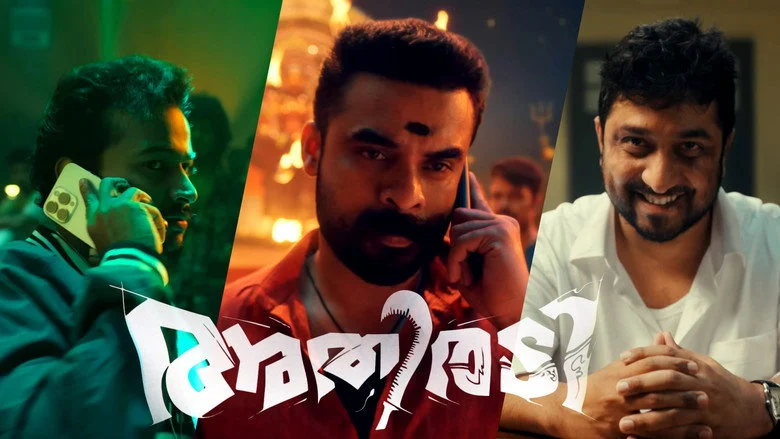
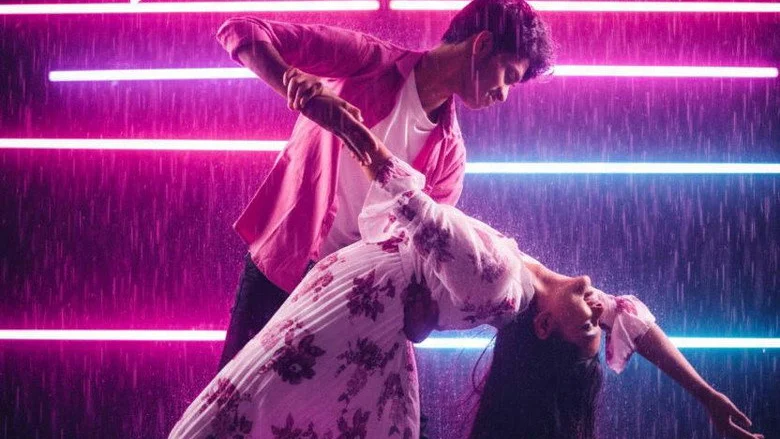
A Vishu release carrying the weight of a beloved comedy drama predecessor, Mohiniyattam arrives with an expanded cast, a reportedly darker narrative register, and the kind of sequel pressure that either sharpens a filmmaker or exposes him. Krishnadas Murali’s return to this universe signals ambition, the question is whether the craft keeps pace with the intent.
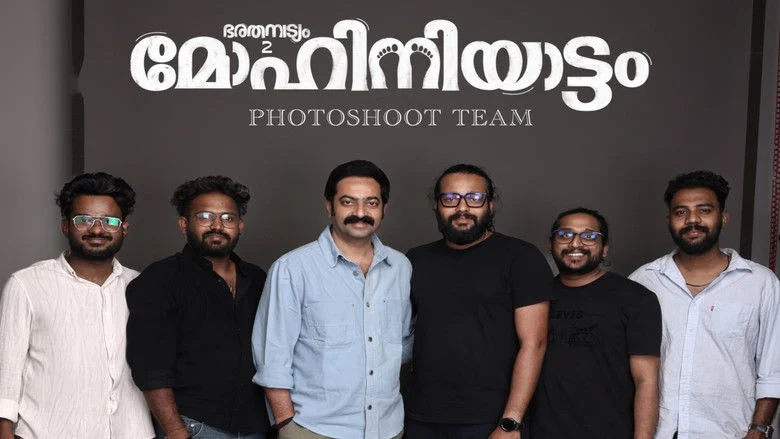
Saiju Kurup Holds the Thread Back Into Familiar Territory
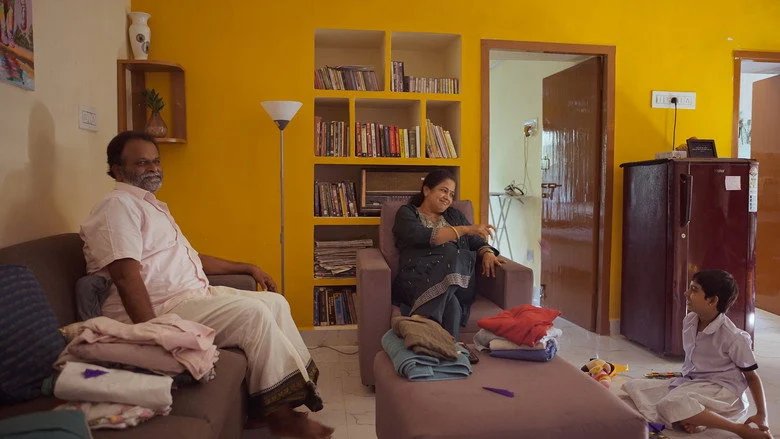
Saiju Kurup’s return as the anchor of this world is the clearest signal of continuity Murali offers his audience. The original Bharathanatyam built considerable goodwill on Kurup’s particular brand of warm, grounded comic timing. A sequel leaning darker risks stranding that register entirely. Whether Kurup recalibrates or simply gets swallowed by a more eventful screenplay is the central performance question the film poses.
Krishnadas Murali Attempts a Tonal Pivot, With Mixed Results
Murali co-writes with Vishnu R. Pradeep, and the decision to push toward a darker, more eventful narrative is a structurally sound sequel instinct. The original’s lighter touch gave this world its identity. Complicating that identity is necessary. The risk, however, is that the screenplay’s expanded ambition occasionally outruns its architecture.
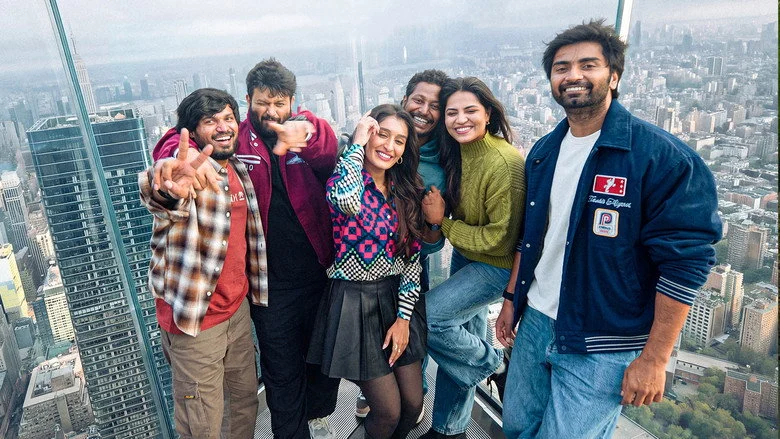
The addition of Vinay Forrt, Suraj Venjaramoodu, and Jagadish in a single ensemble suggests Murali is betting on performer magnetism to carry scenes where plotting may thin out. That is a legitimate directorial strategy in Malayalam comedy drama. It is also, frankly, a crutch that the best sequels learn to resist.
Electronic Kili’s score replaces Samuel Aby’s original compositions, and that tonal substitution is itself a declaration of intent, a more kinetic, contemporary soundscape to match the darker narrative. Whether this registers as evolution or dissonance depends entirely on how well Murali integrates it into the film’s comic-dramatic rhythm.
Vinay Forrt and Suraj Venjaramoodu Command Attention the Moment They Enter
I find it genuinely difficult to think of a Malayalam ensemble that packs this kind of second-wave casting without raising expectations it then has to manage. Vinay Forrt brings a coiled, unpredictable quality that sits interestingly against comedy drama’s softer demands. His presence alone shifts the film’s tonal weight.
Suraj Venjaramoodu’s inclusion is the casting choice that most directly signals the sequel’s darker ambitions. He is an actor who can navigate grief and absurdity within the same scene, a skill a more eventful narrative genuinely needs. Jagadish, a veteran of Malayalam comedy, provides institutional memory; his scenes likely function as tonal anchors when newer cast energies threaten to pull the film sideways.
For more Malayalam drama reviews exploring ensemble craft and tonal risk, Malayalam Not Specified reviews on this platform cover the full spectrum.
Kalaranjini and the Returning Cast Carry the Sequel’s Emotional Continuity
Kalaranjini and Sreeja Ravi returning alongside the original cast is a craft decision as much as a commercial one. Sequels that retain their core ensemble signal trust in the world they built. It also places pressure on those returning performers to register differently, growth, complication, consequence. The twins Jinil Rex and Jivin Rex returning suggests the film honours its original family-drama scaffolding even as the tone darkens around it.
No Controversy, But the Sequel Itself Is a Commercial Argument Worth Watching
Mohiniyattam carries no reported controversy, censorship friction, or casting conflict. Its boldest argument is commercial and cinematic: that Bharathanatyam’s 2024 audience goodwill can be extended, deepened, and made more complex. The Vishu release window is a calculated choice, a festive audience open to familiar faces but also hungry for something slightly more demanding than comfort viewing.
Rapper Baby Jean’s addition alongside Nisthar Sait and Santhosh K. Nayar reads as Murali deliberately broadening the film’s cultural range. Whether these additions enrich the ensemble’s texture or fragment it is the structural gamble the screenplay has to resolve.
If this blend of comic ensemble craft and tonal risk interests you, the TN 2026 review explores similar ambitions in a different genre register.
Mohiniyattam is best experienced theatrically, where ensemble comedy drama, particularly in its Malayalam form, registers most fully in the collective rhythm of a live audience. If you loved Bharathanatyam, the sequel’s expanded cast and darker tone will feel like a genuine creative stretch rather than a lazy retread. If you arrive without that prior investment, the film may feel like it’s asking you to catch up on relationships it hasn’t earned with you yet.
Mohiniyattam is a worthwhile theatrical watch for fans of the original and Malayalam ensemble comedy, though its tonal ambition makes it an uneven but earnest effort, call it a solid 2.75 out of 5, carried largely by a cast that repeatedly outpaces its screenplay.
Love Insurance Kompany takes a similarly calculated risk with its ensemble register, the Love Insurance verdict review unpacks how that gamble plays out.