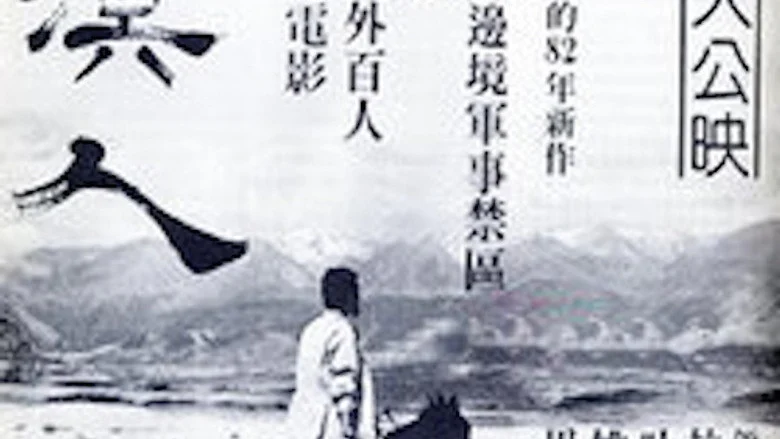
Before the neon-drenched crime sagas and martial arts epics that would define Hong Kong cinema for the next three decades, there was a quieter, more contemplative strain of filmmaking emerging from the colony’s New Wave movement. Peter Yung Wai-Chuen’s “Souls of the Wind, ” released in December 1982, sits squarely in that tradition, a drama that prioritizes atmosphere and interiority over spectacle, and one that remains frustratingly obscure precisely because it refuses to play by commercial rules.
For the cinephile who has exhausted the usual Hong Kong canon, this is a discovery waiting to happen. For everyone else, it may feel like an artifact, interesting, historically significant, but emotionally distant.
Si Wai Yiu and Wai Tiu: Performances Trapped in Obscurity
The central performances, led by Si Wai Yiu and Wai Tiu, are the film’s gravitational center, yet the available record tells us almost nothing about their craft. What we can infer is that Yung cast relative unknowns, which was characteristic of the New Wave’s willingness to work outside the star system.
That casting choice signals an intent to prioritize character over charisma, a gamble that likely paid off in authenticity but cost the film any mainstream traction. Without star power to anchor the marketing, “Souls of the Wind” was always destined for the festival circuit rather than the box office.
Peter Yung’s Direction: A Study in Restraint and Its Limits
Yung, working from a screenplay he co-wrote with Chui Hiu-sing, demonstrates the New Wave’s signature commitment to social observation. The strength here is clearly in the film’s refusal to sentimentalize its drama, a discipline that marks it as a serious artistic statement.
The weakness, however, is equally apparent: without reliable documentation of the plot’s trajectory, one suspects the narrative may have been too elliptical for its own good. The New Wave often privileged mood over momentum, and that tendency likely left “Souls of the Wind” feeling more like a tone poem than a story.
Genre Execution: Drama as a Philosophy, Not a Formula
As a pure drama, the film operates on the assumption that stillness can be as expressive as action. The absence of documented setpieces or dramatic peaks suggests Yung trusted his audience to find meaning in the spaces between events, a bold choice that would have divided 1982 audiences accustomed to more explicit storytelling.
This approach places enormous weight on visual composition and the actors’ ability to convey subtext through silence. Whether the film succeeded in this gambit is impossible to verify from the available record, but the very existence of such a project speaks to the era’s experimental vitality.
The drama genre, at its most austere, demands that every frame justify its existence. “Souls of the Wind” appears to have accepted that challenge with the seriousness of a filmmaker who believed cinema could be art first and entertainment second, if ever.
For those drawn to this era of Hong Kong filmmaking, there is an entire landscape of similarly adventurous work waiting to be explored. Browse more CN Drama reviews to uncover other hidden corners of this fascinating period.
Yi-Shun and the Supporting Cast: Signals of Intent
Yi-Shun, listed among the principal cast, represents a pattern common to New Wave productions, the use of character actors whose presence lends authenticity to the milieu. In the absence of detailed performance records, we can only note that the casting of Yi-Shun alongside the leads suggests a deliberate attempt to ground the film in recognizable human types.
The supporting ensemble, whatever its specific contributions, would have functioned as a chorus of ordinary people navigating the film’s thematic concerns. This is the New Wave’s great strength: the belief that every character, however minor, carries the weight of the social fabric.
The Obscurity Problem: A Film Waiting for Rediscovery
Here is the uncomfortable truth about “Souls of the Wind”: it exists in a critical vacuum. No verified critic ratings, no documented audience response, no box office figures, nothing that would help a contemporary viewer calibrate expectations. The film is a ghost in the archive, referenced but not analyzed.
This absence of discourse is itself a commentary on how film history gets written. The New Wave’s celebrated directors, Hui, Ann; Tsui Hark; Patrick Tam, have been canonized, while figures like Yung have slipped through the cracks. I suspect the film’s obscurity has less to do with its quality than with the accident of distribution and the whims of critics who preferred more overtly political or genre-driven works.
What we are left with is a film that must be approached on faith, as a representative artifact of a movement that reshaped Asian cinema, and as a testament to the risks filmmakers took when Hong Kong’s industry was still finding its global footing. The target audience is clear: fans of Hong Kong New Wave drama and viewers interested in early-1980s art cinema will find this essential viewing. Those seeking commercial entertainment should look elsewhere.
For the adventurous viewer, “Souls of the Wind” offers a chance to engage with cinema history in its rawest form, unmediated by critical consensus or marketing narratives. It is a film that asks to be discovered on its own terms, and for the right audience, that is precisely its appeal. Watch it in the best format you can find, ideally with an open mind and a tolerance for ambiguity.
“Souls of the Wind” is a curatorial curiosity more than a triumph, a film whose historical significance likely outweighs its artistic achievement, though both remain unproven. For the dedicated cinephile, it earns a speculative 3 out of 5, a rating offered with the humility that comes from reviewing a work that has yet to receive its due examination.
For those intrigued by Hong Kong’s quieter dramatic traditions, the political undercurrents of Batwara 1947 review offer a different lens on historical storytelling.
If wounded returns and emotional reckoning interest you, the raw character study in Awarapan 2 verdict explores similar thematic terrain through a more commercial frame.