The village patriarch Parvathalu does not shout when his household collapses into embarrassment; he simply tightens his jaw and scans the room for who witnessed it. That single physical reflex, the anxious inventory of onlookers, is the engine Badrappa Gajula builds his entire film around.
A Wedding Proposal As A Weapon Of Patriarchal Control
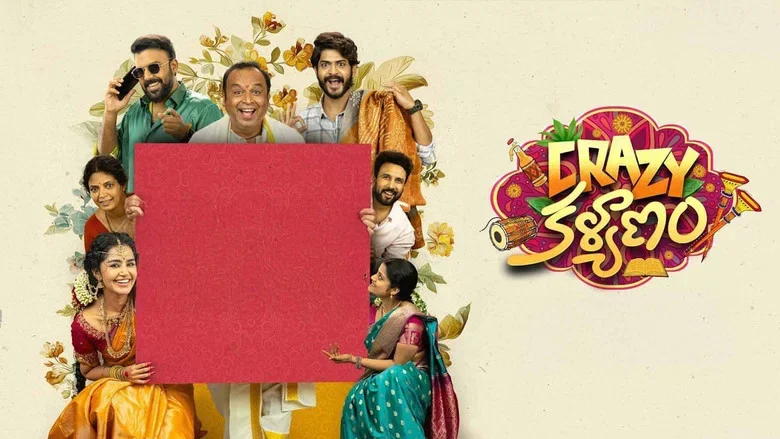
Gajula opens in rural Telangana with a father who measures his worth in public regard, and a daughter, Keerthi, who measures hers in completed education. The collision is immediate and ideological rather than villainous: there is no antagonist here, only a man who genuinely believes a prestigious alliance is the safest shelter he can build for his child.
The first thirty minutes, however, dawdle. Extended family introductions and a routine romantic thread between Keerthi and Uday stretch the runway before the actual dramatic ignition, Parvathalu diverting a marriage proposal meant for his elder brother’s daughter into his own home, finally arrives.
That redirection is the film’s smartest structural turn, because it converts a wedding arrangement into an admission of status hunger. Parvathalu isn’t protecting Keerthi; he’s protecting the family name, and the screenplay knows the difference even when he doesn’t.
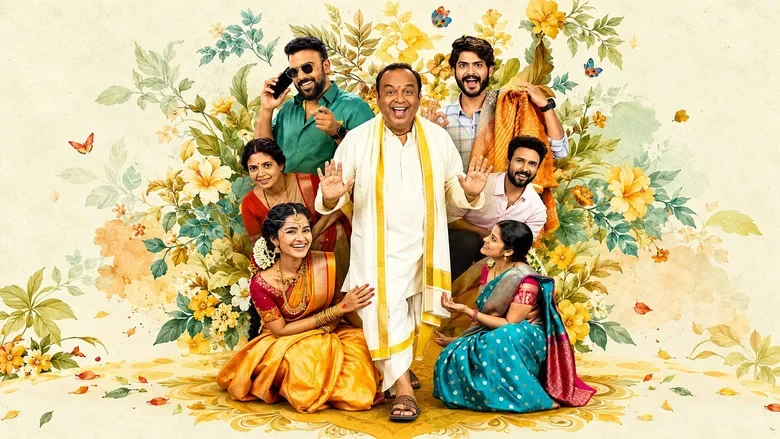
Tharun Bhascker’s Drunken Son-In-Law Carries The Comic Load Alone
Balraju, the drinking son-in-law, is the film’s pressure valve and its most honest mirror. Every time he stumbles home inebriated and picks a fight, he exposes the gap between Parvathalu’s public performance of honour and the disorder actually simmering inside the house.
Tharun Bhascker plays that chaos with a loose, physical abandon, swaying posture, slurred retorts, a complete absence of shame, that recalls the comic timing he brought to Gaayapadda Simham. He is the only performer here who seems to be having fun, and the first half leans on him almost entirely.
The trouble is that once Balraju recedes in the second half, the comedy evaporates and the film has to survive on emotional confrontation alone. It mostly does, but the tonal handoff is abrupt rather than earned.
Anupama Parameswaran Holds The Centre Without A Distinctive Romance
As Keerthi, Anupama Parameswaran does her finest work in stillness, a downward glance when her father announces a decision, a locked spine when she’s told marriage precedes study. She plays self-respect as something physical rather than declarative, and the Telangana household setting fits her like a second skin.
The romance, unfortunately, gives her nothing to push against. Akhil Raj Uddemari’s Uday is a functional placeholder, and the Keerthi-Uday track unfolds with the familiarity of a template rather than a lived relationship.
Where the film actually breathes is in the father-daughter confrontations, and V. K. Naresh is the reason. His Parvathalu is not a monster; he’s a man whose love and control are indistinguishable from each other, and Naresh plays that confusion with a clenched stillness that makes the character’s rigidity feel like fear.
A Climax That Arrives Before The Film Has Earned It
The emotional resolution hinges on Parvathalu accepting that Keerthi’s education and employment matter more than the wedding’s prestige. Thematically, this is the correct destination, the film’s argument that parents should invest in a daughter’s future rather than her ceremony is genuinely worth making.
But the reversal lands forced. Naresh shifts from stubborn patriarch to enlightened father without the intermediate beat of genuine doubt, and the screenplay skips the scene where he’d have to lose something to change. The climax is predictable, and worse, it feels unearned by everything preceding it.
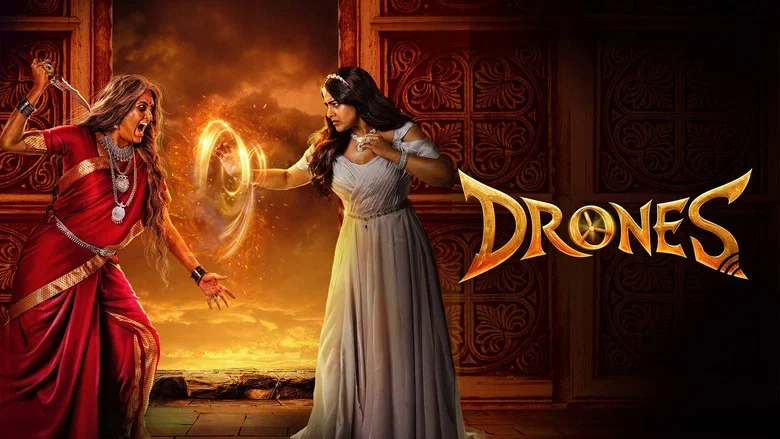
That gap between thesis and execution is a familiar failure mode in this space. Where a peer release like Drones stumbled by misjudging its own genre, Crazy Kalyanam stumbles by trusting its message to do the emotional work its scenes haven’t set up.
The Village Texture Is Real; The Visual Language Is Invisible
Shyam Dupati’s camera captures the rural Telangana milieu with an unshowy naturalism, courtyards, verandas, the specific geography of a household where everyone can hear everyone else’s arguments. That spatial honesty matters, because the film’s entire conflict plays out in rooms with no privacy and no escape.
What the cinematography doesn’t do is find a single image that articulates the theme. There’s no visual idea, no recurring motif of doors, thresholds, or boundaries, that would give the film’s argument about autonomy a pictorial life beyond dialogue.
Suresh Bobbili’s score stays similarly functional, and the editing lets the first act sprawl while rushing the second-act emotional beats. The result is a film that looks and sounds correct without ever becoming distinctive.
Boosam Jagan Mohan Reddy’s Modest Bet In A Crowded Release Corridor
Producer Boosam Jagan Mohan Reddy has placed a small-budget rural family drama into a theatrical corridor dominated by larger regional titles, and the arithmetic is unforgiving. With a reported budget in the low single-digit crores, the film’s commercial viability depends entirely on word-of-mouth in the family-audience segment.
That segment is real, but it’s shrinking. The Telugu exhibition market increasingly rewards scale, franchise familiarity, and star-driven spectacle, and a message-forward village drama without a marquee lead has to fight for screens against exactly the kind of event releases that surrounded this one.
The broader trajectory of contemporary Telugu dramas suggests that mid-budget family narratives can still find audiences, but only when they offer either a genuinely fresh perspective or a performance strong enough to become the marketing itself. Crazy Kalyanam has the second ingredient in Naresh and Bhascker, but it never figures out how to sell it.
The Message Survives; The Movie Around It Doesn’t
Crazy Kalyanam wants to argue that a daughter’s dignity cannot be purchased through a wealthy alliance, and on paper that argument is sound. The problem is that the film states its thesis rather than dramatising it, letting the final twenty minutes carry a conviction the preceding two hours never properly built.
Anupama Parameswaran and V. K. Naresh give the material more weight than it earns, and Tharun Bhascker makes the first half genuinely watchable. But a film that has to be rescued by its performers is a film that hasn’t done its own job.
The wedding here is not the point, and neither, ultimately, is the education. The point is a father learning to see his daughter as a person rather than a reputation to be safeguarded, and that transformation deserves a better film than the one that surrounds it.