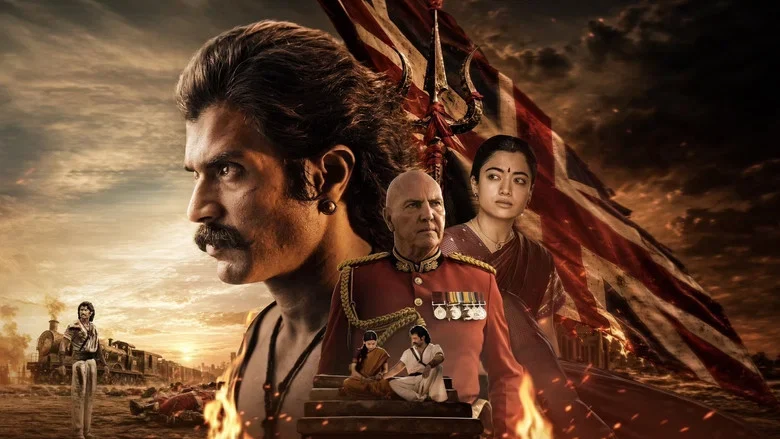
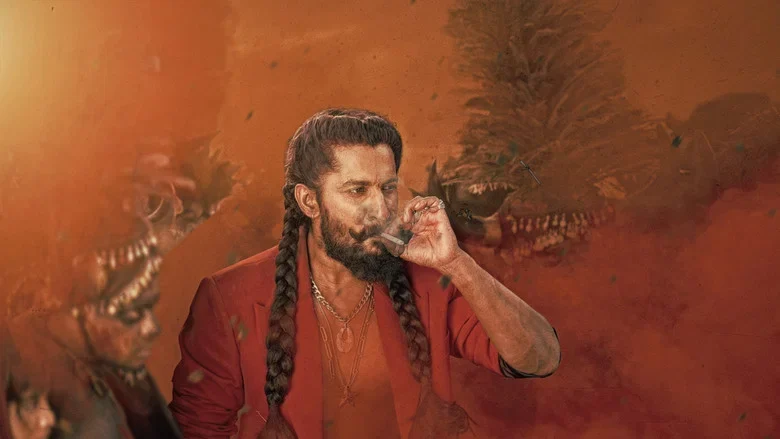
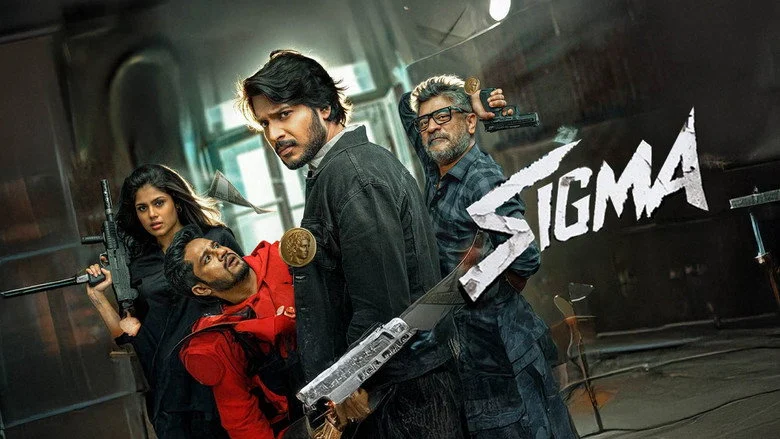
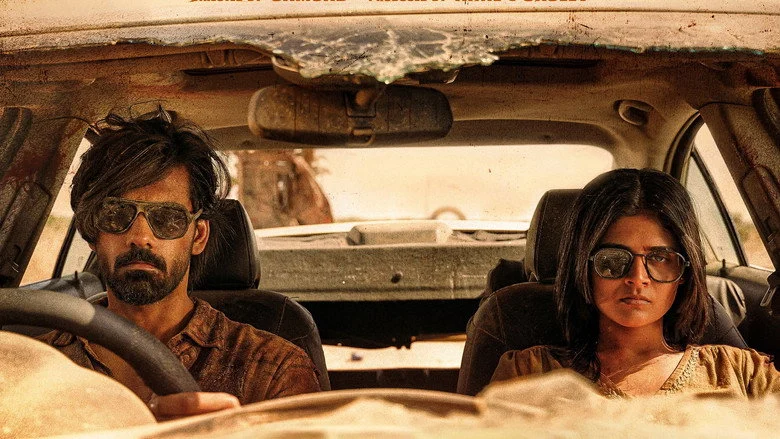
Nelson Dilipkumar opens his sequel not with a prison riot or a rain-soaked ambush, but with Rajinikanth’s Muthuvel Pandian pottering through a kitchen, measuring out domesticity in slow, deliberate sips. The film wants us to believe that peace is the real prize. Then the syndicate knocks, and the retired jailer reaches for the keys to a taxi he has no business driving.

The Driver’s Seat Is A Disguise, Not A Character
The central mechanism of Jailer 2 is deceptively elegant on paper: Tiger goes undercover as a driver, moving through the city’s ordinary arteries while the criminal network that threatens his family assumes he is finished. Rajinikanth plays the concealment with a heavy-lidded calm, his voice dropping to a near-whisper whenever a passenger asks too many questions. It is a performance built on withheld information rather than explosive release.
But the screenplay never quite commits to the tension of that disguise. Within the first hour, the film abandons the thrill of near-discovery for the comfort of familiar star-vehicle rhythms. Just as the ambitious gangster drama in Toxic lost its footing when it mistook volume for escalation, this sequel confuses the mere presence of a hidden identity with genuine dramatic jeopardy. The threat of exposure is stated, not staged.
A Syndicate Without A Face Is A Conflict Without A Pulse
The antagonists here are described as a far-reaching criminal syndicate, a phrase that sounds ominous in a synopsis and evaporates on screen. No single figure emerges as a worthy counterweight to Rajinikanth’s gravity. The film shuffles its villainous forces like a deck of cards, never letting one hand hold the table long enough to matter.
This is the structural flaw that drains the middle section. Tiger’s return to violence should feel like a descent, a man rediscovering a muscle he hoped to leave buried. Instead, the confrontations arrive as obligations, each one checking a box rather than tightening a screw. The screenplay keeps promising a reckoning with the family’s legacy, but the family itself remains a backdrop, present in name and absent in emotional texture.
What the film lacks is the kind of coiled, personal antagonism that made the better moments of Anbil Avan at least attempt a pulse, however far-fetched. Here, the syndicate is a weather system, not a person. You cannot fear a weather system.
Rajinikanth’s Stillness Is The Film’s Only Reliable Currency
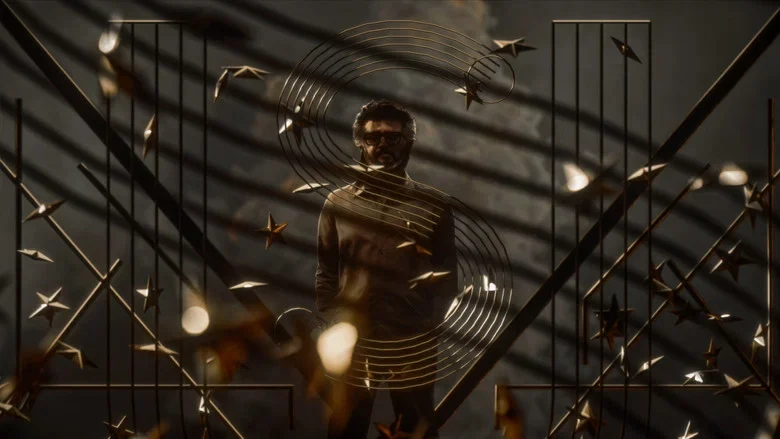
What holds the screen together is Rajinikanth’s refusal to overplay the return. Watch the scene where he first slides behind the wheel of the taxi: his hands settle on the steering wheel with the precision of a man who has spent decades controlling rooms, not vehicles. His eyes flick to the rearview mirror, not with paranoia, but with the cold assessment of a jailer counting inmates.
That physical discipline extends to his scenes with Ramya Krishnan’s Ashtalakshmi, where the domestic register is played with a weary tenderness that briefly suggests a richer film. He does not raise his voice when the threat arrives; he lowers it. The menace lives in the pause before he speaks, not in the volume after.
It is a reminder of the restraint he brought to his work in Love Insurance Kompany, where the performance thrived on what was withheld rather than what was declared. The difference is that Nelson’s screenplay does not give him a scene worthy of that stillness, only a series of poses that require it.
The Ensemble Is A Guest List, Not A Dramatic Architecture
Mohanlal’s Mathew returns with the easy authority of a man who knows his screen time is limited and intends to enjoy it. His single confrontation with Rajinikanth is the closest the film comes to genuine electricity, two veteran presences measuring each other without a wasted gesture. Shiva Rajkumar’s Narasimha gets even less to do, a cameo that registers as a handshake rather than a character.
The rest of the reported ensemble, from Vidya Balan to Mithun Chakraborty, is deployed with the logic of a wedding reception: everyone shows up, no one stays long enough to matter. Yogi Babu’s Taxi Driver is the only supporting role that connects to the film’s central mechanism, and even he is reduced to reaction shots. The film mistakes the accumulation of familiar faces for narrative density.
Nelson’s Direction Favors Surface Over Friction
The visual grammar is clean but inert. Nelson frames Rajinikanth in medium shots that prioritize his silhouette over his psychology, and the action sequences are cut with a rhythmic competence that never generates real disorientation or danger. The camera respects the star too much to put him in genuine jeopardy.
Worse, the film’s sound design leans on a background score that tells us exactly how to feel in every scene. When Tiger walks into a room, the music announces his threat before his body language can. When the family is in danger, the strings swell with a predictability that undercuts the tension the screenplay has failed to build. The film does not trust its own silences.
This is a step backward from the tighter spatial discipline Nelson showed in the first Jailer, where the comedy and violence were allowed to collide without a score cue explaining the joke. Here, the direction feels like it is managing a brand rather than directing a story.
The Box-Office Calculation Behind A Sequel That Arrives Too Comfortably
For the producers and the studio banners backing this release, Jailer 2 represents a calculated bet on franchise continuity and star loyalty. The first film was a phenomenon, and the sequel arrives with the built-in advantage of Rajinikanth’s enduring theatrical draw, particularly in the Tamil market where his opening-day pull remains unmatched.
But the larger ensemble and reported cameo appearances also signal a commercial anxiety: the belief that a single star is no longer enough to sustain a tentpole in an exhibition market increasingly dominated by event cinema. The film’s reliance on crossover names like Mohanlal and Shiva Rajkumar is a hedge, not a narrative choice. It is the language of a producer protecting an investment.
Whether that bet pays off depends on whether audiences accept a sequel that feels like a contractual obligation rather than a creative compulsion. The current landscape of contemporary Tamil actions rewards novelty and punish repetition, and this film’s biggest risk is that it has neither the freshness of a new idea nor the discipline of a well-told one.
The Verdict: A Star Vehicle That Forgets To Build A Road
Jailer 2 ends with Tiger back where he started, a man who has protected his family and preserved his legacy, but the film never makes us feel the cost of that preservation. The violence is clean, the resolutions are tidy, and the emotional residue is negligible. It is a sequel that understands its star’s presence but not his purpose.
Rajinikanth remains the reason to buy a ticket, and his stillness is worth watching even when the film around him is not. But a star vehicle without a destination is just a long, expensive drive. The engine hums. The road goes nowhere.