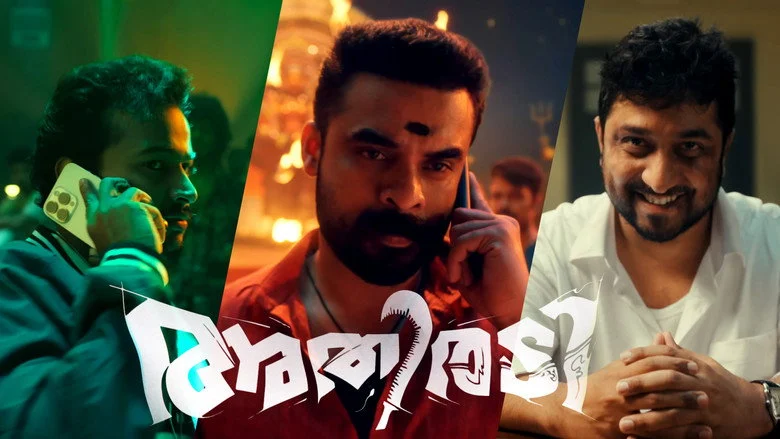
Prince Joy opens on Fort Kochi’s salt-crusted lanes with a getaway car idling and a job about to go sideways. By the time the fantasy arrives, you can feel the movie straining against its own ambition.
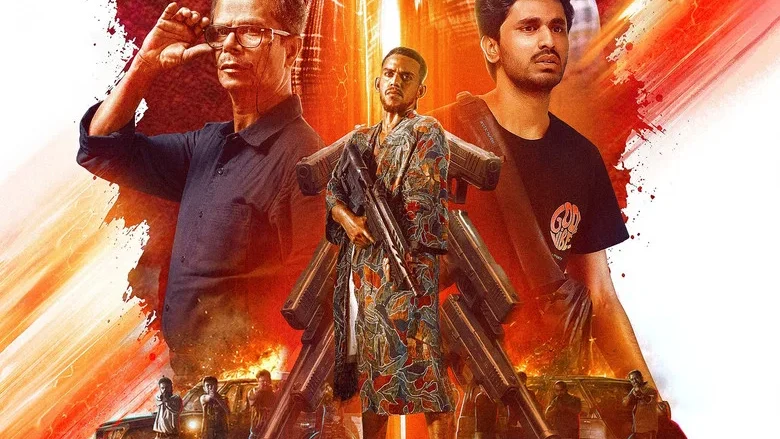
A Final Score That Refuses to Stay a Crime Movie
Antony Yakuza is the kind of gangland nobody who has spent years being underestimated and has decided this is the year the ledger balances. Jayasurya plays him with a slack-jawed weariness that curdles into something harder once the plan starts slipping.
His roommate Anwar, all screens and spreadsheets, treats the heist like a startup pitch. Nihal Nizam keeps the tech-savvy energy clipped and precise, a useful counterweight to Antony’s street-level fatalism.
Then Vinayakan’s Rejimon slides behind the wheel, and the temperature drops. He doesn’t announce himself. He just sits there, hands on the wheel, eyes doing arithmetic the audience can’t follow yet.
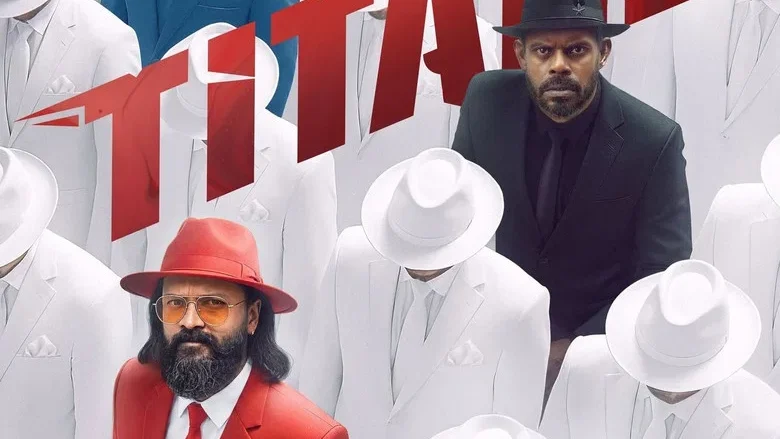
Vinayakan’s Stillness Is the Film’s Best Special Effect
Watch the way Vinayakan holds his shoulders in the passenger seat during the early reconnaissance. He never leans forward. He never asks the obvious question. The performance is built on withholding, and it works because Joy’s camera refuses to cut away from him.
When Rejimon finally lets a sliver of his agenda show, it lands not as a twist but as a confirmation. The film has been telling you all along that the driver knows more than the men in the back.
Jayasurya, meanwhile, does his most interesting work in the reactions rather than the speeches. His Antony is a man who has rehearsed bravado for so long that genuine fear catches him off guard.
The pairing recalls the franchise fatigue Jayasurya had to push through in Aadu 3, where the comic register had begun to sag under repetition. Here he strips the shtick back to something leaner and more watchable.
When the Fantasy Arrives, the Floor Tilts
The film’s central gamble is the moment the robbery stops behaving like a robbery. Strange encounters, inexplicable interruptions, a Fort Kochi that suddenly has more rooms than the map allows.
Joy stages the turn with a deliberate refusal of spectacle. No swelling orchestra, no obvious visual cue. Just a beat that lasts a second too long, and a character who notices.
It’s a smart instinct, but it’s also where the screenplay starts to lose its footing. The crime framework was tight. The fantasy framework is looser, and James Sebastian’s script never quite decides how much to explain.
Compare it to the tonal control on display in HALF, where the genre shift was earned through patient character work rather than plot mechanics. Titans wants the same effect but reaches for it faster.
An Ensemble That Mostly Stands Around Looking Useful
Suresh Krishna’s CI Vyasan is introduced with the promise of a procedural thread that never fully tightens. He gets one good interrogation beat and then recedes into the wallpaper.
Sunny Wayne, Indrans, and the rest of the named supporting roster are present in the frame without ever becoming essential to it. The crime-world texture is there. The dramatic function is not always.
The exception is Manohari Joy’s Leelamma, who gets a single scene of domestic friction that briefly grounds the film in something recognisable. It’s the only moment the fantasy has real emotional stakes.
Prince Joy’s Visual Grammar Is Confident but Uneven
Vishnu Sharma’s lensing gives Fort Kochi a humid, lived-in texture, all narrow lanes and peeling paint. The camera stays close to faces during the criminal passages and pulls back during the stranger ones, a choice that mirrors Antony’s shrinking sense of control.
Dawn Vincent’s score is more cautious than the material demands, leaning on low drones where the fantasy could have used something stranger. Shameer Muhammed’s editing keeps the first half brisk and lets the second half breathe a little too much.
The result is a film that knows how to build tension but isn’t always sure what to do with it once the genre floor gives way. Joy showed a similar instinct for blending the ordinary with the uncanny in his earlier work, and the ambition here is clearly larger.
Whether that ambition lands depends on how much you’re willing to meet the movie halfway. The fantasy doesn’t ask for much suspension of disbelief. It asks for patience.
The Box-Office Math Behind a Hybrid Gamble
Babu Ettan Films and Neramboku are betting on the Jayasurya–Vinayakan pairing as the primary commercial hook, and that’s a reasonable wager. Both actors have loyal theatrical followings in Kerala, and the crime-comedy register travels well in the Gulf market.
But the fantasy element is the wild card. Malayalam audiences have been warm to genre hybrids lately, and the broader landscape of contemporary Malayalam thrillers has shown that tonal risk can pay off when the execution is disciplined.
The question is whether Titans has that discipline. The runtime ambiguity alone, with reports split between a lean cut and a longer one, suggests a film still finding its final shape in the edit.
For Jayasurya, this is a meaningful swing after a run of franchise extensions. For Vinayakan, it’s another reminder that he remains one of the most reliably unsettling presences in the industry.
The Ending Doesn’t Resolve So Much as Deflect
Without spoiling the mechanics, the final act chooses atmosphere over explanation. Rejimon’s agenda gets a partial accounting. Antony’s arc gets a gesture toward closure. The fantasy gets a shrug.
That choice will divide audiences. Some will read it as confidence. Others will read it as a film that wrote itself into a corner and decided the corner was the point.
The comparison to Garividi Lakshmi is instructive here. That film also buried its own fire under stylistic ambition, and the result was a similar sense of a promising premise left half-lit.
Titans is more entertaining than that comparison suggests, but it shares the same willingness to trust mood over resolution. Whether that’s a virtue or a vice depends on the viewer.
What’s clear is that Prince Joy has made a film that refuses to be a conventional crime thriller, and refuses just as firmly to be a clean fantasy. It sits in the uncomfortable middle, and it asks you to sit there with it.
That’s not nothing. It’s also not quite enough.