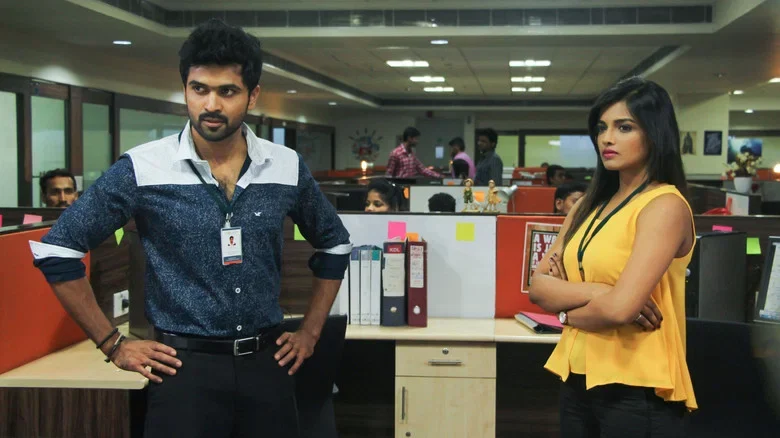
The camera finds Idhaya mid-flight, New York to Chennai, a man about to marry while confessing his romantic history to a complete stranger. It is a lovely, deceptively simple frame, one that promises introspection before spectacle. Atharvaa carries this burden with a quietness that feels earned, his eyes doing the work that louder actors would waste dialogue on.
His performance is built on restraint, on the small flinches and pauses of a man who has spent years swallowing his feelings. Across different life stages, he maintains a continuity of temperament that keeps the character coherent even when the screenplay around him wobbles. The vulnerability lands, even when the material doesn’t fully deserve it.
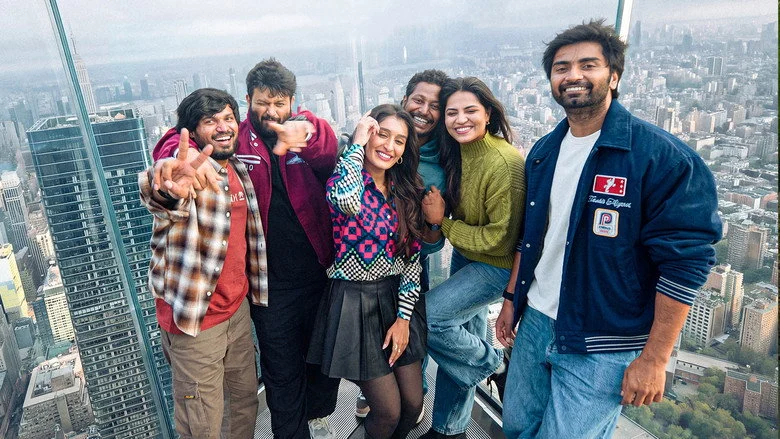
Aakash Baskaran’s Frame Narrative is the Film’s Only Real Surprise
The wedding-journey device is genuinely smart, it gives the romance an endpoint, a deadline that makes every flashback feel urgent. Baskaran and his four co-writers use memory as a structuring principle, tracking how hesitation calcifies into identity.
But the direction leans too heavily on familiar beats, and the 164-minute runtime exposes the thinness of the central idea. What begins as reflective slowly curdles into repetitive. I found myself wishing the present-day frame had been given as much attention as the past it keeps revisiting.
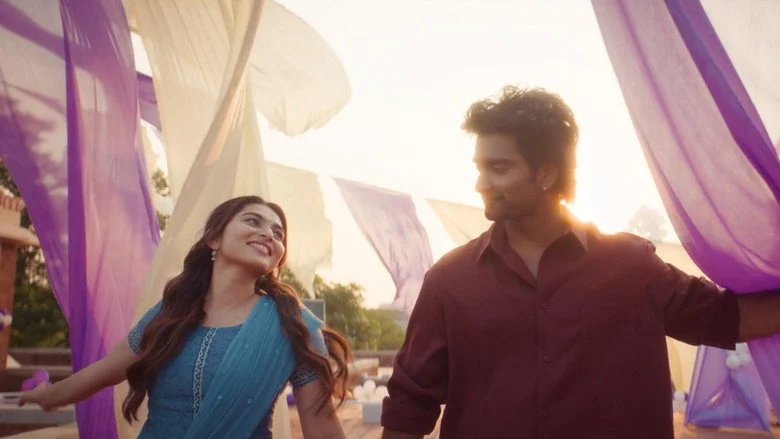
The Genre Core: A Romance Built on What Isn’t Said
This is a romantic drama that understands its primary tension: the words that never arrive. The flashbacks track changing stakes, teenage attraction, first love, adult consequence, without ever rushing the emotional arithmetic. The film trusts that silence can be louder than confession, and for long stretches, that trust pays off.
The in-flight narration to Fahadh Faasil’s Surya is the film’s best scene, a stranger’s patience becoming the audience’s own. It is a clever inversion of the confessional format, turning a captive listener into a mirror for the protagonist’s regret. The recurring memory of first love and restraint gives the romance its spine.
But the genre’s weaknesses are equally visible. The trope-heavy setup, the reluctant lover, the missed signals, the wedding deadline, feels overly recognizable, and the emotional beats land exactly where you expect them to. The film is emotionally accessible, yes, but accessibility here borders on predictability. There are no narrative surprises, only confirmations.
For more like this, browse our Tamil Drama reviews.
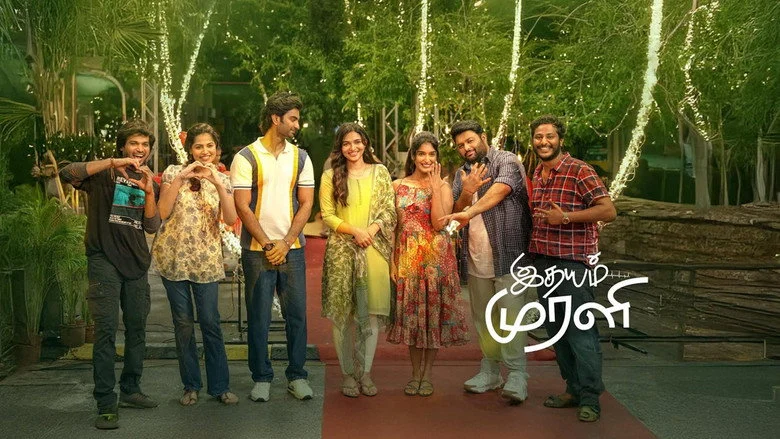
Fahadh Faasil’s Cameo and the Supporting Web
Fahadh Faasil appears as Surya, the stranger who absorbs Idhaya’s life story, and his presence elevates every scene he touches. It is a small role, but his attentive stillness gives Atharvaa someone to play against, a quiet foil that makes the confession feel urgent rather than indulgent.
Preity Mukhundhan anchors the romantic arc as Sam, one of the key figures in Idhaya’s emotional history. Her casting signals the film’s intent to ground the romance in mutual gravity rather than one-sided longing. Kayadu Lohar and Malavika Mohanan round out the relationship web, though their roles remain thinly sketched in the available material.
A Film That Will Divide Audiences by Patience
The audience response splits along predictable lines: those who connect with the unspoken-love theme find it deeply relatable, while others cite the slow middle and familiar template as dealbreakers. There is no verified controversy here, no political noise, no censorship battles, just a straightforward romantic drama that must survive on emotional merit alone.
That merit is real but uneven. The nostalgic structure, the reflective tone, and Atharvaa’s committed performance all work in the film’s favor. But the pacing drags, the second half leans heavily on recollection, and the resolution arrives with a thud rather than a catharsis. This is a film for viewers who value mood over momentum.
Idhayam Murali is best watched on a lazy afternoon, not a Friday night with friends expecting fireworks. If you have the patience for a romance that whispers instead of shouts, there is something here worth your time. For those who need their dramas to move, this will feel like a long wait for a short confession.
Atharvaa’s restrained turn deserved a tighter script, and the result is a film that earns a modest 2.5 out of 5, watchable, sincere, but never essential.
For a sharper take on flawed romantic storytelling, see our review of One Last review.
For another lead performance fighting a patchy screenplay, check out Find Me verdict.