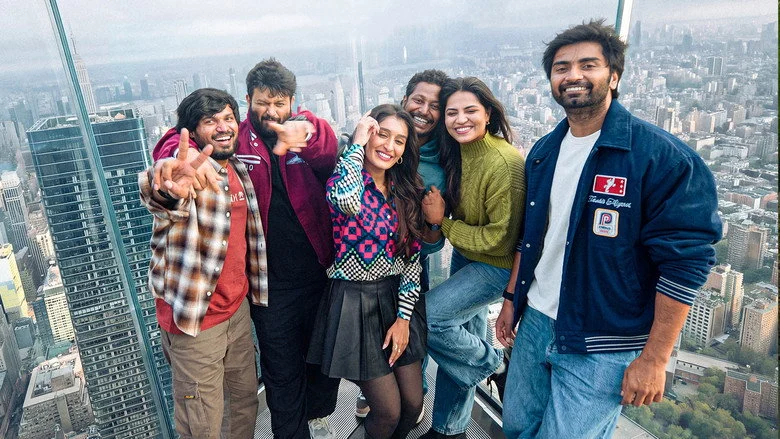
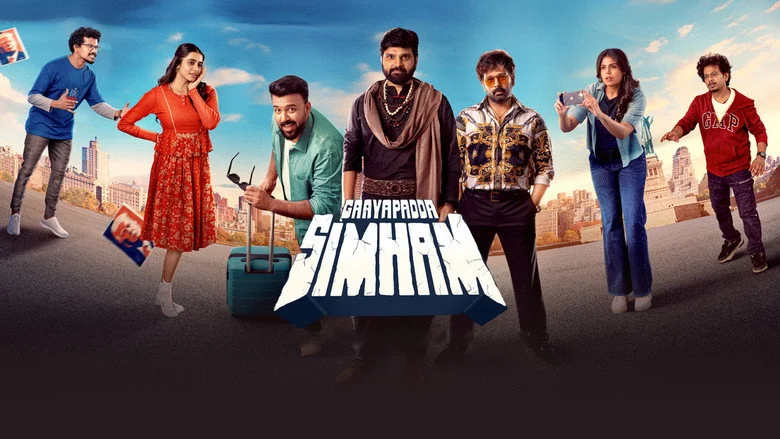
Dharahas packs his bags for the United States, chasing a romance that the film’s opening frames as a breezy comic adventure. The setup is promising, a Telugu everyman navigating love abroad, but the premise quickly loses its footing.
Bhascker brings his signature deadpan energy to the role, and his comic timing sparks in isolated moments. Yet his character feels like a passenger in his own story, reacting to chaos rather than driving it.
J. D. Chakravarthy’s Brutal Dharma Steals the Show From the Lead
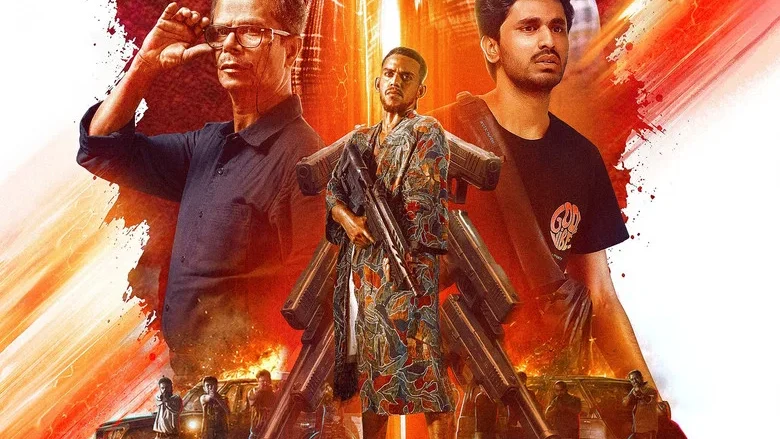
Brutal Dharma is the film’s most memorable creation, and Chakravarthy knows exactly how to play him. His confrontational scenes carry a weight that the rest of the narrative struggles to match, and audience recall of his performance far exceeds the film’s overall impact.
There’s a genuine menace beneath the theatricality, and Chakravarthy’s presence signals what this film could have been with sharper writing. His exchanges are the only moments where the satire feels like it has teeth.
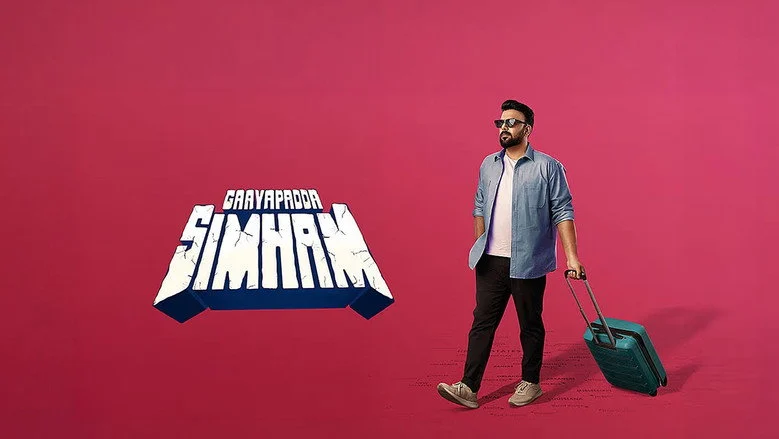
The Comedy-Satire Balance Collapses Under Its Own Ambition
The film wants to be both a laugh-out-loud comedy and a pointed social satire, but it achieves neither with consistency. The eccentric protagonist setup generates situational humor in patches, yet the beats land unevenly across the 2-hour-20-minute runtime. What begins as playful absurdity descends into tonal confusion by the second half.
Deccan Chronicle’s 2.0/5 rating captures the core problem: the film “neither succeeds as a comedy nor as a satire, ending up as a chaotic and forgettable outing.” That chaos isn’t accidental, it’s the result of a screenplay that keeps introducing new characters and subplots without earning their payoff.
The satirical layer, meant to comment on relationships and social behavior through exaggeration, remains underdeveloped. Director Kasyap Sreenivas assembles a strong cast but loses control of the tone, letting the film drift between romance, comedy, and action-drama without committing to any of them.
For more from this space, browse our Telugu Drama reviews.
An Ensemble That Outshines the Material Around It
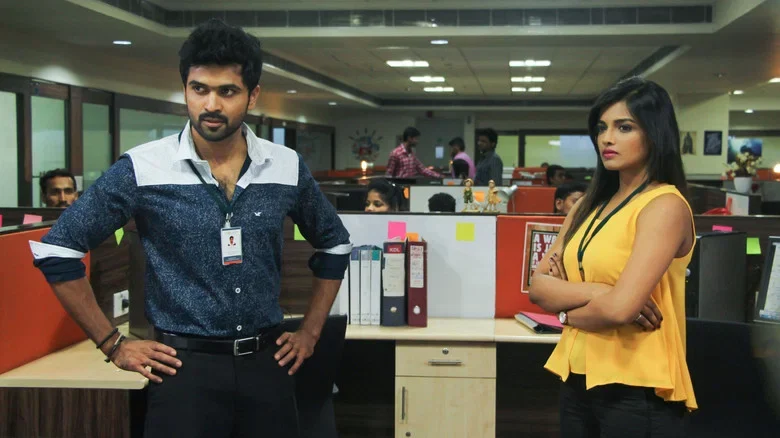
Faria Abdullah anchors the relationship track with natural ease, though Shalini’s character arc gets shortchanged by the chaotic plotting. Maanasa Choudhary’s Gayathri adds backstory texture, and her scenes with Bhascker hint at a more grounded film hiding beneath the noise.
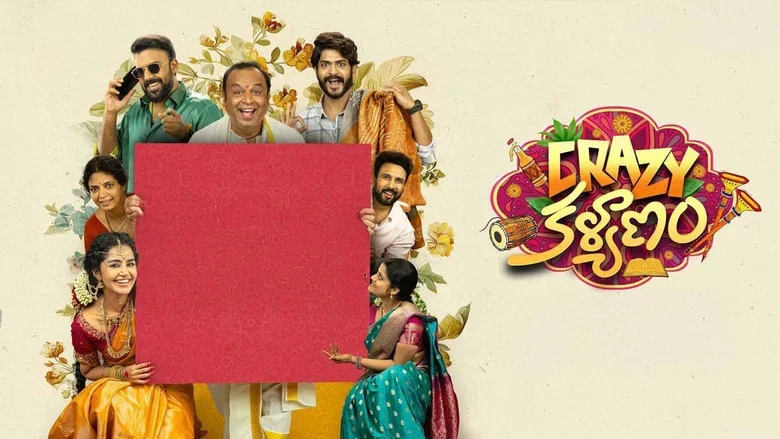
Vishnu Oi provides reliable comic support in the friend circle, while Harsha Vardhan’s ACP Ashok Vardhan and Subhalekha Sudhakar’s IG Vijay Kanth lend institutional weight to the satire. The ensemble energy is palpable, but the screenplay never gives these actors a coherent world to inhabit.
A Divided Reception and a Modest Box Office Haul
Audience sentiment is split down the middle, some praise the comic intent and cast chemistry, while others find the narrative uneven and the humor forced. The film’s opening day netted ₹0.50 Cr in India with a worldwide gross of ₹0.71 Cr, according to Sacnilk, and the first week closed at ₹2.46 Cr domestically.
Those numbers reflect a film that generated curiosity but failed to convert it into sustained momentum. The supporting cast’s energy in ensemble scenes is the most frequently cited positive, but it can’t compensate for the structural incoherence that critics and viewers alike have flagged.
I can’t shake the feeling that a tighter script and a more disciplined directorial hand could have made this a cult favorite in the making.
Should you watch it? Only if you’re a completist fan of Bhascker or Chakravarthy. The performances are worth a glance, but the film around them is a muddle that tests patience. Stream it on a lazy afternoon if you must, just don’t expect the satire to land or the comedy to sustain.
Gaayapadda Simham is a forgettable outing that earns a modest 2 out of 5 from me.
For a sharper take on ensemble-driven storytelling, check out Bromance Kadhal review.
If you prefer your comedy with more grit, Jetlee verdict offers a similar tonal struggle worth comparing.