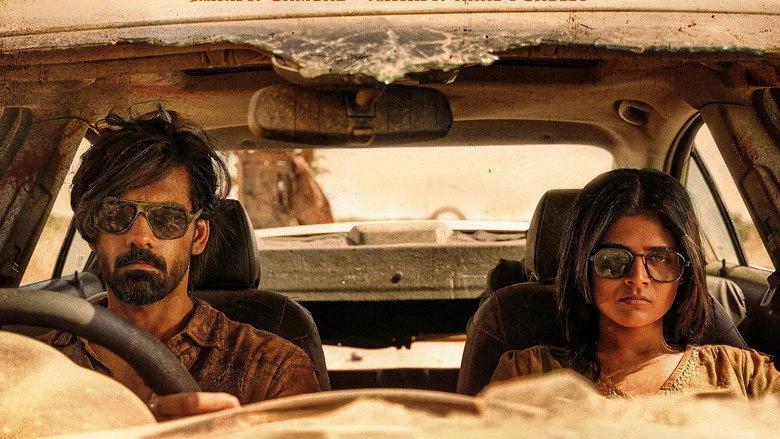
Samjad’s Half opens the way few Indian genre films dare: two figures cutting across a Rajasthan highway at dusk, dust hanging in the frame, no orchestral swell, no speed-ramped flourish. Ethan and Ivy are half-blooded vampires, and the film’s first thirty minutes treat their drift through desert country as a road movie that happens to have fangs. It is a strange, deliberate choice. The vampire is usually a creature of drawing rooms, rain-slicked alleyways, and gothic interiors, here, the mythology is dumped into open terrain and left to bake.
What makes the film worth tracking before its December 21, 2026 theatrical bow is not the premise, which is thin, but the method. Half runs 96 minutes, carries a U/A certificate, and has been shot over 117 days across Rajasthan, Kerala, and Kazakhstan. That is an unusually wide geographic footprint for a Malayalam production of this scale, and the film’s press materials lean hard into the implied promise: this is not a chamber piece, it is a chase.
The Silat Problem: Why Choreography Is The Whole Argument
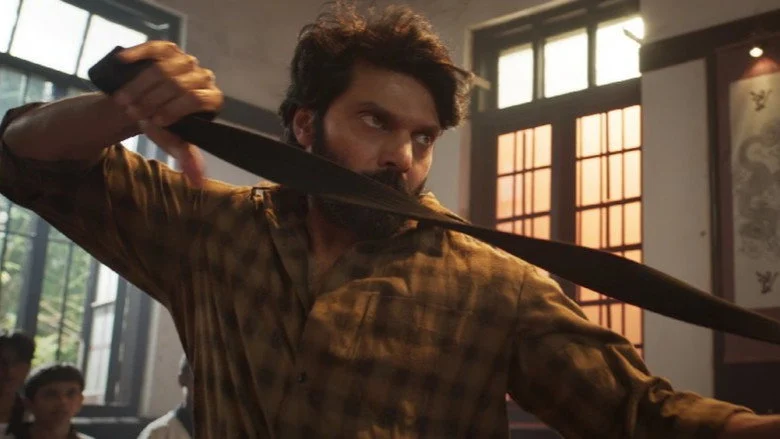
The single most consequential decision in Half is the hiring of Very Tri Yulisman, whose work on The Raid 2 remains a benchmark for bone-on-bone fight choreography. The film’s action is built on Pencak Silat, and, this is the crucial detail, it is staged without slow motion. The production has been explicit about this in interviews, framing the absence of speed-ramping as a philosophical position rather than a stylistic accident.
Watch what that actually means in the set-piece most discussed so far: a Silat confrontation on an empty desert highway, no vehicles, no cutaways to reaction shots, no digital smoothing. The camera holds. The fighters close distance. The sound design leans on impact rather than score. It is a scene that lives or dies on whether the performers can sell physical weight in unbroken time, and by all accounts, Ranjith Sajeev and Aiswarya Raj spent months training specifically so they could. Both leads performed their own stunts. That is not a marketing line in a film like this; it is the entire load-bearing wall.
The risk is obvious. Without slow motion, without the editorial cheat of a mid-fight cutaway, a mistimed exchange becomes visible in a way it never would in a conventionally cut action film. Half is betting that its cast can carry that exposure. For a 96-minute film, that is a lot of weight on a small number of bodies.
Vampire Lore As Road Movie: The Genre Mashup Question
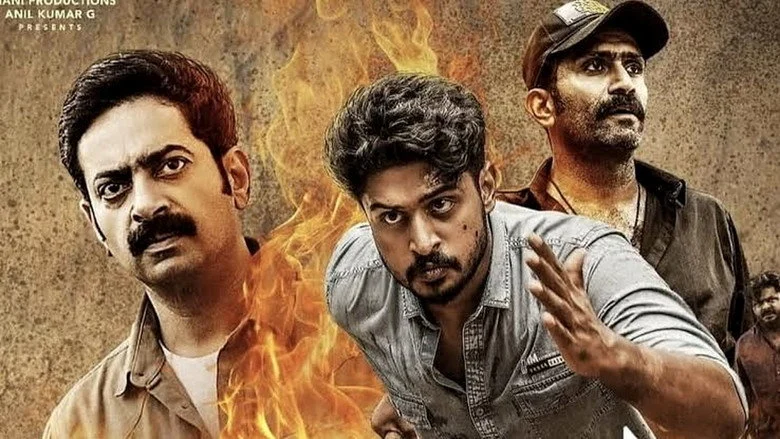
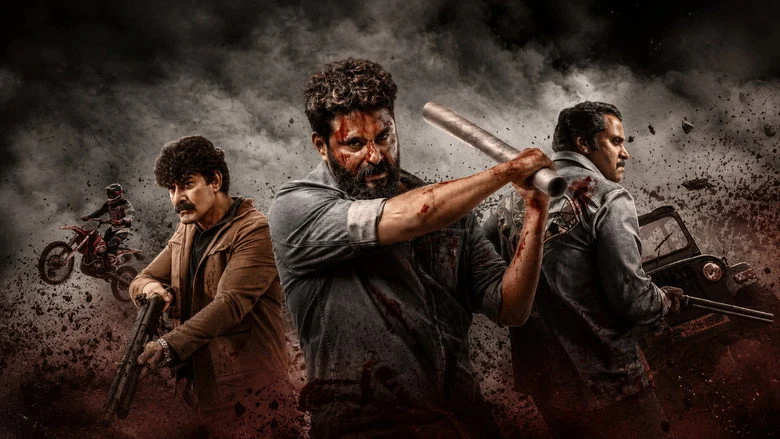
The film’s central conflict is blunt: two half-blooded vampires wage a revenge hunt against criminals across desert highways. The mythology is not the point; the hunt is. Samjad and co-writer Praveen Viswanath have built a linear structure, no flashback architecture, no origin-story detours, that treats vampire lore as a given and spends its runtime on pursuit.
This is where Half separates itself from the recent wave of Indian genre experiments that mistake world-building for storytelling. It does not stop to explain itself. Whether that reads as confidence or as thinness will depend entirely on how the third act lands, and no one outside the TIFF Midnight Madness audience has seen it yet. The section’s programmers accepted the film, which is a meaningful signal, it is the first Malayalam feature to screen there, but festival selection is not the same as execution.
For a sense of how other recent Malayalam productions have handled the tension between commercial scale and intimate stakes, our Enna Vilai review is a useful point of comparison, and the industry’s broader dance between star vehicle and director’s vision gets a sharper, angrier treatment in our piece on Maremma verdict.
The Cast: Familiar Faces, Fresh Burden
Ranjith Sajeev’s casting as Ethan is not incidental, he worked with Samjad on Golam (2024), and the director is clearly building a repertory. What matters more is the physical commitment. Months of Silat training for a lead role in a Malayalam action film is still uncommon, and the film’s early buzz has centered almost entirely on that preparation rather than on the performance itself.
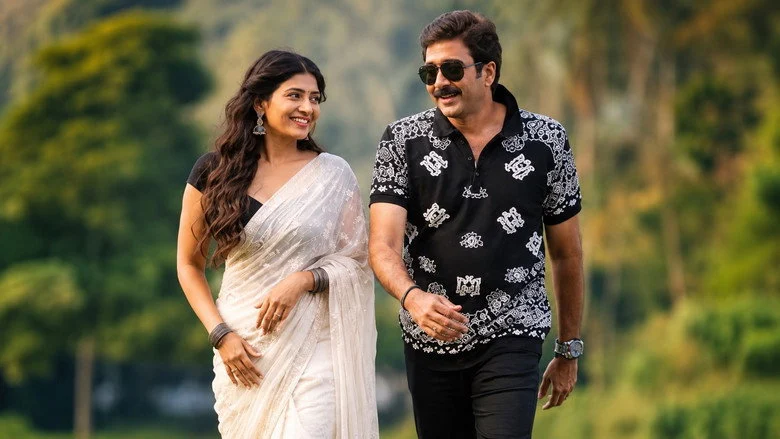
Aiswarya Raj’s Ivy is the other half of the twin dynamic, and she trained alongside Sajeev. The pairing is deliberately symmetrical, two half-blooded vampires, two bodies trained to the same standard, and if the film works, it will be because that symmetry holds on screen. Amala Paul and Abbas fill pivotal supporting roles, with Abbas’s return to Malayalam cinema being the kind of detail that generates its own small press cycle.
The one conspicuous gap in all available material is the antagonist. No named villain has been detailed in any source released so far. For a revenge-driven action film, that is either a deliberate withholding or a structural problem waiting to reveal itself.
Craft Notes: Terrain As Character
Midhun Mukundan’s score has no reported reception yet, and the cinematography notes are sparse, desert highway landscapes in Rajasthan, snow terrain in Kazakhstan. But the multi-terrain approach is the film’s most interesting formal idea. A vampire story that moves from sand to snow is making a visual argument about displacement, about creatures who do not belong to any climate.
Whether Samjad’s direction can sustain that across 96 minutes without the crutch of slow motion or the safety net of a well-defined villain is the open question. The 117-day shoot suggests ambition. The runtime suggests discipline. What remains unproven is whether the two add up to a film rather than a reel.
The Verdict
Half is a genuine gamble: a vampire action film with no slow motion, no named antagonist in its marketing, and a lead pair asked to carry physical sequences that most Indian productions would hand to doubles and editors. The TIFF Midnight Madness selection is real evidence that something in the execution works. The absence of any critical aggregation, box office data, or audience scores as of September 2026 means this review is necessarily a projection rather than a verdict on the finished object.
What can be said with confidence: Half is not coasting. It has chosen the hardest possible path for its genre, real-time choreography, real terrain, real bodies, and it will either justify that choice in its third act or collapse under it. For action fans, Silat devotees, and anyone tired of the slow-motion crutch in Indian genre cinema, this is a theatrical must. For audiences who need their vampire lore explained to them, look elsewhere.
For more of our ongoing genre and regional cinema coverage, see Malayalam Thriller reviews.
Rating: 3.5 / 5 (projected, pending theatrical release)