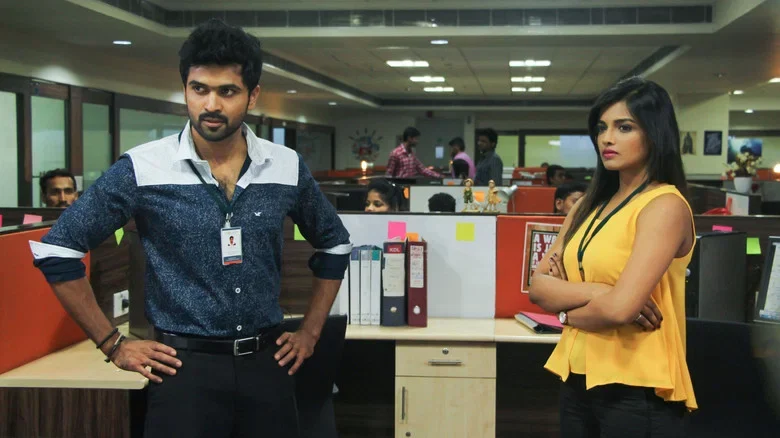
Vidhu carries the entire weight of a man who is terrified of the calendar flipping to 30. His Sathya is all hesitation and half-smiles, a guy who drifts through scenes waiting for a push.
The actor handles the comic rhythm of insecurity well, especially in the early relationship beats with Viji. But when the script demands a deeper emotional rupture after the breakup, Vidhu’s performance stays in the same register of muted confusion, which makes the reinvention arc feel less earned than it should.

Rathna Kumar’s Direction Has a Clear Hook But Loses Its Grip Midway
The premise is the film’s best asset: a relatable, sharply defined anxiety about turning 30 and feeling obsolete. Rathna Kumar builds a coherent emotional spine around Sathya’s commitment problem.
The flaw is execution. A Times of India review described it as an “Identity crisis drama lands in fits and starts, ” and that assessment feels accurate for the middle stretch where the pacing loosens and the scenes lose their connective tension. I found myself checking the runtime during the breakup-to-reinvention sequence, which is never a good sign.
The Genre Core: A Drama That Leans on Relatability Over Craft
As a drama, the film banks entirely on the universality of its age-related anxiety. The conflict is internal, and the external world simply reflects Sathya’s indecision back at him.
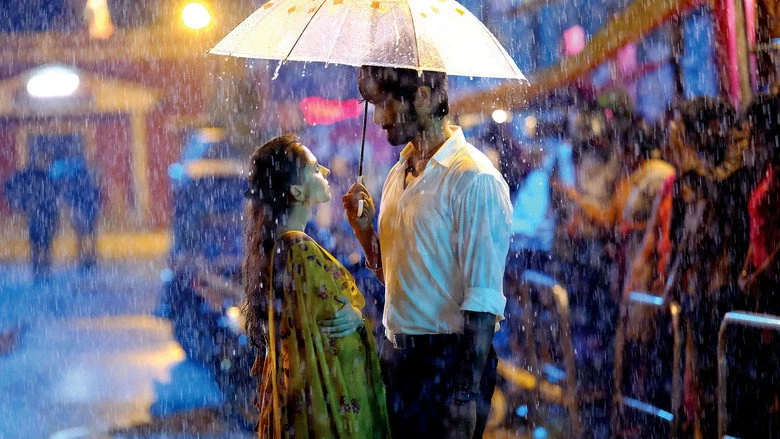
The romantic tension is built through hesitation rather than obstacles, which is refreshing in theory. The beach proposal sequence, where Sathya searches for the perfect spot to declare his love, is the film’s most clearly identifiable visual centerpiece, though the cinematography doesn’t elevate it beyond a standard scenic setup.
The comedy is sprinkled through misadventures and chance encounters, but it never lands with the sharpness of Rathna Kumar’s better-known work. The dramatic arc depends entirely on emotional self-reckoning, and while the intent is noble, the scene-to-scene momentum doesn’t consistently support it.
If you’re in the mood for more character-driven Tamil storytelling, browse through our Tamil Drama reviews for a wider range of options.
Preethi Asrani’s Viji Grounds the Film, But Mahendran’s Santhosh Gets Lost
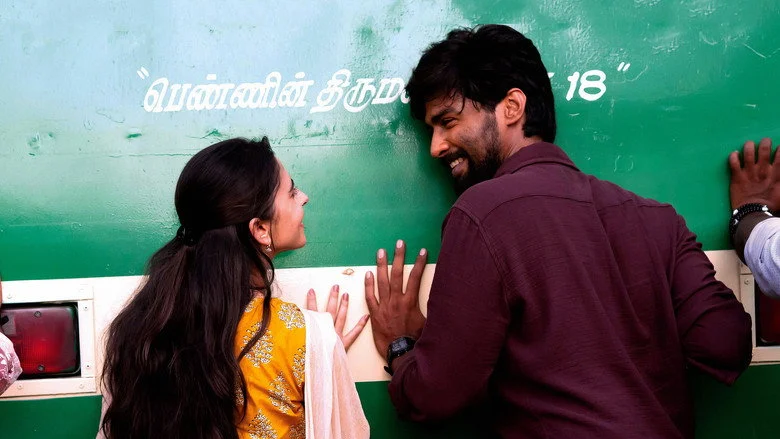
Preethi Asrani plays Viji as the relational counterweight to Sathya’s chaos. Her insistence on commitment and her career-focused clarity provide the necessary friction, especially in the confrontation scene where she questions his reluctance to propose.
Mahendran’s Santhosh is listed as an important role, but the available material gives him little to do beyond existing as a pressure point in Sathya’s orbit. The film doesn’t differentiate his arc enough to make him memorable, which is a missed opportunity for texture in the supporting cast.
No Controversy, Just a Familiar Beat That Might Divide Audiences
There is no political firestorm or censorship battle here; the film’s only real risk is narrative familiarity. Audiences who connect with the premise will likely forgive the formula, while those who require novelty in their relationship dramas will find the beats predictable.
The film’s feel-good framing is its saving grace. It’s positioned as accessible and light, which aligns with the audience profile that enjoys low-key emotional dramas about mid-20s identity crises. The lack of a villain, replaced by Sathya’s own fear and immaturity, is a choice that keeps the stakes intimate but also limits the dramatic voltage.
At its core, 29 is a film that knows exactly what it wants to say but struggles to say it with consistent energy. It is a watch for fans of the genre and a skip for those who need their dramas to move with sharper purpose.
For a similar exploration of tension and character, check out how Dridam review.
29 earns a modest 2.5 out of 5 for its relatable premise and earnest performances, but it never quite escapes the shadow of its own uneven execution.
If you prefer your romance with a sharper emotional beat, see how Itlu Kanmani verdict.