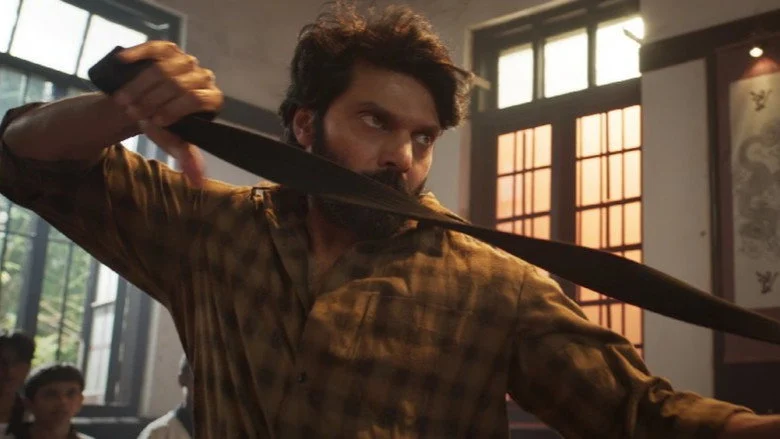
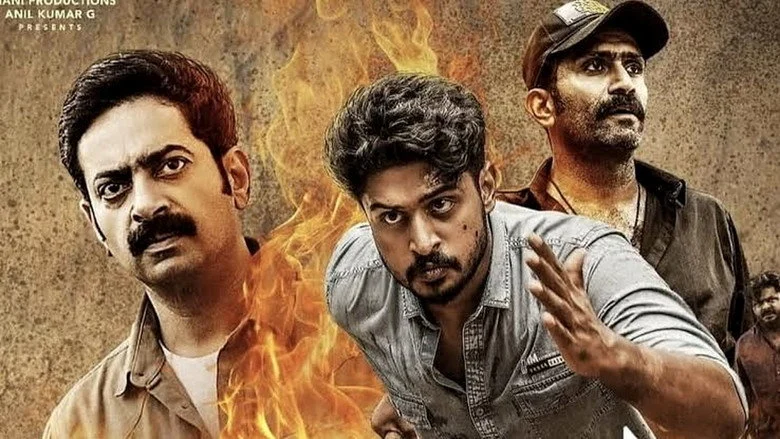
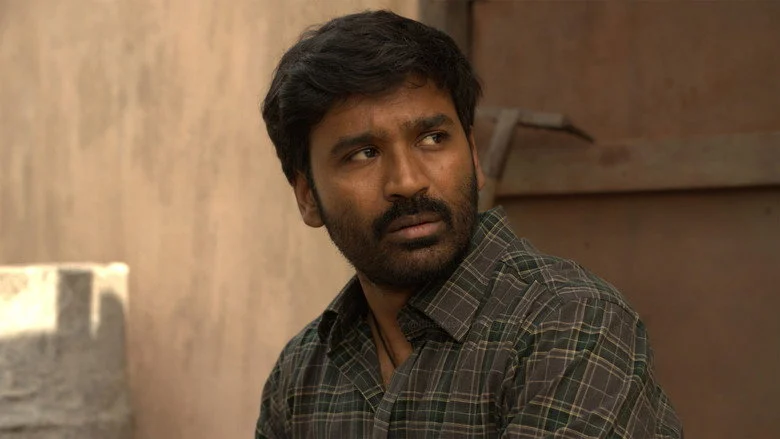
Karasaami “Kara” doesn’t announce himself with dialogue or flourish. He moves through the rural landscape with a quiet resolve that Dhanush renders through minimal expression and measured physicality. The opening stretch is investigative rather than explosive, establishing intent before the thriller machinery whirs to life.
This is a performance built on containment. Where lesser actors would reach for volume, Dhanush lets the tension accumulate in his stillness. His best work arrives in the confrontation passages, where controlled escalation replaces broad stylization. He holds the frame even when the screenplay around him loses its grip.
Vignesh Raja’s Direction Favors Mood Over Momentum
Vignesh Raja demonstrates clear command over atmosphere, grounding the film in a visual palette that favors rural textures and investigative dread over glossy spectacle. The middle portions carry the strongest tension, with pursuit and tactical confrontation driving the narrative forward with genuine purpose.
Yet the screenplay’s patience is a double-edged sword. The first half drags noticeably, with several reviews noting the sluggish rhythm before the film settles into its genre groove. The structure is mostly linear, but the buildup lacks the tightness that stronger comparators like Por Thozhil manage effortlessly.
The Genre Core: Tension Built Through Delayed Revelation
Kara operates as a heist-action thriller that keeps action subservient to character pressure. The film builds suspense through delayed revelation, letting the audience sit inside Kara’s mission before the opposing forces close in. Suraj Venjaramoodu’s antagonist sharpens this dynamic, functioning as a pressure-cooker presence rather than a one-note threat.
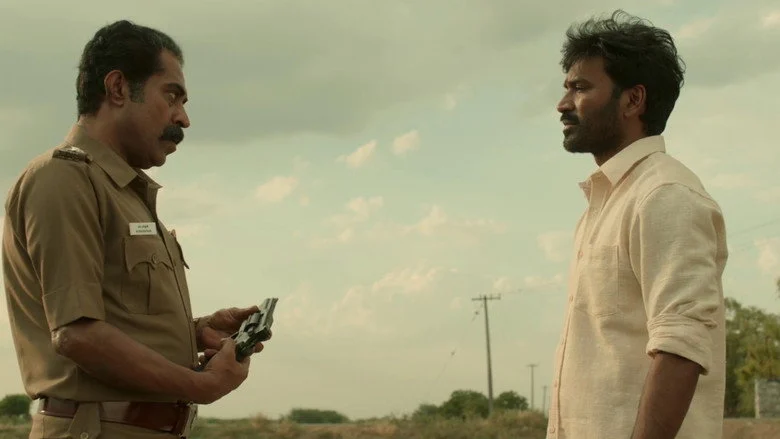
The confrontation-heavy mid and late passages represent the film’s clearest genre work. These sequences rely on controlled escalation and tactical standoffs rather than spectacle-heavy staging. The pursuit geography feels grounded, and the social context gives the thriller mechanics a moral weight that elevates the stakes beyond simple crime.
That said, the film’s tonal momentum remains uneven. The opening stretch before the thriller activates is the weakest genre segment, and the emotional beats don’t land equally across the runtime. The climax resolves the conflict with ideological clarity, but the journey there tests patience in ways that a tighter edit might have solved.
For more Tamil cinema coverage, browse our Tamil Thriller reviews.
Supporting Cast: An Ensemble That Grounds the World
Mamitha Baiju’s Selli provides essential emotional ballast in Kara’s orbit, balancing the thriller’s masculine tension with a character-drama register that gives the film breathing room. Jayaram adds institutional weight as G. Muthu Selvan, his established presence lending authority to the rural power structure. K. S. Ravikumar and Karunas reinforce the local-world realism, with Karunas particularly effective in the village community passages.
M. S. Bhaskar’s ageing villager represents the older generation’s perspective, supporting the film’s tonal palette without overreaching. The ensemble collectively anchors the grounded setting, ensuring the social framing never feels decorative. They are the connective tissue that keeps the slow-burn structure from collapsing entirely.
A Slow Burn That Divides Its Audience
The critical response remains mixed, with the central praise aimed squarely at Dhanush’s anchoring presence. As one publication noted, “Dhanush anchors a confident slow-burn.” The film’s first week figures tell a moderate story: ₹28.87 crore net in India as reported by Cinema Express, with Filmibeat citing ₹47.49 crore worldwide via box office analyst George Utty.
Audience complaints mirror critical reservations, slow first half, length, and uneven engagement. Yet the second-half momentum and Dhanush’s screen presence have kept the conversation alive. The film crossed ₹50 crore globally later in its run, suggesting that the patient build found enough of an audience to sustain commercial interest.
Kara is a film that rewards patience but demands it heavily. If you can sit through the extended setup, the confrontation passages deliver the tension that the opening promises. Watch it for Dhanush’s restraint and the film’s grounded social framing, but don’t expect the tightness of cleaner thrillers. A film that earns a 3 out of 5 for its ambition, even as its pacing keeps it from greatness.
For a similar slow-burn investigation, see our take on Flashback review.
Dhanush’s measured intensity also finds echoes in TAXILA verdict.