The grain sacks are the first thing you notice. Not the horses, not the colonial flags, but the burlap weight of stolen food moving through darkness, a visual thesis that Rahul Sankrityan plants early and never lets you forget.
This is a film that understands hunger as a political weapon, and for its first two hours, that clarity of purpose carries it further than most period spectacles dare to travel.
When Famine Becomes the Engine, Not the Backdrop
The Great Madras Famine of 1876–78 isn’t treated as decorative history here. Sankrityan stages the collapse of Rayalaseema’s subsistence economy with an almost documentary patience, the slow emptying of granaries, the arithmetic of survival, the way colonial administrators convert human need into administrative procedure.
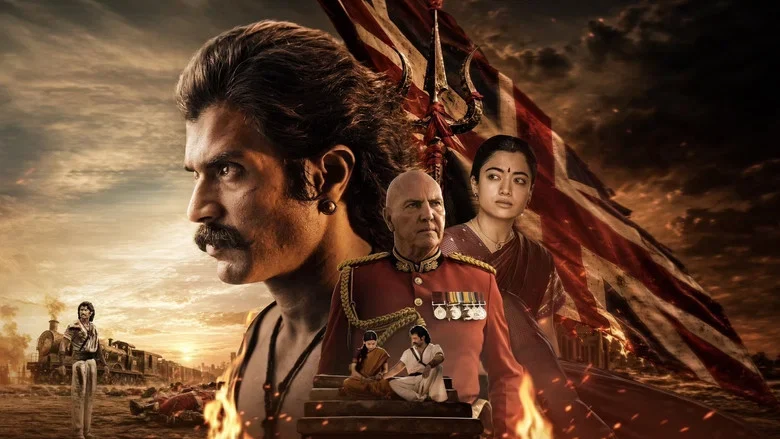
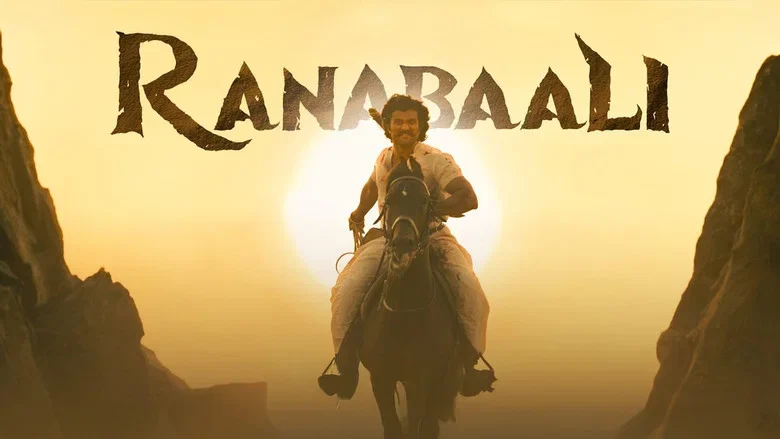
Vijay Deverakonda’s Singanamala Bobbili Ranabaali emerges from this material logic rather than arriving fully formed. His transformation from horseman to insurgent feels earned because the film refuses to skip the intermediate stages of desperation.
The grain-supply raids that dominate the middle section work precisely because they’re small-scale. These aren’t armies clashing; they’re hungry people stealing back what was taken, and the tactical intimacy of these sequences gives the film a grounded tension that larger set pieces later struggle to match.

A Partnership That Refuses the Decorative Wife Trap
Rashmika Mandanna’s Jayamma could have been the film’s weakest link, the wife who waits, worries, and weeps. Instead, she’s positioned as Ranabaali’s operational equal, present in planning, active in execution, and dramatically essential to the resistance’s internal logic.
The film’s smartest structural decision is treating their marriage as a political unit rather than a romantic subplot. When they move together through a colonial checkpoint, the choreography of their deception, her hand on his arm, his eyes tracking guards, the synchronized rhythm of people who’ve learned to survive as one organism, communicates more about their bond than any dialogue could.
Mandanna plays Jayamma with a watchful stillness that contrasts sharply with Deverakonda’s coiled physicality. She’s the film’s center of gravity, the person who reminds you what all this violence is supposedly protecting.
Arnold Vosloo and the Architecture of Colonial Cruelty
Sir Theodore Hector arrives on screen with the weary entitlement of a man who’s signed too many death warrants to remember individual faces. Arnold Vosloo, working in a register far removed from his Mummy franchise days, plays him as an administrator first and a villain second, which makes him infinitely more chilling than any sneering caricature could be.
Watch his hands during the grain negotiation scene. He doesn’t gesture, doesn’t threaten. He simply signs documents while explaining, in the tone of a man discussing weather, that starvation is a matter of resource allocation. The horror isn’t in his cruelty but in his comfort.
Where the screenplay falters is in refusing to give Hector a single moment of genuine doubt or complexity. He’s a wall of colonial certainty, and walls, however imposing, eventually become predictable.
The Three-Hour Question and the Weight of Exposition
At nearly three hours, Ranabaali carries its runtime like a burden it’s trying not to acknowledge. The first half, in particular, moves with the deliberate pace of a film convinced that every detail of village life, prophecy, and political context deserves equal weight.
Sankrityan’s camera does some of the heavy lifting, drought-stricken landscapes shot with an unflinching horizontal gaze that refuses to aestheticize suffering, interiors lit by oil lamps that turn faces into maps of shadow and bone. But visual intelligence can’t entirely compensate for a screenplay that occasionally mistakes accumulation for depth.
The mystical prophecy elements, introduced early and returned to sporadically, sit uneasily alongside the film’s otherwise materialist approach to historical conflict. It’s as if the filmmakers couldn’t quite trust the famine alone to justify a hero’s journey, so they bolted on destiny as insurance.
Where the Climax Finds Its Power, and Where It Loses It
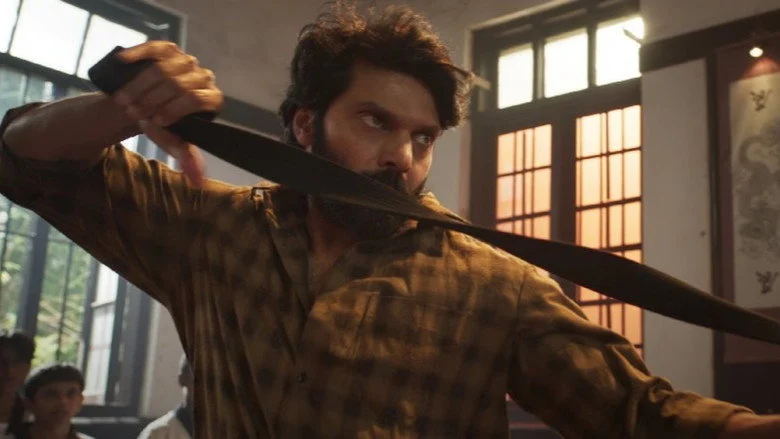
The final confrontation between Ranabaali and Hector delivers on the promise of the preceding two hours, largely through Deverakonda’s physical commitment. He fights like a man who’s been starving, not like a movie star who’s been choreographed, there’s an ungainliness to his movements, a desperation that reads as genuine.
But the staging around him grows increasingly conventional. The intimate, tactical quality of the grain raids gives way to larger, more anonymous action beats that could have been lifted from any period spectacle. The film forgets what made its earlier violence compelling: specificity.
Just as he demonstrated a tighter spatial discipline in Jailer 2, Sankrityan seems more comfortable with contained conflict than sprawling confrontation. The climax wants to be epic; it works best when it remembers to be personal.
The Supporting Cast and the Problem of Functional Presence
The colonial officers surrounding Hector, a rotating gallery of red-coated functionaries, register primarily as obstacles rather than characters. They perform their roles with adequate menace, but the screenplay gives them nothing to do except embody institutional power and eventually die for it.
This isn’t a fatal flaw in a film this focused on its central pair, but it does flatten the conflict into something closer to a video game than a historical drama. The British presence feels like a level to be cleared rather than a system to be understood.
The restrained physical exhaustion Deverakonda brings to the final confrontation recalls the psychological weight of his turn in Toxic, though Ranabaali’s heroism is considerably more straightforward than that film’s morally ambiguous protagonist.
What the Camera Captures and What It Misses
The visual scheme divides the world cleanly: colonial spaces are shot in cold, symmetrical compositions that emphasize order and control, while resistance spaces favor handheld intimacy and natural light. It’s an effective shorthand, though one that occasionally tips into obviousness.
What the film captures best is texture, the grain of wooden carts, the weight of water in clay pots, the particular quality of light in a famine-stricken village where even the sun seems to be rationing itself. These details accumulate into something more persuasive than any speech about freedom.
What it misses is the interior life of its antagonist. We understand Hector’s function but never his psychology, which leaves the film’s central conflict feeling somewhat lopsided. The hero gets a full portrait; the villain gets a position.
Resonances Beyond the Period Setting
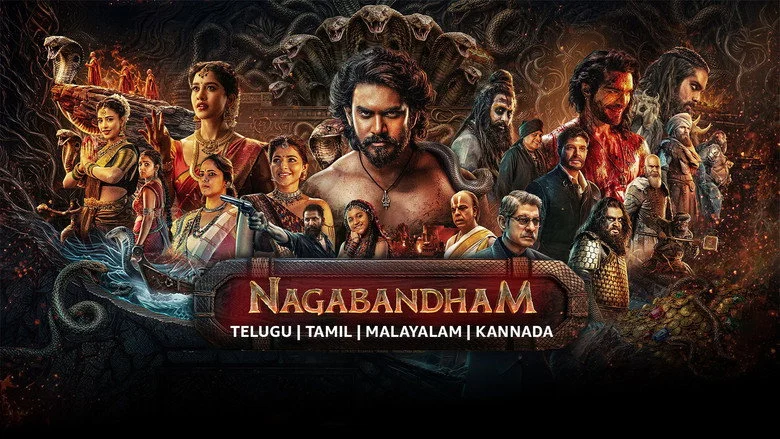
The screenplay resists the kinetic sensationalism that overtook Nagabandham, opting instead for a deliberate, suffocating dread that suits its famine-era setting. Both films share an interest in resistance against overwhelming power, but Ranabaali’s historical grounding gives its struggle a weight that purely fictional frameworks can’t replicate.
The film’s willingness to sit with discomfort, to show the slow violence of starvation rather than cutting away, represents a maturity that feels increasingly rare in large-scale Indian productions. It trusts its audience to endure difficulty without constant relief.
This patient approach to historical trauma signals a welcome seriousness across contemporary telugu actions, proving that spectacle and substance need not be mutually exclusive.
The Commercial Gamble of Period Resistance Drama
Positioned as a pan-India multilingual release tracked closely across digital premiere trackers like Filmyfly, Ranabaali represents a substantial bet on whether audiences will embrace historical tragedy as mass entertainment. The production’s decision to postpone from September to October 2026, placing it in closer proximity to other major releases, suggests either confidence or anxiety, the trade will decide which.
Vijay Deverakonda’s box-office leverage is genuinely at stake here. His recent filmography has been inconsistent, and a three-hour period drama about famine lacks the obvious hooks of his earlier romantic and action vehicles. If Ranabaali connects, it expands what audiences will accept from him; if it doesn’t, the industry will read it as confirmation that his commercial ceiling requires more conventional material.
Rashmika Mandanna’s involvement provides additional star power, and the reunion of the Dear Comrade pairing offers a marketing hook that transcends the film’s grim subject matter. Whether that’s enough to overcome the inherent challenges of selling starvation as spectacle remains the central commercial question.
The Verdict: Ambition Outweighs Execution, But Both Matter
Ranabaali is a film that aims for something genuinely difficult, a historical action drama that takes its history seriously, a star vehicle that asks its star to disappear into suffering, a resistance narrative that understands resistance as logistics as much as heroism. It doesn’t fully achieve these aims, but the attempt itself carries value.
Sankrityan has made a film that trusts its audience to sit with discomfort, to follow a hero who’s defined by hunger rather than invincibility, to accept a climax that’s more about endurance than triumph. These are not small things, even when the execution stumbles.
What lingers after the credits isn’t the final fight or the prophecy fulfilled, but the image of grain moving through darkness, food as contraband, survival as rebellion, the small daily acts that precede grand historical gestures. Ranabaali understands that revolutions begin in empty stomachs, even if it occasionally forgets that they end in complicated, unresolved places.