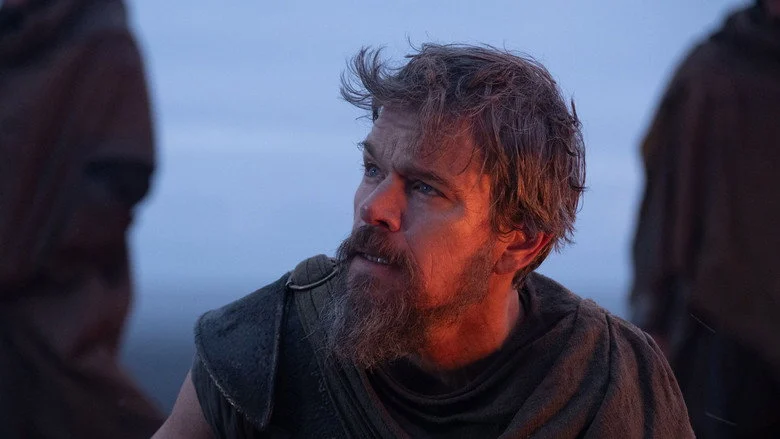
The shot that stays with you is Matt Damon, salt-crusted and hollow-eyed, standing at the prow of a ship that has seen a decade of blood and storms. His Odysseus does not roar orders, he stares at the horizon like a man who has already died once. Damon delivers a performance built on physical depletion and a low, steady register of grief; this is a king who has buried too many men to find glory in the journey ahead.
Nolan’s Grandeur Meets a Screenplay Gap
The direction is predictably monumental, Nolan shoots the islands and sea caves with a geographical gravity that makes the mythical feel geological. But the screenplay stumbles in its first act when Odysseus cedes his throne to Telemachus; the exposition is efficient but cold, leaving the emotional stakes of exile feeling academic rather than bruised.
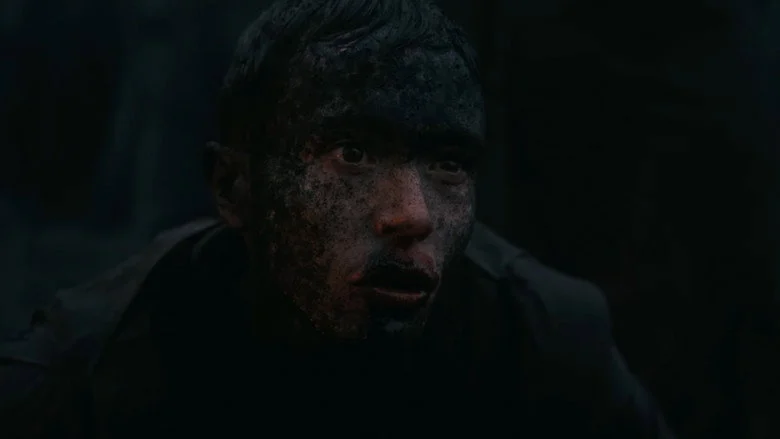
The Cyclops Has No Glamour, and That Is the Point
The genre-core of an epic fantasy lives and dies on how it renders the impossible, and Nolan refuses to soften any of it. The Cyclops Polyphemos is not a CGI cartoon, he is a mass of scarred flesh and bone, slow and stupidly violent, and the cave-fight sequence is filmed with the claustrophobic brutality of a prison riot. There is no music swelling to tell you this is a monster you should fear; you just hear the wet sound of bones breaking.
The Sirens are deployed as a psychological weapon rather than a seduction trope, their voices layered into the sound mix so that they whisper from inside the crew’s own memories. It is the most formally inventive stretch of the film, and it earns its 173-minute runtime through patience alone.
Where the film stumbles is in its middle passage, the encounter with Circe. Charlize Theron plays her as a sorceress who is bored by mortality, but the sequence drags because Nolan cannot decide whether she is a threat or a tutorial, and the script gives her no sharp dialogue to cut through the haze.
I found myself wishing the screenplay trusted its audience the way the sound design does.
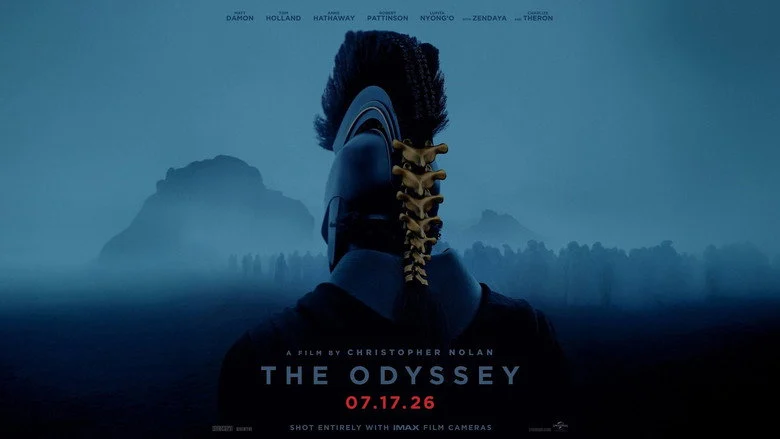
Theron’s Ennui and Holland’s Unseen Grief
Charlize Theron’s Circe is a fascinating non-starter, she is all languid contempt and elegant costume, but the role never demands that she do anything truly dangerous. Tom Holland, relegated to the opening act as Telemachus, is miscast in a part that requires stoic longing; Holland’s face is built for anxiety and charm, not the quiet endurance of a son waiting for a ghost to return.
A Casting Puzzle With No Easy Answers
The film’s ensemble includes Anne Hathaway, Robert Pattinson, and Lupita Nyong’o in undisclosed roles, which signals that Nolan is building a mythic ensemble rather than a standard support cast. Pattinson’s casting, in particular, suggests a character with moral ambiguity, his face carries a modern queasiness that sits uneasily inside an ancient epic. Without a scene to anchor these performances, the film feels like a chessboard waiting for a game that never fully begins. It is a bold casting instinct that the script does not yet know how to use.
For more epic and fantasy takes, browse our English Action reviews collection.
Skip the Matinee, Wait for an IMAX Evening
Fans of Nolan and Damon will find a film that respects its source material with a quiet, brutal seriousness that refuses to wink at the audience. The 173-minute runtime asks for stamina, but the Cyclops sequence alone is worth the price of a ticket.
The Odyssey is a handsome, haunted, occasionally inert epic that earns a reluctant 3.5 out of 5, a film more likely to be admired than loved, but one that will haunt the nightmares of anyone who steps into its cave.
For another film that leans into quiet character beats over spectacle, see our take on Varavu review.
If you prefer action that knows its audience, check Dongamohan verdict.