A woman wakes inside a question: terrorist, spy, actress, vampire. The film wants us to believe all four are possible and none are safe.
Poorvaaj Builds A Labyrinth Without A Floor Plan
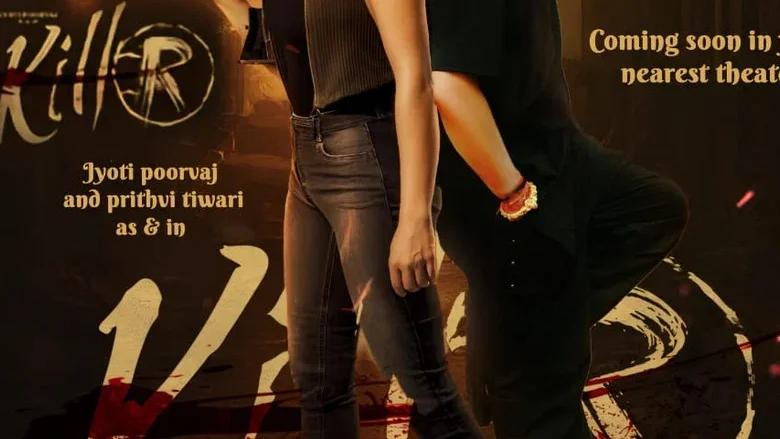
KillR opens with the kind of high-concept dare that independent Telugu science fiction rarely attempts: a female protagonist whose memory has been carved into competing selves. Jyothi Poorvaj is credited as Rania, Raktika, Julia, Sia and an AI-driven avatar, and the film treats each name as a room in a house with no blueprint.
The premise is genuinely seductive. A woman must determine whether she is victim, weapon or autonomous person while a genius scientist played by director Poorvaaj hovers at the edge of her fragmented consciousness.
Where the film stumbles is not ambition but architecture. The identity-question teaser that sold the movie, terrorist, spy, actress, vampire, plays on screen as a series of masks rather than a progression of discoveries.
Just as #Cult demonstrates how a fragmented-romance premise can settle into melancholy before its mysteries are earned, KillR keeps stacking riddles without paying the dramatic interest on any of them.
Jyothi Poorvaj Carries The Film On The Strength Of A Single Physical Tell
The performance is the film’s most persuasive argument. When Jyothi shifts from Rania’s coiled stillness to Julia’s loose, theatrical hand gestures, the transition happens in the shoulders before the face, a small, disciplined choice that suggests she has thought carefully about which body belongs to which woman.
Her Sia is the most grounded creation: eyes lowered, voice pitched low, hands always occupied with some object. It’s the performance of a woman trying to occupy a room without being noticed, and it’s the closest the film comes to genuine emotional gravity.
The AI-avatar sequences demand a different register entirely, and here the strain shows. The digital doubling is realized through hard lighting and a flattened vocal cadence that reads as technical limitation rather than deliberate estrangement.
The restrained physical exhaustion she brings to the film’s final confrontation recalls the psychological weight of her work opposite the procedural tension of Enemy Of The Smuggler, though that film’s star had a clearer dramatic spine to lean against.
The Scientist As Structural Crutch, Not Antagonist
Poorvaaj casts himself as Dr. Poorvaaj, the genius scientist whose experiments sit at the center of the mystery. His screen presence is watchful and recessive, he spends most of his scenes behind glass, observing monitors, speaking in a measured monotone, and the film never commits to whether he is villain, father figure or both.
That ambiguity could be productive. Instead it functions as narrative evasion, allowing the screenplay to defer the question of who is actually doing harm until the final act has nowhere left to hide.
The supporting ensemble is given little room to register as individuals. Manish Gilada appears in a handful of procedural scenes with a clipboard and a furrowed brow, but the film treats its royal relatives and laboratory functionaries as interchangeable furniture rather than characters with stakes.
The screenplay resists the kinetic sensationalism that overtook AAKHRI MULAQAT, opting instead for a deliberate, suffocating dread that occasionally tips into inertia.
Poorvaaj’s Direction Finds Texture In Silence And Loses It In Noise
The film’s strongest sequences are its quietest. A corridor scene where Jyothi stands motionless while fluorescent tubes flicker above her, the camera held at a fixed medium distance, generates more tension than any of the climactic confrontations.
When the action arrives, the direction loses that discipline. Fight choreography is cut in rapid, disorienting fragments, and the AI-avatar transitions are staged with a wash of blue light that flattens the spatial geography rather than clarifying it.
The score by Suman Jeeva and Asheer Luke leans heavily on low synth drones, effective in the identity-question passages but overused to the point of monotony by the second hour.
This patient approach to character interiority signals a welcome tonal maturity across contemporary Telugu thrillers, even when the execution doesn’t fully justify the patience it demands.
The Climax Resolves The Plot And Abandons The Question
Without spoiling the mechanics, the final act resolves the identity mystery in a way that is coherent but emotionally thin. The woman reclaims her suppressed reality, the scientific apparatus is confronted, and the film exhales into a resolution that feels less like a revelation than a paperwork completion.
What lingers is not the answer but the asking. The film’s central question, whether a person constructed by external forces can still claim authorship of herself, deserves a more searching final movement than the one it receives.
The climax stages its confrontation in a sterile laboratory, all white surfaces and humming servers, and the visual cleanliness works against the emotional messiness the story has been building toward.
The Box-Office Math Of A High-Concept Telugu Experiment
Poorvaaj wears producer, director and actor hats simultaneously, which means the commercial risk here is concentrated in a single filmmaker’s conviction. That’s an unusual position for a Telugu science-fiction release, and it cuts both ways: total creative control, total exposure.
The theatrical franchise lifecycle for identity-thriller IP in the Telugu market remains unproven. KillR arrives without a star-vehicle safety net, and its UA16+ classification narrows the family audience that typically sustains a mid-budget genre release across multiple weeks.
Jyothi Poorvaj’s box-office leverage is the film’s real variable. If audiences respond to her multi-persona turn, the film could find a niche among viewers hungry for female-led genre work; if they don’t, the theatrical window will close quickly.
No verified opening-day figures were available at the time of this writing, and the film’s commercial fate will depend heavily on word-of-mouth from the identity-mystery audience it is clearly courting.
A Film That Asks The Right Question And Answers It Too Neatly
KillR is a genuine attempt to build a female-led science-fiction thriller around questions of memory, control and selfhood. It is also a film that mistakes complication for complexity, piling identities on top of each other without giving any single one the room to breathe.
Jyothi Poorvaj’s performance is the reason to see it. She plays five women and finds a distinct physical vocabulary for each, and in her quietest moments, Sia’s lowered eyes, Rania’s coiled stillness, she suggests the film that might have been.
The film’s final image is of a woman standing alone in a corridor, the fluorescent lights steady above her, her reflection doubled in the glass. It’s a striking composition, and it’s also an inadvertent summary: two versions of the same person, neither fully realized, both waiting for a script that knows which one to follow.