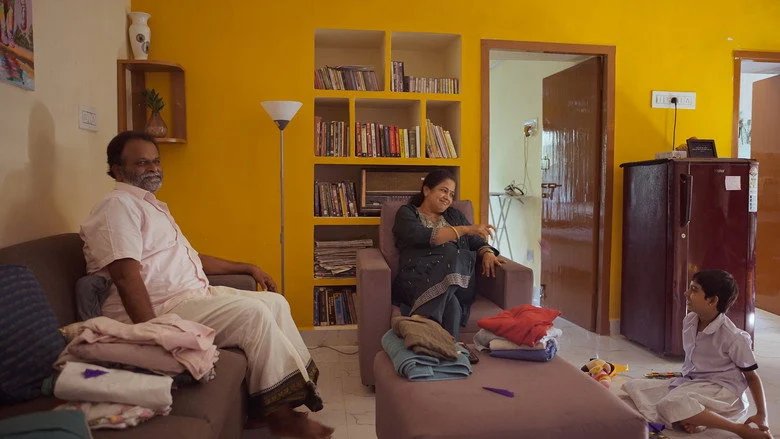
Raghu enters the frame as a man who has already closed the book on love. Arjun Das plays this withdrawal with a stillness that suggests the wound is fresh, not healed. His introduction scene carries the film’s entire emotional thesis, this is a man who has decided feeling is a risk he won’t take again.
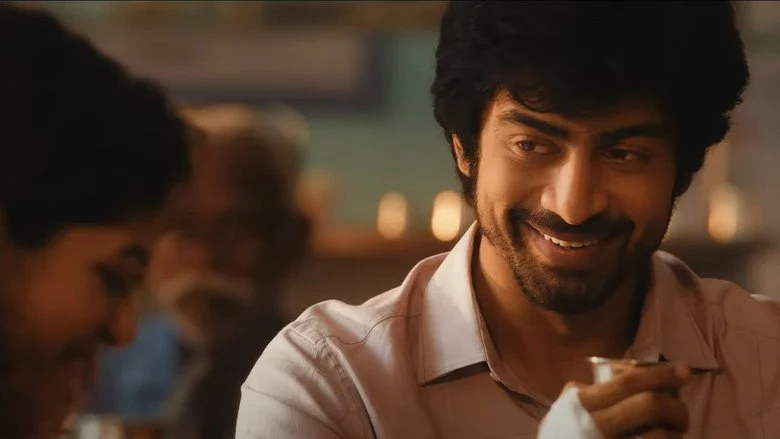
Das’s performance is built on restraint. He doesn’t announce his pain; he lets it sit in his posture, in the pauses between his lines. The arc from guarded to vulnerable is the movie’s engine, and Das handles it without tipping into melodrama.
Aditi Shankar’s Persistence Is the Film’s Pulse
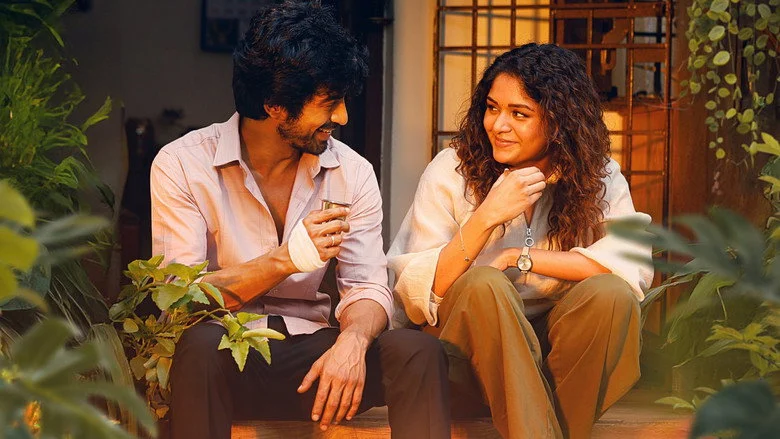
Anjali isn’t a love interest who waits around for Raghu to fix himself. Aditi Shankar plays her as someone who sees the man beneath the armor, and she keeps pushing. The most praised scene, Anjali trying to reach Raghu’s guarded inner state, works because Shankar refuses to make the effort look desperate.
She gives the character a lightness that contrasts sharply with Das’s heaviness. Their chemistry is the reason the premise works at all; without it, the grief-to-healing arc would feel like a therapy session, not a romance.
The Director Trusts the Silence Between Words
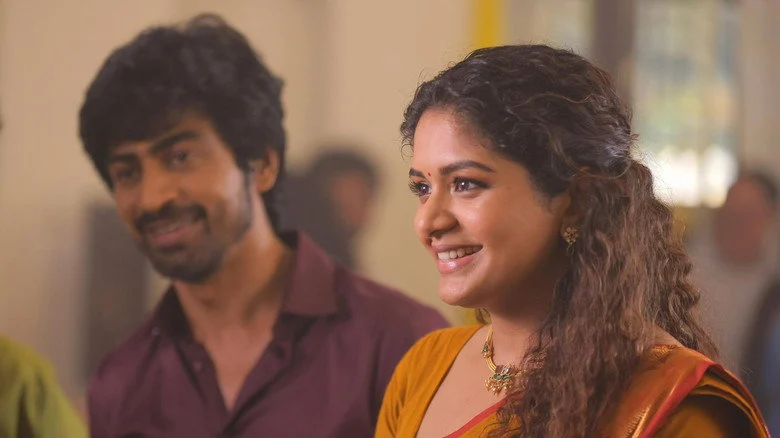
Vignesh Srikanth’s screenplay is linear, and that’s a strength here. He doesn’t complicate the story with subplots that don’t serve the central relationship. The family-collision setup, where Raghu’s and Anjali’s different social worlds crash into each other, adds pressure without turning into a loud domestic drama.
The weakness is that Srikanth’s confidence in the material sometimes borders on repetition. Anjali’s attempts to break through Raghu’s resistance are emotionally clear, but the middle section could have used a sharper edit to keep the tension from flattening.
A Romantic Musical That Lets the Score Do the Talking
The film’s genre framing as a romantic musical tells you where its priorities lie. Hesham Abdul Wahab’s music is positioned to amplify the emotional beats, and the structure of the story, grief, resistance, breakthrough, gives the score clear moments to land.
Raghu’s grief-centered introduction is the setpiece here, not in action terms, but in emotional geography. The scene establishes his withdrawal so cleanly that every subsequent beat between him and Anjali carries the weight of that opening.
The second-chance love premise is easy to follow, and the film trusts that simplicity. There’s no villain, no external conflict forcing the leads apart, just the slow work of two people trying to meet in the middle.
The Supporting Cast Builds the World Around the Leads
Sona Olickal appears to be part of the relationship and family dynamic that surrounds the central pair. Her role seems designed to ground the romance in a social reality, giving Anjali and Raghu stakes beyond their own feelings.
Dravid Selvam, Anusha Prabhu, and Chitra Lakshmanan round out the supporting environment. Their casting signals a film that wants its romance to feel lived-in, not isolated. The family-collision setup depends on these actors making the two worlds feel distinct, and their presence gives the drama a texture the leads alone couldn’t provide. I suspect the supporting cast’s quiet work is what makes the central pairing feel earned rather than convenient.
For more Tamil romance that leans into emotional restraint, browse our Tamil Romance reviews.
A Familiar Arc, Executed With Genuine Warmth
Filmibeat’s early review gave the film a 4.0 rating, and that number tracks with what the material promises. This isn’t a movie that wants to surprise you with plot twists; it wants to make you feel the slow thaw of a frozen heart. The grief-to-healing arc is familiar, but the execution is sincere.
The 131-minute runtime is a commitment, but the film earns it by staying focused on its two leads. If you’re here for Arjun Das and Aditi Shankar, you’ll get exactly what you came for, two performers who understand that romance is often about what isn’t said.
Go if you’re in the mood for a character-driven romance that trusts its actors to carry the emotional load. Skip it if you need plot momentum or external stakes to stay engaged, this one lives or dies on the chemistry between its leads. Best watched on a quiet evening, in a regular format, where the music and silence can breathe.
Once More is a gentle, well-acted romance that earns its emotional payoff through patience rather than spectacle, a solid 3.5 out of 5 for anyone who values craft over chaos.
For another take on emotional restraint in Tamil cinema, see Sanjeev review.
If you prefer romance with sharper comic edges, check Modha Rathri verdict.