The film opens in the 1990s, on a landscape that has stopped pretending to be peaceful. Two men move through a guarded military zone, and the tension is immediate, not from explosions, but from the quiet calculation in their steps. Ganesh, in the lead, plays this restraint beautifully, letting his eyes do the work that dialogue might have over-explained.
His physicality anchors the early stretch. There is a weariness to his movements that suggests a man who has stopped counting the days, and it grounds the film’s central survival premise in something human. It is a performance built on small choices, and they accumulate.
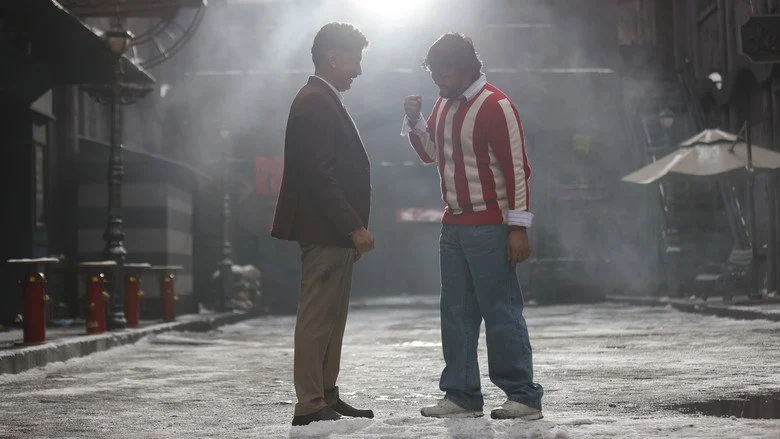
Ramesh Aravind’s Presence Sharpens the Stakes
Ramesh Aravind brings a different register to the pairing, more cerebral, more guarded. Against Ganesh’s instinctive survival mode, his measured calm creates a useful friction. The dynamic between them becomes the film’s quiet engine.
Their unspoken rapport in the escape sequences carries more weight than any exposition could. Aravind’s casting signals a film that wants its conflicts internal as much as external, and he delivers on that intent.
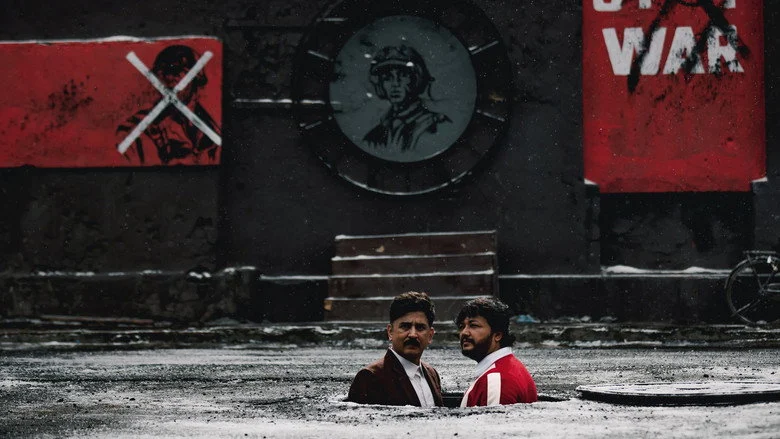
Director A. R. Vikhyath Builds a Drama of Restraint
Vikhyath’s direction favors atmosphere over incident, and it mostly works. The period setting is evoked through production design and a muted color palette that never screams for attention. He trusts the audience to read the subtext in the characters’ silences.
The flaw is in the screenplay’s middle stretch, which lacks the structural clarity of the opening. The momentum built in the military-zone escape dissipates, and the narrative treads water between strong set-pieces. Vikhyath’s strength is staging tension; his weakness is sustaining it across a full runtime.
That said, the genre-core execution, survival drama, is handled with admirable seriousness. There are no cheap heroics, no convenient rescues. The film commits to the grim logic of its world, which makes the moments of relief feel earned rather than manufactured.
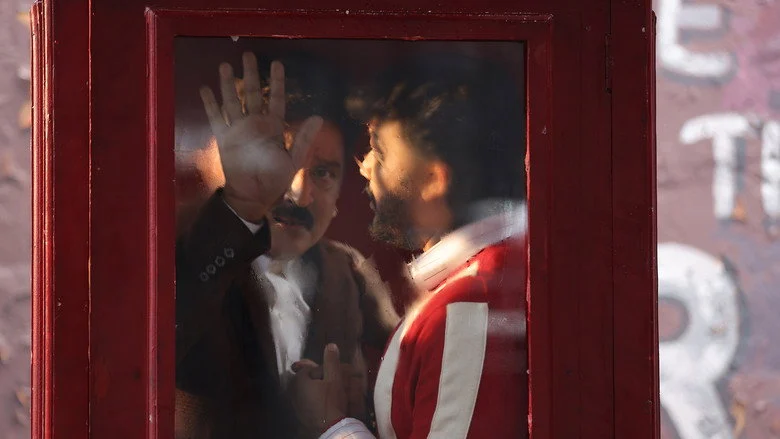
Bhavana and Meera Jasmine Add Texture to the Ensemble
Bhavana steps into the supporting fold with a groundedness that suits the film’s tone. Her scenes bring a domestic counterpoint to the conflict-driven narrative, and she makes the most of limited screen time. Meera Jasmine similarly elevates her material, bringing a lived-in quality that the film’s more schematic moments lack.
Mahima Nambiar and Nishvika Naidu round out a formidable female cast, and their presence signals a film conscious of its emotional range. Achyuth Kumar, as always, delivers a scene-stealing turn that reminds you why he remains one of Kannada cinema’s most reliable character actors.
For viewers drawn to this kind of measured storytelling, the film’s Kannada drama roots offer plenty to explore. Kannada Drama reviews on the site cover similar territory.
An Audience Waiting for Answers, Not Action
With no verified box office figures or critical ratings available, the film’s reception remains an open question. What is clear is the intent: this is a drama aimed at viewers who value mood and performance over spectacle. The absence of commercial data points suggests a release strategy that prioritizes festival circuits or OTT platforms over wide theatrical play.
The film’s audience profile is narrow but devoted, fans of period-set conflict stories and admirers of the assembled cast. For them, the film’s restraint will read as confidence. For others, it may feel like patience is being tested.
Your’s Sincerely RAAM is a film that asks you to meet it halfway, and rewards those who do. The opening act alone justifies a watch, and the ensemble keeps the middle stretch watchable even when the screenplay stalls. It is a film for a quiet evening, not a crowded screen, best experienced where its silences can breathe.
Your’s Sincerely RAAM earns a cautious 3 out of 5, a drama of genuine ambition that never quite escapes the shadow of its own setup.
For a similar register of measured storytelling, Once More review offers a gentler take on emotional restraint.
Sanjeev verdict shares this film’s struggle with structural payoff.