The A certificate lands before the first punch, and so does the film’s central problem: a revenge engine that never quite decides whether it wants to be a mass crowd-pleaser or a slow-burn moral autopsy.
Agastya Narasimha, directing himself, has built a lean two-hour action-thriller around a premise that sounds sharp on paper, a man takes the wrong road for the right reason, but the execution keeps slipping between registers.
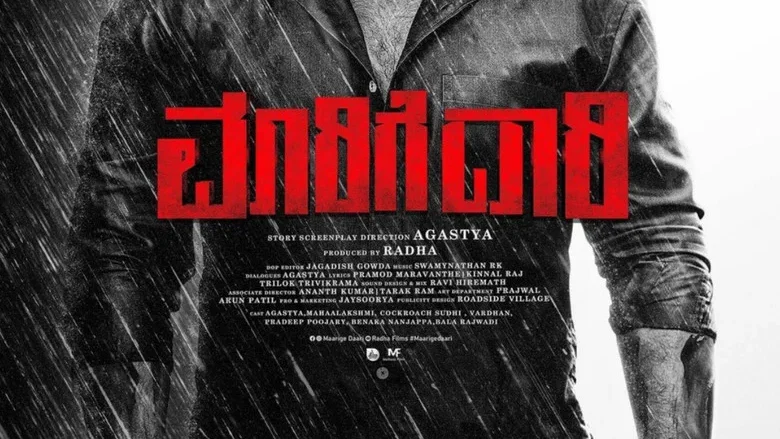
The Right Reason, The Wrong Road, And The Missing Map
The film’s spine is simple enough: a grievance demands redress, and the protagonist chooses methods that compound the damage rather than resolve it. That’s a sturdy dramatic chassis.
What’s missing is the granularity. The opening act establishes the wound without letting us feel its texture, we’re told the cause is just, but the screenplay skips the quiet, human scenes that would make us believe it.
By the time the retaliation begins, the character has already hardened, and we’re watching a man we barely met. Emotional consequence, the film’s stated thesis, becomes a caption rather than a lived experience.
Compare this to the spatial discipline on display in Pulse, where the filmmaker trusted silence and negative space to carry dread. Narasimha, by contrast, fills every gap with score and volume.
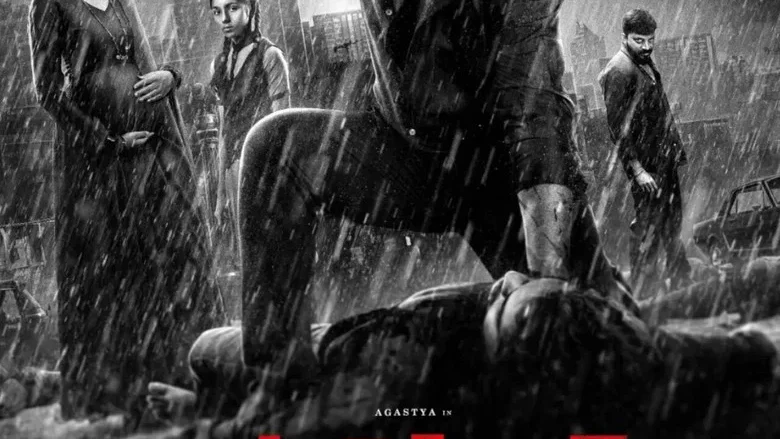
When Every Scene Is A Climax, Nothing Climaxes
This is the film’s most conspicuous structural flaw: the second act treats escalation as a substitute for progression. Confrontations arrive, fists fly, the re-recording swells, and then the pattern repeats.
Without a genuine reversal or a moment of doubt, the middle section flattens. The protagonist’s certainty becomes the audience’s fatigue, and the promised moral cost never quite lands because the film is too busy admiring the damage.
The dialogue, widely praised in early audience chatter, carries real punch in isolated exchanges, clipped, confrontational, built for the last row. But punchlines are not a plot.
Where Toxic at least attempted a psychological scaffold beneath its gangster theatrics, this film skips the scaffolding and goes straight to the fireworks.
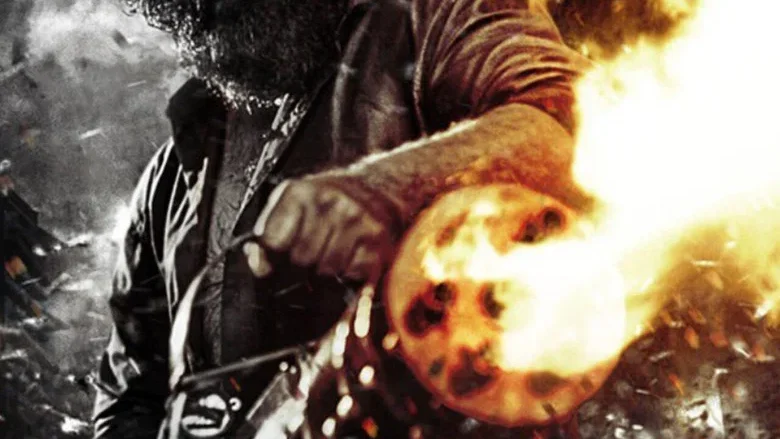
Narasimha’s Physicality Carries What The Script Cannot
The lead performance is the film’s most reliable asset, and the reason is physical rather than verbal. Narasimha holds his shoulders like a man bracing for impact, and his stillness in the quieter beats suggests reserves the screenplay never asks him to spend.
His vocal register stays low through the confrontations, a deliberate choice that keeps the character from tipping into caricature. When he finally raises his voice in the back half, the shift registers because he’s been rationing it.
The supporting ensemble, by contrast, functions as texture rather than architecture. Royal relatives and temple elders drift through scenes without individual dramatic weight, and the antagonist remains a silhouette with a sneer rather than a presence with a philosophy.
It’s a contrast worth noting against the grounded, folklore-rooted anchoring in Shankarabharana, where even minor figures seemed to carry the weight of their world. Here, the world is thinner than the man at its center.
The Camera Knows Where To Stand, Not Why
Riyo Antony’s background score is the film’s loudest collaborator, and that’s both its strength and its crutch. The re-recording is genuinely muscular, percussive, propulsive, mixed hot, but it works overtime to manufacture tension the staging hasn’t earned.
The cinematography, praised in audience reactions, favors low angles and tight framing during confrontations. It’s competent, occasionally striking, but rarely expressive, the camera tells us who’s winning rather than what winning costs.
Editing is where the film’s impatience shows most clearly. Scenes end a beat before they should, transitions skip the connective tissue, and the cumulative effect is a film that feels shorter than its two-hour runtime and lighter than its subject deserves.
There’s a version of this film, leaner, quieter, more willing to sit in the discomfort of its own premise, that would have landed harder. That version isn’t on screen.
What Radha Films Is Betting On, And What The Numbers Say
Radha Films is a small banner, and the commercial math here reflects that scale. The reported opening-day figure of roughly ₹1 lakh in India net is not a soft start; it’s a whisper.
For a self-directed, self-starring Kannada action-thriller with an A certificate, the theatrical window is narrow and the competition brutal. The film’s best hope lies in word-of-mouth within mass-action loyalists, not in broad multiplex penetration.
The regional action pipeline remains viable for stars with established draw, but this release illustrates the ceiling for newcomers without a franchise or a familiar face at the marquee.
What the film does signal, more broadly, is a continuing appetite for adult-skewing revenge narratives across contemporary Kannada action, a market that rewards conviction even when the craft wobbles.
The Cost Of The Wrong Road Is Paid By The Audience
By the final act, the film wants us to feel the weight of the path chosen. The intention is legible; the execution is not.
Because the protagonist’s interior life was never fully dramatized, the ending’s moral reckoning reads as a formal gesture rather than an earned catharsis. We understand what the film is saying. We just don’t feel it.
That gap matters, because revenge stories live or die on the audience’s willingness to follow a man into the dark and recognize something of themselves in his choices. This one asks for the follow-through without building the trust.
Narasimha has the physical presence and the restraint to anchor a better film than this one. The next one, hopefully, will give him a road worth walking.